Who is this choice relevant to?

Cook with limited worktop space

Wants to make ice for fruit coolers without losing the remaining preparation space, so the external dimensions and access for filling and emptying both matter. DOMO lists the DO9220IB’s external dimensions as 32,00 × 22,50 × 29,80 cm.

Host serving several rounds of drinks

Wants to serve fresh ice repeatedly and therefore compares the first cycle, the number of cubes per cycle and the reservoir. DOMO and Princess provide cycle information for specific models.

User who wants easy cleaning

Uses the machine regularly to make ice for drinks and wants easy access to the basket, reservoir and drain; a cleaning function does not replace the instructions for the specific model. H.Koenig sets out manual cleaning steps for the KB12.

What should you look for when choosing?

Countertop machine with a manual-fill reservoir

Choose this if: you want to make ice while preparing several fruit coolers in a row and have an accessible spot for filling and emptying the machine. DOMO lists the DO9220IB as 22,50 cm wide and 32,00 cm deep, with the first ice ready after 8 minutes.

Bear in mind: the machine takes up worktop space and needs maintenance; the manufacturer’s specifications do not state how much ice fits in the basket at once.

Ice cube tray in the freezer

Choose this if: you only need a small amount of ice occasionally, can plan ahead and have freezer space available. PlusOnline lists an ice cube tray as an alternative when just a few cubes will do.

Bear in mind: you’ll need to wait for the water to freeze, and the amount of ice you can store is limited by your available freezer space.

What to consider What should you check? Who is this important for?
Worktop space required Measure the width and depth, and check the specific model’s space requirements for the lid, ventilation, power cord and drainage. DOMO lists the DO9220IB as 22,50 cm wide and 32,00 cm deep; these are the appliance dimensions, not the clearance required around it. If I’m making fruit coolers on a small worktop, I want to leave enough room to carry on preparing drinks and fill the machine. Around 36% of consumers prioritise keeping their worktop clear.
Ice while serving Compare the stated time and quantity per cycle, reservoir capacity and access to the ice basket. DOMO says the first ice is ready after 8 minutes; Princess lists up to nine cubes every ten minutes for item 01.283069.01.001. When serving several drinks in a row, I want to know when the first cubes will be ready and how many each cycle produces. Around 29% of consumers prioritise speed and the amount of ice.
Cleaning and draining water Check that the basket and drain are accessible, and follow the manual for the specific model. DOMO lists a removable basket and drainage opening for the DO9220IB; H.Koenig also describes manual cleaning steps for the KB12. If I regularly make ice for drinks, I want easy access to the parts and drain so I can clean the appliance according to the manual. Around 21% of consumers prioritise cleaning and drainage.
Preferred ice shape Compare the size settings on the specific model and consider whether an ice cube tray would suit your preference. Princess lists three size settings for item 01.283069.01.001; this does not apply to other models. For a fruit cooler with a particular look, I want to know in advance what size ice the appliance actually makes. Around 14% of consumers prioritise their preferred ice shape.

Common buying pitfalls

  • Confusing daily output with the amount of ice ready at once

    DOMO lists the DO9220IB as producing 12 kg per 24 hours, but daily output doesn’t tell you how much ice fits in the basket at once.

    For your drinks round, compare the number of cubes per cycle with the amount of ice you can access, and check how to remove ice from the basket.

  • Checking only the width of a compact appliance

    You’ll also need space and access around the machine to fill it, scoop out ice and drain leftover water.

    Measure the entire space where you plan to put it and check the manual for the specific model before choosing an appliance over an ice cube tray.

  • Assuming a cleaning function means no manual maintenance

    The H.Koenig KB12 instructions also include removing and washing parts and draining the water.

    Check which manual steps are required in the instructions for your specific model.

Relevant brands to consider

DOMO

The DO9220IB offers a useful point of comparison for a compact worktop space, with stated external dimensions, first-cycle time and reservoir capacity.

  • DOMO says the DO9220IB has a removable basket and drainage opening.
  • The stated output of 12 kg per 24 hours doesn’t show how much ice is ready at once for a single round of drinks.

KitchenBrothers

According to the manufacturer, KitchenBrothers’ Dutch range includes portable machines and models with different reservoir capacities.

  • For its specific Easy Clean model with a 1-litre reservoir, KitchenBrothers lists nine cubes in eight minutes and access to the inside by opening both compartments.
  • These details apply to that model and are manufacturer claims, not the result of an independent comparison test.

Princess

Item 01.283069.01.001 is worth considering when comparing a larger reservoir and adjustable ice sizes with a smaller set-up.

  • Princess lists a 2,8-litre reservoir, three size settings and up to nine cubes every ten minutes for this item.
  • Check the external dimensions and clearance for the lid in the space where you plan to use the appliance.

H.Koenig

The KB12 is a specific model to compare for ice sizes, cycle details and cleaning.

  • H.Koenig lists an LCD screen, two ice sizes and a 6–13-minute cycle for the KB12; the manufacturer also describes manual cleaning steps.
  • This information applies to the KB12 and cannot automatically be assumed to apply to other H.Koenig models.

Ice cube makers at Joybuy

This selection includes ice cube makers for use on or around the worktop, with product details such as reservoir capacity, cycle time and ice sizes. Measure the available space and check the ventilation instructions and applicable electrical safety and food-contact material requirements for the specific model. The Dutch government’s Ondernemersplein explains the requirements for electrical appliances; the European Commission provides information about the rules for materials that come into contact with food.
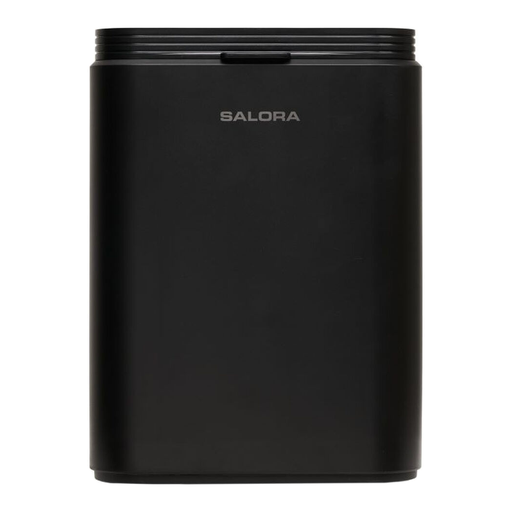
Salora ICE12B ice cube maker

Salora ICE12B ice cube maker

The stated cycle time and two ice sizes are useful to compare if you want to make batches of ice while serving drinks.

According to the product name: 8 cubes in 6–9 minutes, 1,3-litre reservoir, two ice sizes and a stated output of 12 kg per 24 hours. The instructions require at least 15 cm of clearance on all sides for ventilation.

View at Joybuy
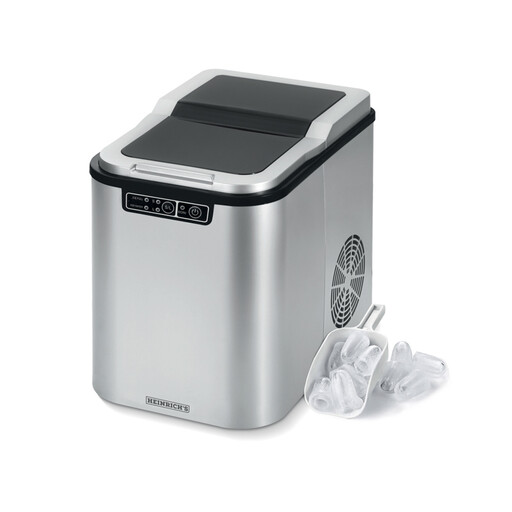
Ice cube maker with a 2,2-litre reservoir and two ice sizes

Ice cube maker, 120 W

The stated cycle time and two sizes are useful details to compare if you want ice for successive drinks.

According to the product name: 120 W power, 2,2-litre reservoir, 9 cubes in 9 minutes, two ice sizes and a self-cleaning function.

View at Joybuy
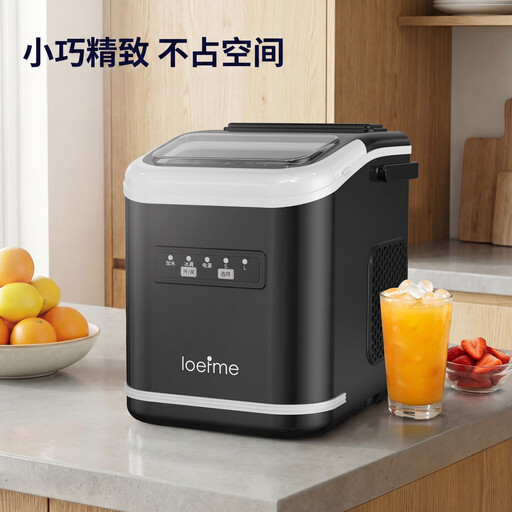
LOEFME 12/K ice cube maker

LOEFME 12/K ice cube maker

The stated cycle time and S and L sizes are useful to compare if you want ice for several drinks and different glass presentations.

According to the product name: 9 cubes every 6–13 minutes, two ice sizes (S/L), 1,4-litre reservoir, stated output of 12 kg per 24 hours and an automatic cleaning function.

View at Joybuy
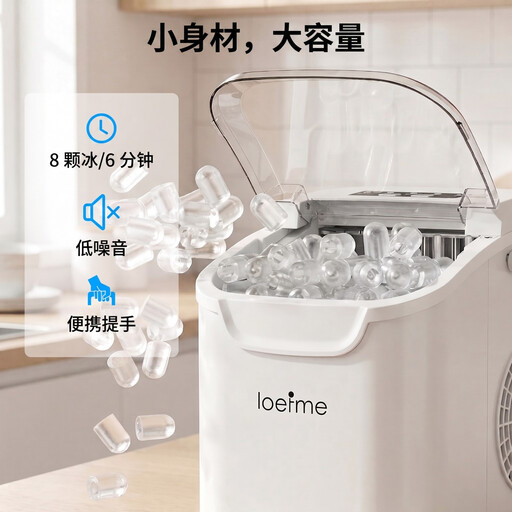
LOEFME 12/Q ice cube maker

LOEFME 12/Q ice cube maker

The stated cycle time and S and L sizes are useful to compare if you want ice for several drinks and different glass presentations.

According to the product name: 9 cubes every 6–13 minutes, two ice sizes (S/L), 0,8-litre reservoir, stated output of 12 kg per 24 hours and an automatic cleaning function.

View at Joybuy
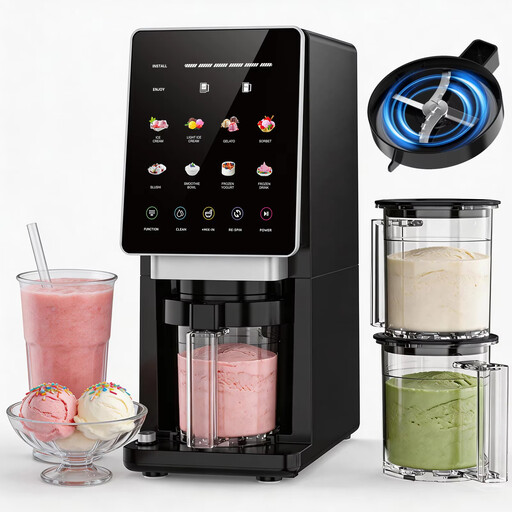
Teendow KF-2501U1 ice cube maker

Teendow KF-2501U1 ice cube maker

The product name describes a countertop model with preset programmes, which may be useful if you want to compare the listed features.

According to the product name: 8 preset programmes, self-cleaning function, mixing function and restart function. The name also mentions use in campervans, lorries and cars; check the instructions for the specific model before using it in these settings.

View at Joybuy

Frequently asked questions

How can I tell if the machine will fit on my worktop?

Measure the available width and depth, and also check the manual for the specific model for ventilation requirements and access to the lid and drain. The DOMO DO9220IB measures 22,50 × 32,00 cm; this does not confirm that this much space is enough for safe use.

Can I keep ice in the collection basket for later?

Don’t assume the basket is suitable for freezer storage unless this is confirmed for your specific model. For the separate DO9200IB, DOMO recommends transferring the ice cubes from the basket to a freezer bag; check the instructions for your own model.

How do I clean an ice cube maker?

Follow the manual for the specific model and carry out any manual cleaning as instructed by the manufacturer. For the H.Koenig KB12, H.Koenig describes removing and washing the basket and draining any remaining water, among other steps; don’t automatically apply these instructions to another model.

What water can I use in the Netherlands?

According to the Netherlands Nutrition Centre, Dutch tap water meets strict standards. Also check your machine’s manual: DOMO, for example, specifies spring water for the DO9220IB. Follow any local advice to boil tap water separately from the instructions for your specific model.

What product requirements apply to an ice cube maker?

Electrical appliances placed on the market in the Netherlands must meet the applicable European requirements and carry CE marking, as explained by the Dutch government’s Ondernemersplein. Parts that come into contact with water or drinkable ice must also comply with the applicable EU rules for food-contact materials, including Regulation (EC) No 1935/2004, as explained by the European Commission. A CE claim alone does not prove that a specific appliance has been independently tested or that its food-contact parts have been checked.
