
Vandaag of morgen in huis

Kwaliteit gegarandeerd

Welkomstaanbiedingen ontgrendelen: GRATIS bezorging | Tot 80% korting | Gratis 30 dagen JoyPlus-proefperiode
Download de app
Choosing an i-Size car seat may seem straightforward, until you consider the fitting method, height range, harness routing and the space available in your car. A model may offer plenty of features but still not be suitable for your child or vehicle. Three pitfalls are particularly common:
Using age as the main measure
The age shown on the packaging is only an indication. Under i-Size regulations, the child’s height is the key factor. A car seat for a 100 cm child has different requirements from one for a 60 cm baby, even if both products show a similar recommended age.
Confusing a swivel function with easy installation
A 360-degree car seat can make getting your child in and out easier. That does not automatically mean installation will be trouble-free in every car. Always check that the ISOFIX connectors, support leg and any Top Tether are compatible with your car.
Prioritising comfort features over the essentials
A sunshade, extra cushion or breathable fabric can be useful, but the height range, harness routing and homologation must be correct first. Soft upholstery cannot make an unsuitable car seat suitable.
An ECE R129 car seat is approved under European regulations that focus on the child’s height. i-Size models also take account of factors including side-impact testing and the use of rear-facing travel for young children.
Look for the exact designation in the product information, such as ECE R129/03 or ECE R129/04. According to the product information provided by the manufacturers mentioned, the relevant models are approved to this standard. This is a verifiable product specification, but correct installation and use in accordance with the instructions remain essential.
Children under 15 months must generally use an i-Size car seat in a rear-facing position. Always check the instructions for the specific model.
A 0–12-year car seat sounds appealing, but a wide range requires good adjustability. Check the following:
A car seat with an adjustable headrest can grow with your child for longer. For models with a five-point harness, you should also check the maximum height or weight at which the harness may be used. After that, switch to the car’s three-point seat belt.
An ISOFIX car seat clips directly onto the attachment points in the car. This can make installation easier, but the car must have ISOFIX. Some models also use a support leg or Top Tether. So do not look only for the word ISOFIX; check the complete installation system.
A booster seat may use ISOFIX for stability, while the three-point seat belt actually secures the child. Other boosters use only the car’s seat belt. With an ISOFIX booster cushion, the seat belt must still run correctly across the shoulder, chest and hips.
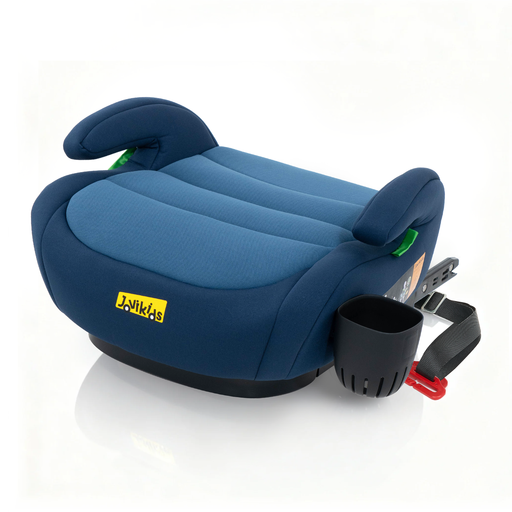
Why it suits this profile: This model is intended for children measuring 125–150 cm and has a compact design, cup holder and stated weight of 3 kg. It is a good fit for families looking for a simple booster seat for everyday use.
The product information states ECE R129, ISOFIX attachment and a seat-belt clip. This means you can check the key specifications in advance rather than relying solely on comfort claims.
125–150 cm, ISOFIX, removable washable cover and compact design.
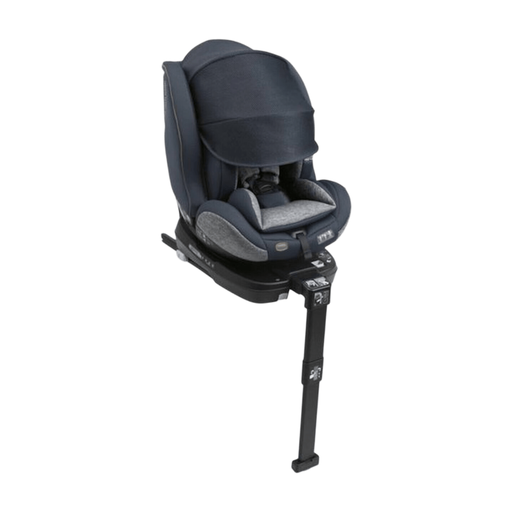
Why it suits this profile: This swivel car seat is intended for children measuring 40–125 cm and combines 360° rotation with ISOFIX and a support leg. The product information also states that it has six recline positions and ventilation inserts.
The height range, ECE R129/03 standard and attachment system are clearly stated. Before buying, however, check that your car has sufficient space for the support leg.
40–125 cm, 360° rotation, six recline positions and removable cover.
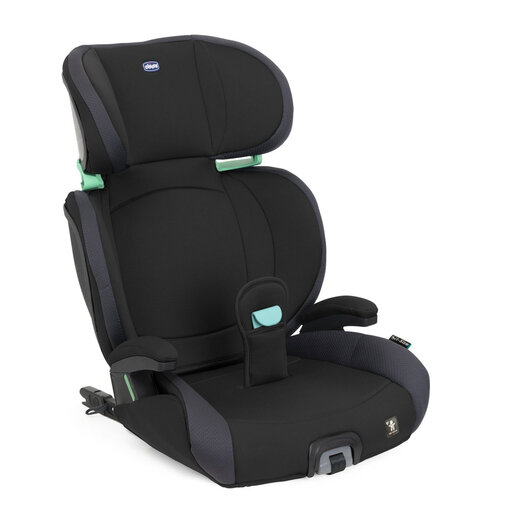
Why it suits this profile: This model is suitable for children measuring 100–150 cm and can be used with ISOFIX plus the three-point seat belt, or with the seat belt alone. This is practical when the seat is moved between different cars.
The product information makes it clear that ISOFIX is not mandatory and mentions separate seat-belt guides. This helps you avoid buying a model that is unsuitable for a second car.
100–150 cm, two recline positions, adjustable headrest and washable cover.
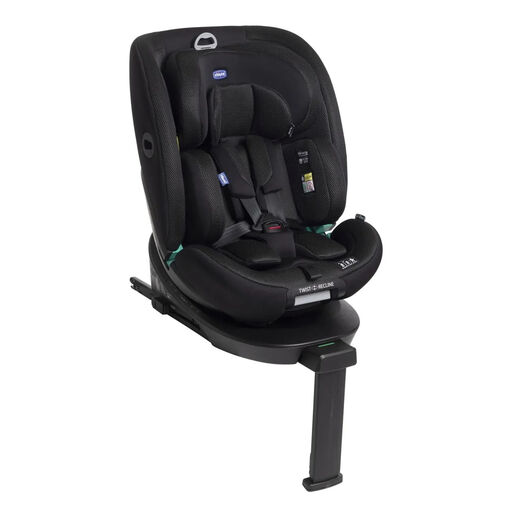
Why it suits this profile: According to the product information, this model is suitable for children measuring 40–150 cm and features ISOFIX, a support leg, 360° rotation and a five-point harness. It is designed for families who do not want to buy several different seats.
The wide height range avoids a quick switch to the next seat, but check the 20 kg limit when using ISOFIX and follow the installation instructions for each growth stage.
40–150 cm, 360° rotation, three recline positions and adjustable headrest.
We have put together a complete, up-to-date list of products that fully meet these strict selection criteria and the applicable European safety regulations.
Use this quick checklist:
A baby car seat is generally used rear-facing. A toddler car seat may have several positions and a five-point harness. For older children, a booster car seat with correct seat-belt routing is often more practical than a large model with an integrated harness.
This depends on the stated height range. A 40–125 cm model can be used from birth to approximately 7 years, while a 40–150 cm seat will last longer. Age remains an estimate; your child’s height and the fit are the deciding factors.
Not always. Some i-Size models use ISOFIX with a support leg or Top Tether. Other models from 100 cm may, according to the product information, also be installed using only the three-point seat belt. Check the instructions and compatibility with your car.
A booster seat or booster cushion should be used within the height range specified by the manufacturer. Many models are intended for 125–150 cm, while high-back boosters often start from 100 cm. The diagonal belt should run across the shoulder, not along the neck, and the lap belt should sit low across the pelvis.
