
Vandaag of morgen in huis

Kwaliteit gegarandeerd

Welkomstaanbiedingen ontgrendelen: GRATIS bezorging | Tot 80% korting | Gratis 30 dagen JoyPlus-proefperiode
Download de app
At first glance, choosing an i-Size car seat with ISOFIX seems straightforward. But models can vary considerably in their height range, installation, rotation and useful life. A seat suitable from birth won’t necessarily fit a four-year-old properly. And a rotating car seat may be more practical in one car than another.
So don’t focus only on a low price or a wide age range. Above all, check the specifications that determine whether the car seat is right for your child, your car and your everyday needs.
Age ranges such as ‘0–12 years’ are only a rough guide. Children of the same age can vary considerably in height and build. That’s why an ECE R129 child car seat is classified primarily by height, for example 40–150 cm or 76–150 cm.
Before you buy, check:
ISOFIX makes fitting a car seat easier, but installation varies between models. Some seats use a support leg as well as ISOFIX; others require a Top Tether. With an ISOFIX booster seat, ISOFIX often keeps the seat in place while the three-point seat belt secures your child.
Read the instructions and check that your car has:
A recline position, rotating function or thick cushion can be useful, but none of these features alone tells you whether a seat is suitable. A rotating car seat, for example, takes up extra space. A very long usable life may mean the seat is less specifically tailored to any one stage of your child’s growth.
Also check the seat’s width and weight, how adjustable the headrest is and how to clean the cover.
ECE R129, also known as i-Size, uses a child’s height as a key classification criterion. Products carrying this label are approved to the stated R129 version and for the specified height range. According to the product information for the models featured here, certification also involves requirements relating to installation and side-impact testing.
Certification doesn’t guarantee that a seat will fit every car. Always check the approval details, instructions and installation indicators for the specific model.
The direction of travel is also important for babies. The product information for several models states that children under 15 months must travel rear-facing. Always follow the manufacturer’s instructions and applicable regulations.
A car seat suitable from birth often starts at 40 cm. Other models start at 76 cm or 100 cm. A car seat for ages 0–12 can be a practical choice if you want one seat to cover several stages of growth, but pay attention to when you need to change how it’s used:
A car seat with a 5-point harness is used differently from a booster seat. Check that the harness is easy to adjust for height and fits snugly without twisting. A washable cover is particularly practical for everyday use, long journeys or young children.
Also look for:
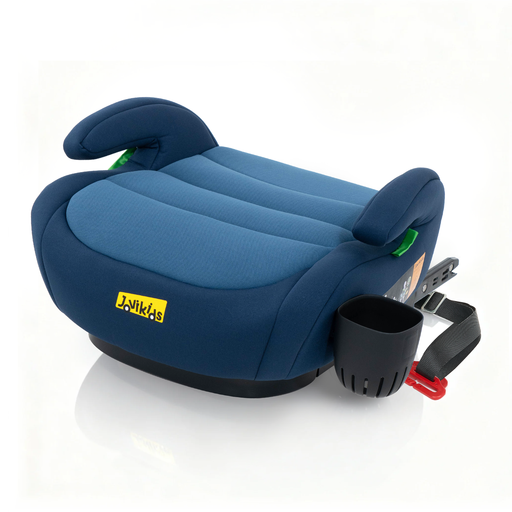
Why it suits this profile: This compact booster is designed for children measuring 125–150 cm and weighs around 3 kg, according to the product information. It’s a good fit for families looking for a simple booster cushion for older children.
The clearly defined height range helps you avoid buying a model for a child who’s too small. The ISOFIX adaptors and belt clip also make installation more straightforward.
ECE R129 approval, a removable washable cover, a compact design and a cup holder, according to the product description.
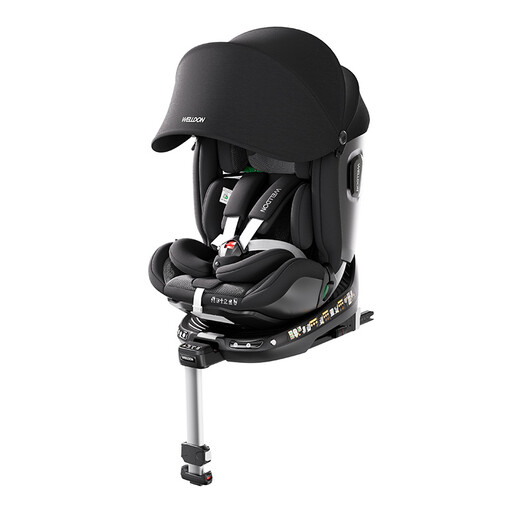
Why it suits this profile: According to the product information, this model is suitable for children measuring 40–125 cm. It combines ISOFIX with an adjustable support leg, 360° rotation and several recline positions.
The height range is clearly specified, up to 125 cm. The seat also has check indicators, according to the product description, but it’s still essential to install it in line with the instructions.
ECE R129, 360° rotation, a removable newborn insert, a washable cover and an adjustable recline position.
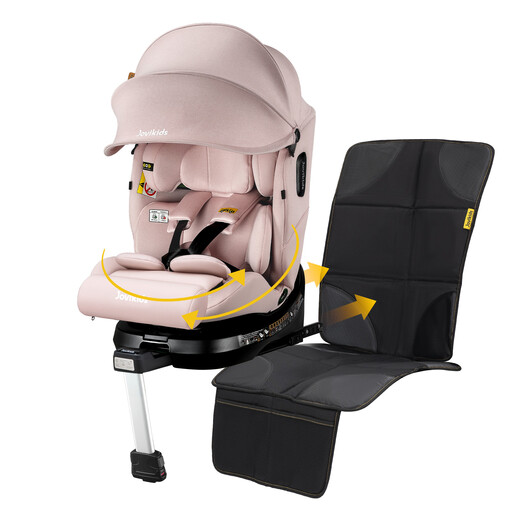
Why it suits this profile: According to the product information, this model is suitable for children measuring 40–150 cm. That means it can cover several stages of growth, from a car seat for newborns to a child seat for older children.
The wide height range is clearly stated. The adjustable headrest and removable insert help you adapt the seat to different stages of growth.
360° rotation, ISOFIX with a support leg, several adjustment positions, a sun canopy and a removable cover, according to the product description.
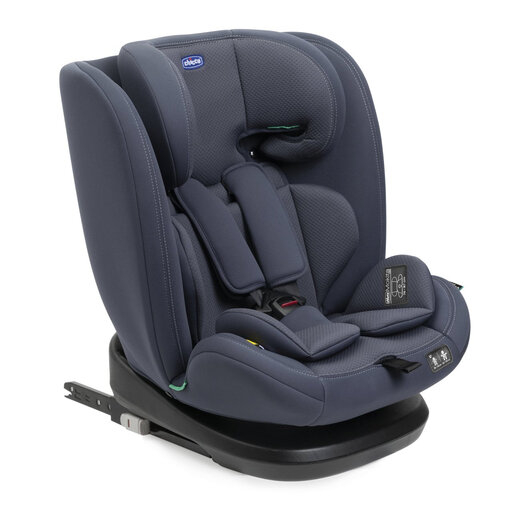
Why it suits this profile: According to the product information, this seat is designed for children measuring 76–150 cm and has a 5-point harness for use up to 18 kg. From 100 cm, the three-point seat belt can be used, with ISOFIX as an optional attachment.
The change from the 5-point harness to the three-point seat belt is clearly linked to your child’s weight and height. This makes it easier to keep track of each stage as they grow.
ECE R129/04, an adjustable headrest, four positions for the toddler cushion and installation with ISOFIX, Top Tether and a 5-point harness during the first stage.
We’ve put together a complete, up-to-date list of products that meet these strict selection criteria and current European safety regulations.
Not every i-Size car seat uses ISOFIX on its own. Some models combine ISOFIX with a support leg or Top Tether. Other seats can be secured with the three-point seat belt at a particular stage of your child’s growth. Always check the installation options for the specific model and your car.
Its practical usable life depends on the height range, the condition of the cover and whether it has been involved in an accident. Replace a seat after a collision if the manufacturer says to, even if there’s no visible damage. Also check the harness, anchor points and plastic parts regularly.
Not always. Check the available space on the back seat, the position of the ISOFIX points and whether the support leg can rest properly on the floor. If possible, check that the door still closes properly and that the seat can be used in your preferred direction of travel.
