
Vandaag of morgen in huis

Kwaliteit gegarandeerd

Welkomstaanbiedingen ontgrendelen: GRATIS bezorging | Tot 80% korting | Gratis 30 dagen JoyPlus-proefperiode
Download de app
Choosing an i-Size car seat for your child may seem straightforward, but product pages often use a lot of terms interchangeably. Age, weight, height, ISOFIX, a swivel function and certification don’t all mean the same thing. For example, a seat that looks suitable for years on paper may be too large for a newborn. A compact booster seat may not provide enough support if the car seat belt doesn’t sit correctly across your child’s shoulder and hips.
Look out for these common pitfalls:
An ECE R129 car seat is classified by your child’s height. Check your child’s height rather than relying only on the age guidance.
For children under 15 months, a suitable model must be used rear-facing in accordance with the product instructions. A forward-facing toddler car seat isn’t automatically suitable for a younger child, even if they’re within the height range.
An ISOFIX child car seat attaches to the anchor points in your car. This can make installation easier, but check that your car has ISOFIX on the seat you want to use.
Also check the type of additional anchorage:
Always follow the manufacturer’s instructions. A seat belt that isn’t fitted correctly, a loose Top Tether or an unlocked ISOFIX connector can reduce how well the system works. Check that the indicators are in the correct position before every journey.
A good fit matters more than extra features. Look for:
A 5-point harness must not be twisted and should fit snugly, with no thick coat or extra cushion underneath. With a booster seat, the diagonal seat belt should run across the shoulder, not along the neck.
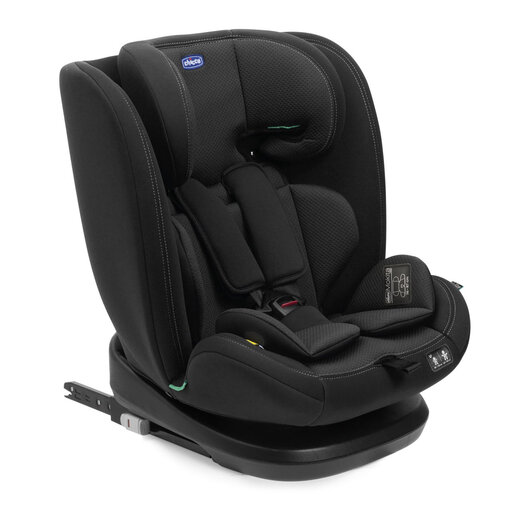
Why it suits this profile: This car seat is designed for children from 76 to 150 cm and grows with them from around 15 months to about 12 years. That means you’re less likely to need to buy another seat soon.
The product has a clearly defined height range, a 5-point harness up to 105 cm and can also be used with a three-point seat belt from 100 cm, according to the product specifications.
ECE R129/04, ISOFIX and Top Tether, four recline positions, and simultaneous adjustment of the headrest and 5-point harness.
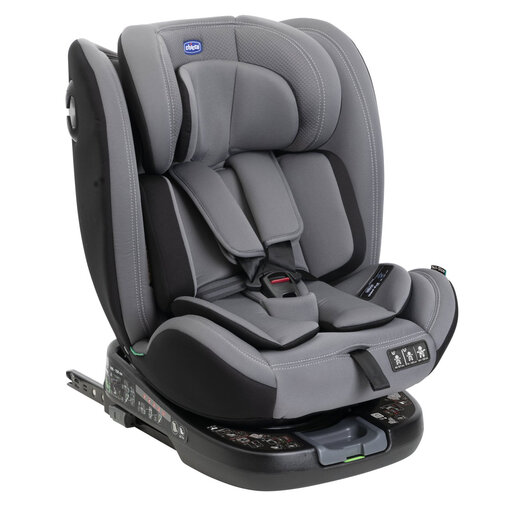
Why it suits this profile: Families looking for one car seat from birth and an easier way to get their child in and out may find the 360-degree swivel function practical.
The model provides separate installation instructions for rear-facing and forward-facing use. This means you can check the direction of travel at each stage of your child’s growth, rather than focusing only on the swivel function.
ECE R129/03 for 40-150 cm, 360° rotation, five recline positions, ISOFIX with Top Tether and a baby insert up to 60 cm.
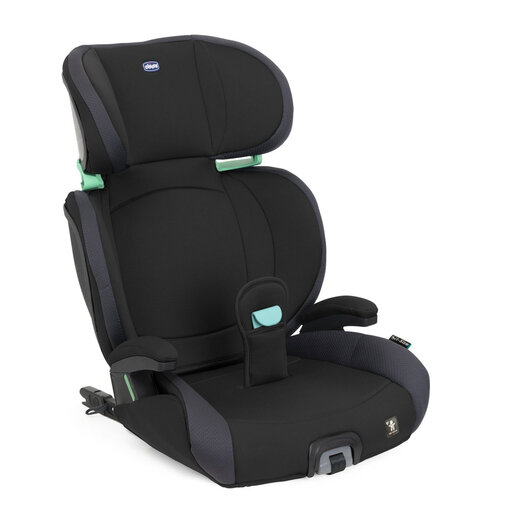
Why it suits this profile: This seat is designed for children from 100 to 150 cm. It’s a good fit for families who already have a baby or toddler car seat and are looking for a solution for school runs and longer journeys.
The seat has a backrest, an adjustable headrest and seat belt guides. So it’s not a backless booster seat for a child who still needs extra support with positioning.
ECE R129/04 for 100-150 cm, two recline positions, ISOFIX for stabilisation and use with a three-point seat belt.
We’ve put together a full, up-to-date list of products that meet these strict selection criteria and the applicable European safety regulations.
That depends on the model’s approval and instructions. According to the product information provided, children under 15 months must travel rear-facing. Always check that your child’s height is also within the permitted range.
How long you can use a car seat depends on your child’s height, development and condition, not just their age. A model for 40-150 cm can cover several stages of growth. Replace a car seat after an accident, even if there’s no visible damage. Also check the harness, buckles, cover and anchor points regularly.
Not always. Some models for 100-150 cm or 125-150 cm can be used with a three-point seat belt. ISOFIX can then provide extra stability. However, a booster seat for a child must always be used with the three-point seat belt positioned correctly; a lap belt alone isn’t suitable.
