
Vandaag of morgen in huis

Kwaliteit gegarandeerd

Welkomstaanbiedingen ontgrendelen: GRATIS bezorging | Tot 80% korting | Gratis 30 dagen JoyPlus-proefperiode
Download de app
An i-Size car seat might seem easy to choose at first: look for a seat with ISOFIX, check the age range and choose a model that fits your car. In practice, problems often arise from misinterpreting the size range, incorrect installation or choosing a seat that doesn’t suit your day-to-day needs.
The main pitfalls for parents in the Netherlands are:
Below are the key points to check, along with some product options for different family needs.
i-Size refers to the European safety standard ECE R129. This standard classifies child car seats primarily by the child’s height, for example 40–150 cm, rather than by weight or age alone.
Always check the following before buying:
The approved height range
A car seat for 76–150 cm isn’t suitable for a newborn. A model covering 40–150 cm has a wider range, but it still needs to fit a small baby properly.
The direction of travel
According to the product information for the models mentioned, children under 15 months must travel rear-facing. A seat that can only be used forward-facing, such as the Mokita i-Size from 76 cm, is therefore not suitable as a car seat from birth.
The installation method
Check whether the seat uses ISOFIX, a support leg, Top Tether, the car’s three-point seat belt or a combination of these. Not all cars have the same anchor points.
An ECE R129 car seat meets the stated homologation requirements when used correctly. You should still check the manual, the correct belt path and whether the seat is compatible with your car.
A seat might be suitable for 40–150 cm, for example, but the internal five-point harness isn’t always used throughout the entire range. On many models, the five-point harness is used up to around 105 cm or 18 kg. After that, your child switches to the car’s three-point seat belt.
So check:
An ISOFIX car seat clips directly onto the car’s anchor points. This can make installation easier, but you still need to check that the indicators show the connectors are securely attached.
A child car seat with Top Tether also uses an upper anchoring strap. Other models use a support leg. Check your car’s manual to see whether this installation method is permitted and whether the support leg sits securely on the floor. Don’t place a support leg on a floor storage compartment unless you’re using the solution specified by the car manufacturer.
A 360-degree rotating car seat can make getting your child in and out easier. However, the seat needs extra space to rotate. Check the distance from the front seat, the door and any centre console. Not every model has a rotation function in every direction of travel, or can be used without a base.
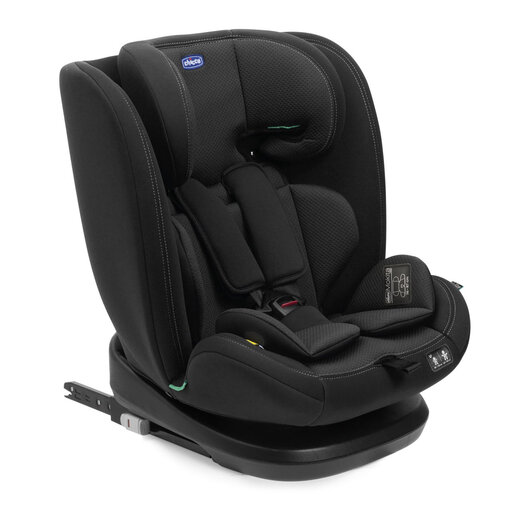
Why it suits this profile: This seat is designed for children from 76–150 cm, from around 15 months. It’s a good fit for parents looking for one forward-facing seat they can use for a long time.
The height range and minimum height of 76 cm are clearly stated, so it’s immediately clear that this isn’t a car seat for use from birth.
ECE R129/04, ISOFIX and Top Tether up to 105 cm; installation with the car’s three-point seat belt is possible from 100 cm. Four positions and an adjustable headrest are also listed.
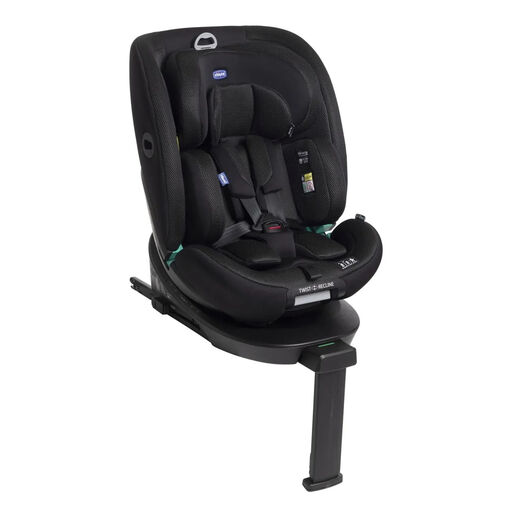
Why it suits this profile: According to the product specifications, this model is suitable from 40–150 cm. It combines rear-facing use for young children with a later switch to the car’s seat belt.
The specifications include installation indicators, a support leg and the height range. Always check that the support leg and ISOFIX are compatible with your car.
ECE R129/03, 360-degree rotation, three recline positions and a five-point harness. The stated height range is 40–150 cm.
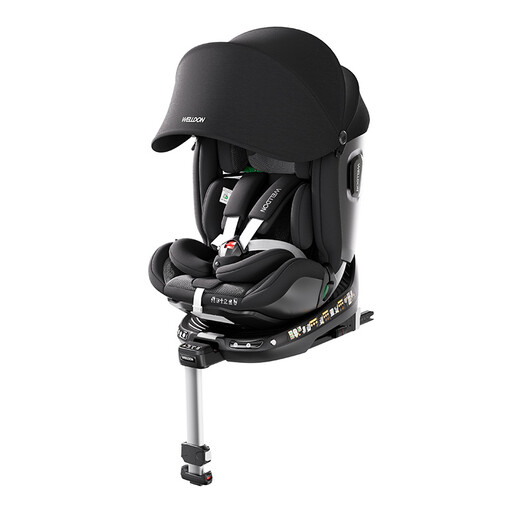
Why it suits this profile: According to the product description, this model is designed for use from 40–125 cm. It offers rear-facing travel for young children, ISOFIX, a support leg and 360-degree rotation.
The model isn’t listed as a seat for ages 0–12: the product information states 0–7 years and a maximum height of 125 cm. This helps avoid unrealistic expectations about how long it can be used.
The product description lists a 90-degree door-stop function, several recline positions, a removable insert and a removable cover. The sensors and app notifications mentioned are claims made in the brand’s product description.
We’ve put together a complete, up-to-date list of products that meet these strict selection criteria and current European safety regulations.
No. Check the anchor points, available space and instructions for both the car seat and your car. With ISOFIX models, you should also check whether a Top Tether or support leg is required.
That depends on the approved height range, how the seat is used and its condition. A model covering 40–150 cm can suit several stages of your child’s development, but parts such as the five-point harness are usually only used up to a certain height. After an accident, replace the seat in line with the safety instructions, even if there’s no visible damage.
An i-Size booster is suitable when your child is within the stated height range. The Quasar models in this range are listed for 125–150 cm, or around 7–12 years, and use the car’s three-point seat belt. The diagonal belt should lie across the shoulder and shouldn’t press against the neck.
