
Vandaag of morgen in huis

Kwaliteit gegarandeerd

Welkomstaanbiedingen ontgrendelen: GRATIS bezorging | Tot 80% korting | Gratis 30 dagen JoyPlus-proefperiode
Download de app
Choosing an i-Size car seat may seem straightforward, until you start comparing installation, height range, swivel function and vehicle compatibility. Marketing copy often uses terms such as “360-degree”, “safe” and “grows with your child”, but these words don’t always explain how the seat should be used in your car.
The three most common pitfalls:
Looking only at age
i-Size car seats are classified mainly by a child’s height. So a seat for “0 to 12 years” won’t necessarily fit from birth or suit every stage of your child’s growth.
Assuming a swivel function means easy installation
A 360-degree car seat can make getting your child in and out easier. You still need to check that the ISOFIX arms, support leg or Top Tether are fitted correctly, and that the seat is facing the right way according to the manual.
Overestimating how long a seat can be used
A car seat that grows with your child from 0 to 12 years sounds like good value, but always check the individual stages. For example, a 5-point harness may only be suitable up to a certain height or weight. After that, you’ll need to use the car’s seat belt.
An ECE R129 car seat, also known as an i-Size car seat, lists a height range in centimetres. This makes it easier to compare seats than relying on age recommendations alone.
Look out for ranges such as:
According to the product warnings for the models mentioned, children under 15 months must travel rear-facing. Always check the latest manual and the approval details for the specific model too.
An ISOFIX car seat connects directly to the vehicle’s anchor points. This can make installation easier to follow, but not every car has the same amount of space or suitable anchor points.
Be aware of the difference between:
A car seat with Top Tether or a support leg is only installed correctly when all indicators and fastenings are in place as instructed in the manual.
A car seat with a 5-point harness secures young children at the shoulders and hips. Check whether the harness adjusts together with the headrest, and whether it fits snugly without a thick coat or extra cushion underneath.
A car seat with an adjustable headrest is useful when your child is growing quickly. Also check for:
A mention of side protection doesn’t mean a model will perform in the same way in every car. Use this information as a product specification and always follow the fitting instructions.
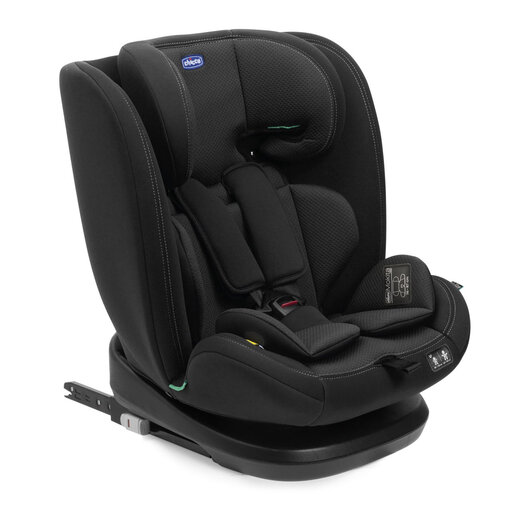
Why it suits this profile: This model is designed for children from 76 to 150 cm, covering several growth stages from around 15 months.
The product information clearly states the minimum height of 76 cm and specifies that the seat should be used forward-facing from 15 months. This helps prevent you from choosing it for a newborn.
ECE R129/04 for 76-150 cm, ISOFIX and Top Tether up to 105 cm, then installation with the three-point seat belt; four recline positions.
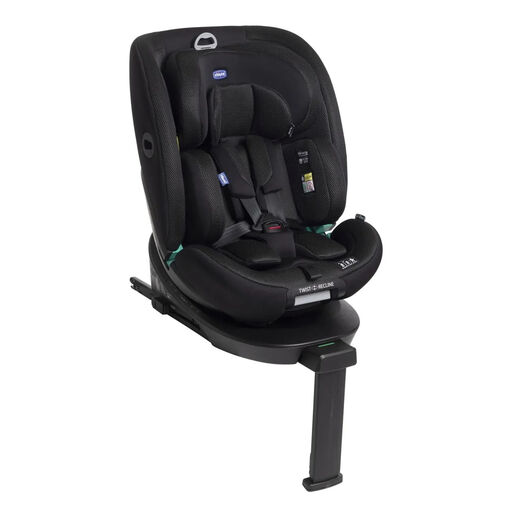
Why it suits this profile: According to the product specifications, this model is suitable for children from 40 to 150 cm and combines 360-degree rotation with several adjustment options.
The height range and the limits for ISOFIX use are listed separately. This makes it clear that ISOFIX is specified for use up to a maximum of 20 kg, for children from 40 to 105 cm.
ECE R129/03, 360-degree rotation, support leg, three recline positions, adjustable headrest and Side Safety System.
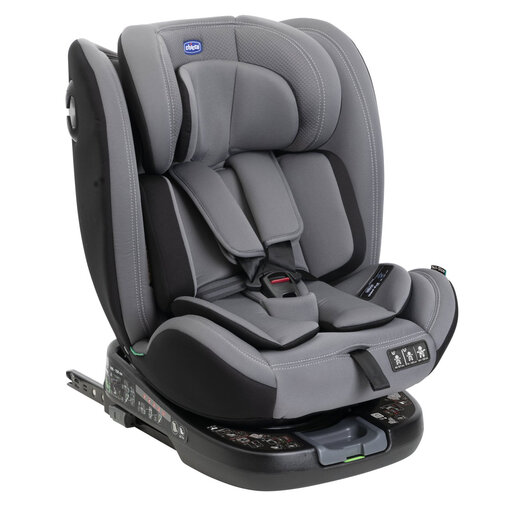
Why it suits this profile: A handy choice for families who regularly get their child in and out of the car and want one seat to use from birth to around 12 years.
The product information distinguishes between rear-facing and forward-facing use, including the corresponding ISOFIX, Top Tether and seat-belt stages.
40-150 cm, 360-degree rotation, five recline positions, insert suitable up to 60 cm and a 5-point harness up to 105 cm or 18 kg.
We’ve put together a complete, up-to-date list of products that meet these strict selection criteria and current European safety requirements.
No, it depends on the model and the stage of use. Some i-Size car seats use ISOFIX with Top Tether or a support leg. Other models can be fitted with a three-point seat belt from a certain height. Always check the product manual and whether your car has the necessary anchor points.
How long you can use a seat depends on its approved height and weight limits, as well as its condition. A model for 40-150 cm can be used for several years, but the 5-point harness and infant insert are often suitable for a shorter range. Replace a car seat after an accident, even if there’s no visible damage.
Only if the model is specifically approved from 40 cm and comes with a suitable insert. A seat such as the Mokita I-Size Classic has a minimum height of 76 cm according to its product specifications, so it isn’t designed for newborns. Also check whether rear-facing use is required for babies.
