
Vandaag of morgen in huis

Kwaliteit gegarandeerd

Welkomstaanbiedingen ontgrendelen: GRATIS bezorging | Tot 80% korting | Gratis 30 dagen JoyPlus-proefperiode
Download de app
An i-Size car booster seat may seem simple: you place the seat on the back seat and use the car seat belt. Yet parents regularly make the same mistakes when buying and using one. A booster seat that is not suitable for the child’s height, a belt that runs along the neck or a cover that is difficult to clean can quickly lead to disappointment.
For children aged around 7 to 12, it is not age but primarily height from 125 to 150 cm that matters. Always check the instructions, vehicle compatibility and official product information before making a purchase.
The age shown on a product page is a guideline. The Quasar models, for example, are intended for children aged around 7 to 12, but the specified height range is 125 to 150 cm. A child of the same age may therefore still be too small or already too tall for a particular group 2/3 child seat.
Measure your child standing upright and compare their height with the booster seat’s range. Do not use a 125–150 cm car seat outside the specified limits.
An Isofix booster seat can be useful if you want the seat to stay in place when your child gets in or out. However, Isofix does not automatically replace the three-point seat belt used to secure the child.
The product description states that the Isofix connectors on the Quasar Fix i-Size are optional. The car’s 3-point seat belt is still required. The standard Quasar i-Size uses only the car seat belt and does not require Isofix.
A booster seat without good positioning for the diagonal belt can be impractical. The belt should run over the shoulder and chest, not along the neck. Therefore, check that the model is a clear car seat with belt guide and that the belt guide is compatible with the belt in your car.
Thick coats, extra cushions or a loose booster seat placed under the child can alter the belt position. Use the booster seat flat on the car seat and follow the fitting instructions.
First, check the approved height range. According to the product information, the Quasar models discussed here are suitable for 125–150 cm. The stated approval is ECE R129/04 (i-Size). This is an official European standard marking on the product; when you receive it, check that the label and instructions correspond to it.
An ECE R129 booster seat is not a licence to skip the fitting instructions. The belt must:
A car booster seat with belt-only attachment is practical for families who regularly move the booster seat between several cars. Consider its weight and dimensions if you carry it around frequently.
An Isofix booster seat may stay in place more securely on the car seat. With a model featuring optional Isofix attachment, you must click the connectors into place correctly and check that your car has suitable Isofix anchor points. The seat belt remains responsible for securing the child in accordance with the product instructions.
Children are more comfortable on longer journeys with supportive armrests and enough seating space. Also check whether the width fits alongside other child seats. A removable, washable cover is practical when dealing with spills and everyday use.
According to the product specifications, the Quasar i-Size without Isofix measures 33 × 42 × 22 cm and weighs 1 kg. The Quasar Fix models measure 33 × 39 × 20 cm and weigh 2 kg. The dimensions may be important when rear-seat space is limited or when several seats need to fit side by side.
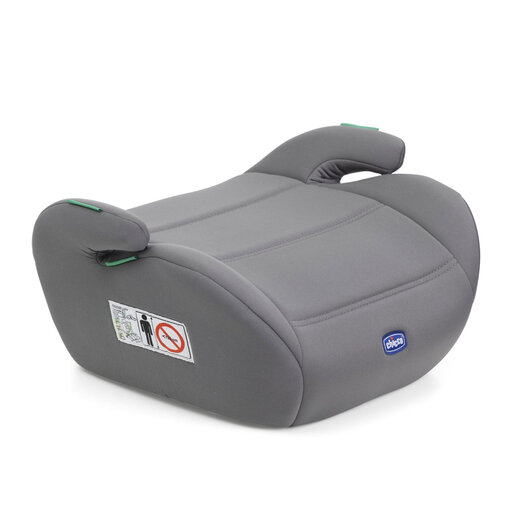
Why it suits this profile: This model uses the car’s three-point seat belt and does not require Isofix. That makes it a straightforward choice for a first booster seat or for use in several cars.
The product description mentions a belt guide, a range of 125–150 cm and a removable, washable cover. However, check the belt position before every journey.
ECE R129/04 according to the product specification; softly padded armrests; weight of 1 kg.
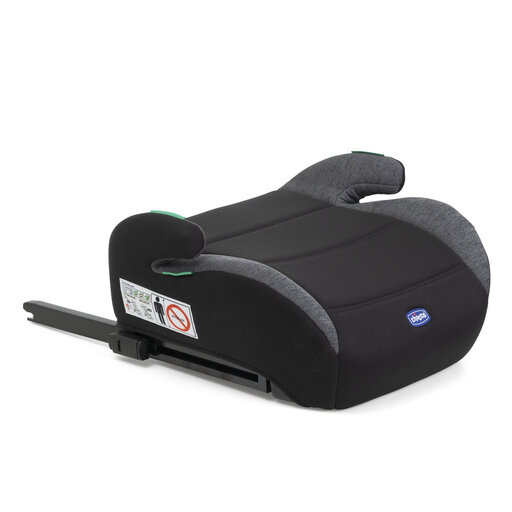
Why it suits this profile: Suitable for parents who want optional Isofix connectors as well as correct belt positioning. The model combines a compact size with additional attachment options.
The diagonal belt is routed through a designated guide. Isofix is optional; always also use the three-point seat belt as stated in the instructions.
ECE R129/04 according to the product information; optional Isofix connectors; removable, washable cover.
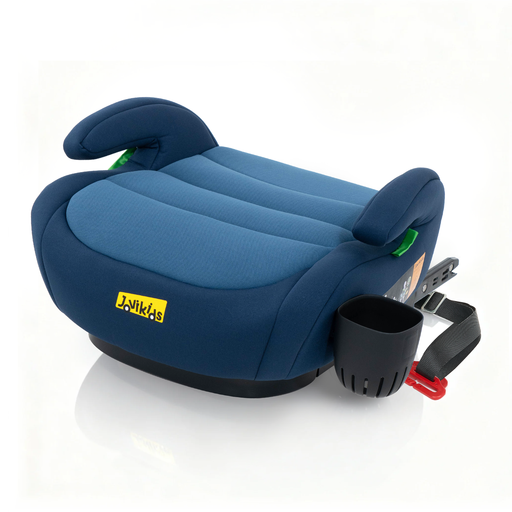
Why it suits this profile: An option for families looking for an Isofix booster seat with a removable cover and cup holder. The specified height range is 125–150 cm.
The product specification mentions Isofix and a belt clip. Before use, check that the belt runs correctly over the shoulder and pelvis and that the Isofix connection is secure.
ECE R129 according to the product information; Isofix adapter; removable, washable cover; specified dimensions of 37 × 44 × 23 cm.
We have put together a complete, up-to-date list of products that fully meet these strict selection criteria and the applicable European safety regulations.
A washable cover helps with maintenance, but always follow the washing label. Also check that all parts have been put back correctly after washing.
This varies by model. The products in this overview are specified for children from 125 to 150 cm. Check your child’s height and the official product information before ordering.
No, not for every model. According to the product description, the Quasar i-Size is used with the three-point seat belt and does not require Isofix. Isofix is available or optional on the Quasar Fix and Jovikids OHHO+, but the three-point seat belt remains important for securing the child correctly.
Use the seat as long as the child remains within the specified height range and the product shows no damage or signs of wear. Replace a booster seat after a serious accident and follow the instructions for checking, maintenance and service life.
