
Vandaag of morgen in huis

Kwaliteit gegarandeerd

Welkomstaanbiedingen ontgrendelen: GRATIS bezorging | Tot 80% korting | Gratis 30 dagen JoyPlus-proefperiode
Download de app
A hydraulic car jack might seem simple at first: position it under the car, pump the car up and change a wheel. In practice, lifting capacity, minimum lifting height and stability can make the difference between a useful tool and a costly mistake.
This matters to private car owners, DIY enthusiasts and garages alike. A low sports car, for example, needs a different low-profile car jack from an SUV. If you also want to remove wheel nuts quickly, a garage jack paired with a cordless impact wrench could be a better option.
A label such as 3-tonne car jack doesn’t automatically mean that every car can be lifted safely and easily. First check the vehicle’s kerb weight and consider where the support point is. A jack with a 1.5-tonne capacity may be suitable for some cars, but not for every SUV or van.
Also, don’t use the jack as permanent support. Once the car is raised, you should put suitable axle stands in place. A jack is designed for lifting, not for working under a vehicle for extended periods.
A standard steel car jack may need plenty of clearance to fit under the car. For a sports car, lowered saloon or performance car, an ultra-low car jack with a minimum height of around 85 to 90 mm may be more practical.
As well as the minimum height, check the maximum lifting height. A low-profile jack that doesn’t lift high enough won’t be suitable for jobs that require more space under the vehicle.
Terms such as “fast lifting”, “heavy duty” or “1000 Nm” don’t tell you everything about how a product performs in practice. According to the LARBANKE product description, the pneumatic air jack can lift in around 3 to 5 seconds, but it needs a suitable air supply and a level surface.
The stated torque of an impact wrench is also a manufacturer’s product specification. Actual performance depends on factors such as battery condition, bolt type, corrosion and the socket used. Always use a suitable torque wrench to tighten wheel nuts fully.
Check:
A 2.5-tonne car jack is a practical mid-range option for many cars, saloons, MPVs and some SUVs. A 1.5-tonne car jack may be worth considering if low weight and easy storage are more important. For larger vehicles, a 3-tonne model may offer more capacity in reserve, but only if its dimensions and lifting height are suitable for your car.
A hydraulic trolley jack with a minimum height of 85 to 90 mm falls into the low-profile or ultra-low car jack category. This is important for sports cars and lowered vehicles. A model with a range of 150 to 530 mm, by contrast, offers more working height for taller cars and SUVs.
Before buying, compare the specifications with the distance between the ground and the manufacturer-recommended jacking point. Check this with the tyres cold and the car on the surface you normally use.
A steel car jack is usually designed for a sturdy build and weighs more. This can be an advantage in a permanent garage. An aluminium car jack is easier to take to a track day, a tyre change or a breakdown.
Also look for an overload valve, a wide support plate, a long handle and a controlled lowering function. A product listing that mentions EN 1494 and CE indicates that the seller associates these standards or marking with the product. Always check the latest documentation and instructions for use; a marking is no substitute for using the product correctly.
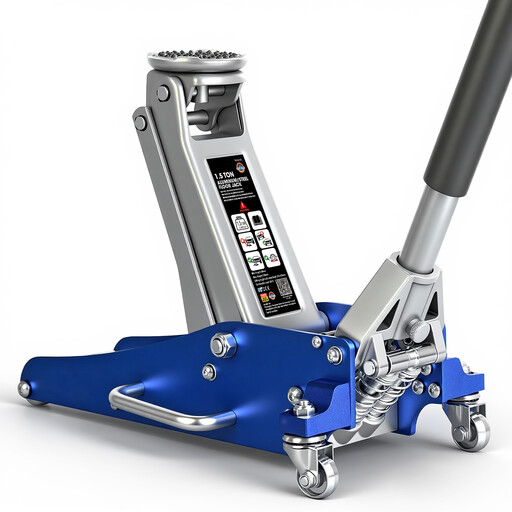
Why it suits this profile: According to the product information, this aluminium model weighs around 14.3 kg. It’s designed for use in a home garage, at a track day or in an emergency with a suitable car.
The 90 mm minimum height makes it suitable for low cars. Check that its 1.5-tonne capacity is right for your vehicle.
Aluminium construction, twin-pump system and a lifting range of 90 to 358 mm, according to the product specifications.
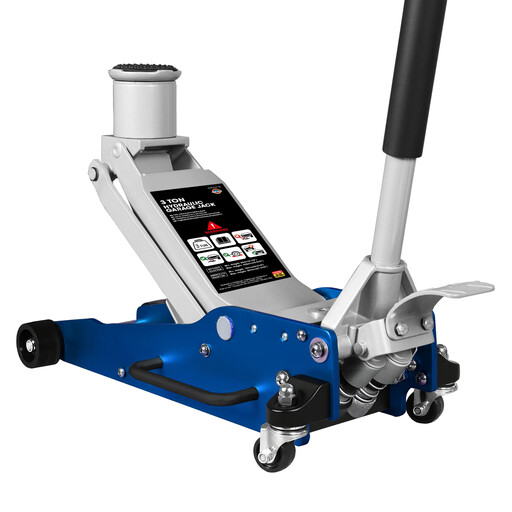
Why it suits this profile: With its low entry point and 3-tonne capacity, this model is aimed at people with sports cars, SUVs, MPVs or vans who want one versatile garage jack.
The product specifications give a lifting range of 85 to 465 mm, with an optional extension up to 541 mm. That means you don’t have to base your choice on tonnage alone.
Aluminium body, twin-pump system and two lifting modes, according to the product description.
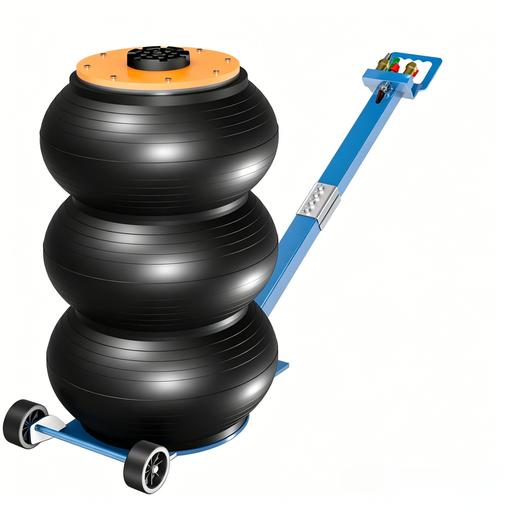
Why it suits this profile: A workshop, tyre service or breakdown recovery operator with a suitable compressor may benefit from a pneumatic air jack for vehicles within its stated operating range.
The air supply and controlled lowering are built into the design. The air source you need and the surface you use it on still matter.
Stated 5-tonne capacity, a lifting range of around 150 to 400 mm and a removable handle, according to the listing.
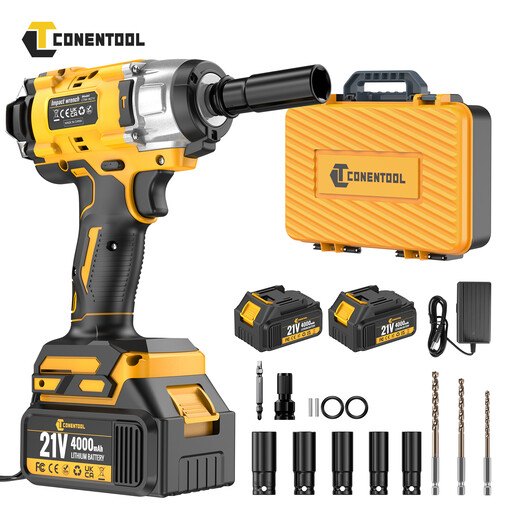
Why it suits this profile: If you want to loosen wheel nuts as well as use a hydraulic car jack, this cordless impact wrench is a handy addition for garage and maintenance work.
The three settings and variable trigger give you more control than relying on a maximum torque figure alone. Always use a torque wrench for final tightening.
The manufacturer states a maximum loosening torque of 800 Nm; the set includes five sockets, two batteries and an LED light.
We’ve put together a complete, up-to-date list of products that meet these strict selection criteria and the applicable European safety regulations.
It can be, but check the vehicle’s weight and jacking point, as well as the minimum and maximum lifting heights. According to the product specifications, a 3-tonne model has a higher capacity than a 1.5-tonne model, but the car must still be within the stated limits.
Its lifespan depends on the load, storage, maintenance and whether it’s used on a suitable surface. Keep the hydraulic cylinder clean, avoid overloading the jack and follow the manufacturer’s maintenance instructions. Don’t continue using a jack that leaks or feels unstable.
Not necessarily. A jack lifts the car; a cordless impact wrench helps loosen and tighten wheel bolts. For accurate final tightening, a torque wrench is more suitable than the impact wrench itself. For specific heavy-duty applications, for example, you might need a model rated around 1000 Nm.
