
Vandaag of morgen in huis

Kwaliteit gegarandeerd

Welkomstaanbiedingen ontgrendelen: GRATIS bezorging | Tot 80% korting | Gratis 30 dagen JoyPlus-proefperiode
Download de app
A hydrating face mask can be a simple addition to your skincare routine, especially when your skin feels dry, tight or lacking moisture. However, you do not automatically get a better formula just because the packaging uses terms such as “deep hydration”, “glow” or “barrier repair”.
The key differences often lie in the material, ingredients, application time and number of masks per pack. By considering these points, you can avoid a poor purchase and choose a mask that suits your routine.
A mask containing lots of active ingredients may sound appealing, but more is not always more practical. Above all, check that the formula suits your needs:
A face mask containing hyaluronic acid can temporarily leave your skin feeling smoother and more supple. This does not automatically mean that it prevents long-term moisture loss or treats a skin concern.
Not every sheet mask is designed to be worn while sleeping. A classic sheet mask is often used for around 10 to 20 minutes. A hydrogel face mask may be suitable for a longer application time, but always follow the instructions on the packaging.
Products such as an overnight face mask are specifically designed for use throughout the night. Allowing an ordinary sheet mask to dry on your face is not a good way to extend its effects. The material may then feel dry or tight.
Do not just compare the price of the pack; also calculate the price per mask. A box containing 30 sheets may be a practical choice for daily use, while a set of four hydrogel masks may be better suited to a weekly skincare routine.
Also check the amount of product in each mask. A pack containing 23 ml of essence per sheet cannot be compared directly with a hydrogel mask containing 34 or 35 grams.
For a face mask for dry skin, moisture-binding ingredients such as glycerin and different forms of hyaluronic acid are useful ingredients to look out for. A formula containing panthenol, ceramides or squalane may be worth considering if your skin feels tight soon after cleansing.
With a face mask for sensitive skin, a short, easy-to-understand ingredients list is often simpler to assess. Always carry out a patch test before using a new product, for example on the inside of your wrist. Stop using it if you experience redness, swelling, itching or a burning sensation.
A sheet mask is usually made from cellulose, bamboo fibre or another thin sheet material. The fit determines how much contact the mask makes with your skin. A 3D sheet may fit more closely around the nose, jawline and chin.
A hydrogel mask often feels firmer and stays in place well, but may be heavier than a classic sheet mask. Also check whether the mask consists of one or two pieces. Two pieces are generally easier to position.
Choose a format that you will actually use:
A glow face mask can temporarily make your skin look smoother and more hydrated. Treat terms such as “glow” and “radiance” as descriptions of the expected appearance, not as a guarantee.
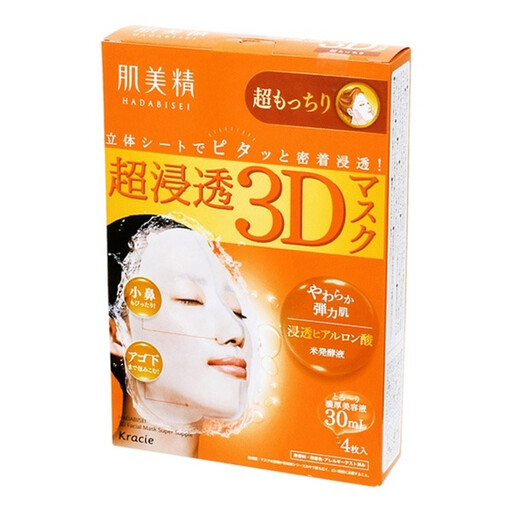
Why it suits this profile: This Japanese set contains four 3D sheet masks, each with 30 ml of essence. The contoured fit is practical if you are using a sheet mask for the first time.
The product information gives clear instructions for use and warns against leaving the mask on for too long or sleeping in it.
Four masks per box, hyaluronic acid in the formula and a 3D sheet designed to fit the contours of your face.

Why it suits this profile: This hydrogel mask is designed for a longer treatment. The product description lists hyaluronic acid, panthenol and several ceramides as part of the formula.
The recommended application time is clearly stated: several hours during the day or overnight, in line with the instructions. This means it is not a standard sheet mask that can be left on indefinitely.
Hydrogel material, 34 grams per mask and an ingredients list containing different forms of hyaluronic acid and ceramides.
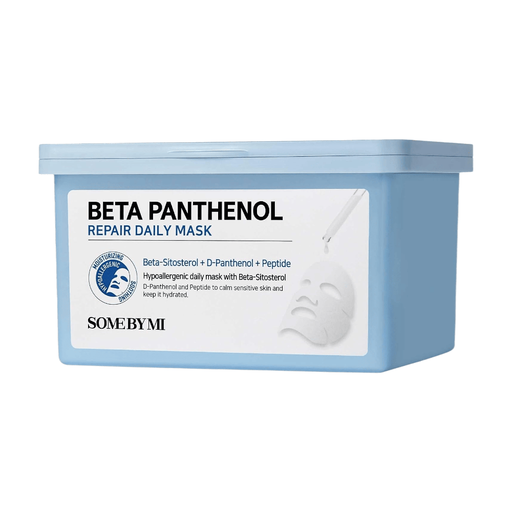
Why it suits this profile: The pack contains 30 individual sheets. This suits users who want to build a regular daily or frequent skincare ritual into their routine.
The instructions specify an application time of 10 to 20 minutes and recommend a patch test, so daily use is not confused with leaving the mask on for longer.
30 sheets, panthenol in the formula and several forms of hyaluronic acid according to the listed ingredients.
We have put together a complete, up-to-date list of products that fully meet these strict selection criteria and the applicable European safety regulations.
Do not use a mask on damaged or irritated skin. If a product contains fruit acids, such as citric acid, your skin may be more sensitive to sunlight. During the day, therefore, use sun protection in accordance with the manufacturer's instructions.
This depends on the formula and the instructions. A simple sheet mask, for example, may be used several times a week. An intensive hydrogel mask or a product containing active ingredients may be better suited to use once or twice a week. Always check the packaging and pay attention to how your skin reacts.
It can be, but check the ingredients first. Ideally, choose a formula without unnecessarily high levels of fragrance and carry out a patch test. Product descriptions may state that a mask is suitable for sensitive skin, but this does not guarantee that everyone will tolerate the product well.
A hydrogel mask is a moist mask that you place on your face as a sheet and remove after the recommended time. An overnight face mask is usually a gel- or cream-like layer applied as the final step of your evening routine. One product may therefore be left on for several hours, while the other is specifically designed for use overnight.
