
Vandaag of morgen in huis

Kwaliteit gegarandeerd

Welkomstaanbiedingen ontgrendelen: GRATIS bezorging | Tot 80% korting | Gratis 30 dagen JoyPlus-proefperiode
Download de app
A hydrating face mask might seem simple to choose: pick a nice-looking package, look for words like “glow” or “collagen”, and you’re done. In reality, sheet masks, hydrogel face masks and sleeping masks differ greatly in how they’re used, their ingredients and how long you wear them. A wrong choice can therefore cost you money without the product fitting comfortably into your routine.
Words like “anti-ageing”, “firming”, “glass skin” and “intense hydration” sound appealing, but they don’t automatically tell you what your skin actually needs. Always check the ingredients list, the usage advice and the evidence behind the claims.
When a brand talks about clinical results, look at the test group and conditions mentioned. For example, the Peptide Collagen Brightening Water Gel Mask states that, according to a clinical test by the brand, 20 women reported firmer and more radiant skin. That’s information from a limited test group and no guarantee for every skin type.
A sheet mask or hydrogel face mask is usually intended for a specific duration. Leaving it on longer isn’t automatically better. Some hydrogel masks can be worn for two to three hours or left on overnight, according to the product information. A classic sheet mask, such as the Hadabisei 3D Mask, should not be left on for too long according to the instructions and is not designed for sleeping in.
A face mask with hyaluronic acid can help bind moisture to the skin, but the overall formula determines how the product feels. Glycerine, panthenol, ceramides, squalane and occlusive ingredients can also be relevant. For dry skin, a formula with only a watery essence may feel less comfortable than a sleeping mask with a gel or cream base.
Also pay attention to the fit. A pre-shaped 3D sheet mask can sit differently around the nose, cheeks and eyes compared to a flat mask. With the Hadabisei 3D Mask, the sheet is formed into a three-dimensional shape according to the product description.
For a hydrating mask for dry skin, humectants such as hyaluronic acid, glycerine and betaine are relevant ingredients to look for. If you mainly want to support the skin barrier, look for ceramide NP, other ceramides, cholesterol and panthenol.
A collagen face mask can make the skin feel temporarily supple or fuller. That doesn’t automatically mean a cosmetic mask will structurally change collagen production. Product descriptions mentioning PDRN, peptides or collagen should therefore be read as cosmetic product information, not as a medical promise.
For a face mask for sensitive skin, a patch test and a short initial wear time are sensible. Also check for fragrance, essential oils and any ingredients you’ve reacted to before.
Don’t compare only the price per pack; also consider the number of masks and the amount of essence per piece. A box of five individual masks can be more practical for weekly use; a pot of sleeping mask may be better value if you regularly apply a thin layer.
Individual sheet and hydrogel masks are single-use. Use an opened mask straight away and store unopened packs according to the label, away from sunlight and extreme temperatures.
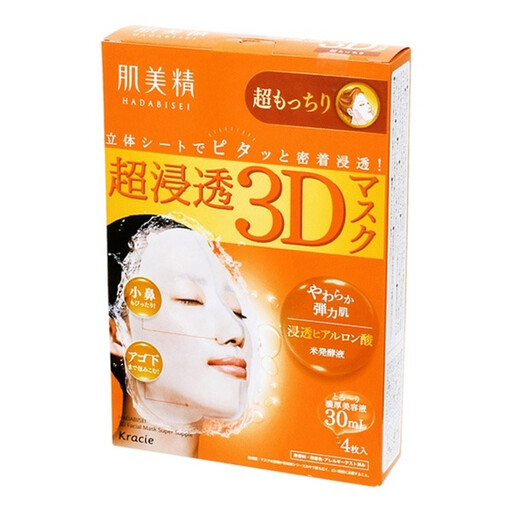
Why this fits the profile: A straightforward set of four 3D sheet masks for anyone wanting to try a face mask with hyaluronic acid for the first time.
The packaging states the number of pieces and 30 ml per mask. The instructions also clearly indicate that the mask should not be left on for too long.
Four individual masks, a 3D shape and a formula with low- and high-molecular-weight hyaluronic acid according to the product description.

Why this fits the profile: A hydrogel face mask for those who pay attention not only to hydration but also to ceramides, panthenol and the composition of the formula.
The wear time is clearly described: overnight or during the day for three to four hours, until the mask becomes transparent. Always check the label, though.
Four hydrogel masks of 34 g each with hyaluronic acid, panthenol and multiple ceramides according to the ingredients list.
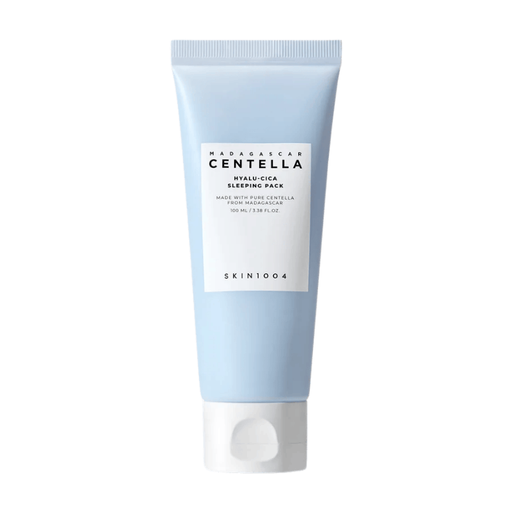
Why this fits the profile: A sleeping mask for those who don’t want to apply a loose sheet and prefer a thin gel layer in their evening routine.
The gel is applied as a thin layer and, according to the product information, does not need to be rinsed off. This makes the routine clearer than with a sheet mask.
30 ml in a tube, intended for overnight use, with hyaluronic acid, centella, panthenol and ceramide NP in the ingredients list.
We’ve put together a full, up-to-date list of products that fully meet these strict selection criteria and comply with current European safety regulations.
For a face mask for sensitive skin, a patch test is sensible, especially with formulas containing lots of plant extracts, fragrance or active ingredients. Do not use the product on damaged, irritated skin or eczema patches.
That depends on the type and the instructions. A sheet mask, for example, can be used one to several times a week. For some hydrogel masks, the product information recommends once or twice a week. A sleeping mask can be part of a regular evening routine, as long as your skin tolerates the product well.
It can be, especially when the formula contains humectants such as glycerine or hyaluronic acid. For dry skin, it’s also useful to look for soothing and barrier-supporting ingredients, such as ceramides and panthenol. The fit and wear time also determine how practical the mask is for you.
A glow face mask usually refers to the desired appearance: a fresh or radiant look. A hydrating mask focuses on moisturising care according to the product description. The terms can overlap, but always check the ingredients, wear time and safety information rather than just the name.
