
Vandaag of morgen in huis

Kwaliteit gegarandeerd

Welkomstaanbiedingen ontgrendelen: GRATIS bezorging | Tot 80% korting | Gratis 30 dagen JoyPlus-proefperiode
Download de app
A hydrating face mask can be a practical addition to your skincare routine when your skin feels tight, dry or lacking in moisture. However, you do not automatically get a better formula simply because the packaging uses words such as “deep”, “glass skin” or “intensive”. The mask’s structure, ingredients list and recommended wear time have a much greater influence on whether a product suits your routine.
Words such as “restoring”, “rejuvenating” or “pore-minimising” may sound appealing, but they are not always clearly substantiated. A brand’s own research may report certain results, but that does not automatically make them predictable for everyone. So first look for verifiable information:
A common mistake is to leave a sheet mask on your face until it has completely dried out. This can feel uncomfortable and is not in line with the usage instructions for many products. An ordinary sheet mask is often removed after 10 to 20 minutes. A hydrogel mask, on the other hand, may be worn for several hours, but only when the packaging specifically says so.
A hyaluronic acid mask is not the same as every other hydrating mask. Hyaluronic acid comes in several forms, and the overall formula determines how the product feels on your skin. For dry skin, glycerine, panthenol, ceramides and other moisture-binding ingredients may also be relevant. If you have sensitive skin, also check whether the ingredients list contains fragrance, plant extracts or alcohol.
A sheet mask usually consists of a fibre or cellulose sheet saturated with serum. It is convenient for a short skincare routine and is often available in larger packs. A hydrogel face mask has a gel-like texture that can fit closely against the face. Some varieties become more transparent the longer they are worn.
Pay attention to the fit around the nose, eyes and mouth. A 3D or pre-shaped sheet, such as the Hadabisei mask, may fit more closely than a flat sheet. The fit does not guarantee a particular result for your skin, but it can prevent areas of the face from being left dry.
Do not just look for “collagen face mask” on the front. Check the full composition. Common ingredients in the selected products include:
Compare the number of pieces and the amount of essence per mask. A box with four masks is not automatically better value than a box with ten; divide the purchase price by the number of individual applications. Also check whether a product is intended for single use. Most sheet and hydrogel masks should not be reused.
Store unopened masks according to the packaging instructions, away from direct sunlight and extreme temperatures. The best-before or expiry date is shown on the product or packaging.
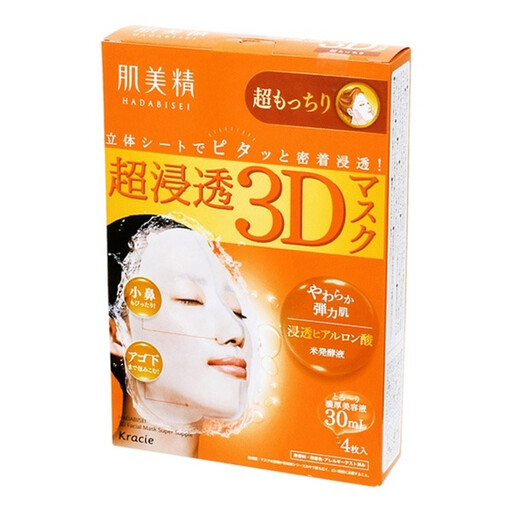
Why it suits this profile: The box contains four pre-shaped 3D sheet masks, each with 30 ml of essence. This makes it an easy-to-manage choice if you want to try a Korean face mask routine or intensive skincare without buying a large multipack straight away.
The product information clearly states that there are four masks, with 30 ml per mask, and that they should be used after cleansing and toner. This helps you estimate the cost and wear time more accurately, rather than relying solely on a claim on the front of the packaging.
Hyaluronic acid in the formula, a pre-shaped 3D sheet and production in Japan, according to the product information.

Why it suits this profile: This hydrogel face mask is designed for a longer skincare session. The instructions specify three to four hours during the day or overnight use, making it suitable for a planned weekly routine.
The recommended wear time is clearly stated, making it distinctly different from a short-use sheet mask. Do not leave it on for longer than indicated and do not apply it to damaged or irritated skin.
Four 34 g masks; the ingredients list includes hydrolysed hyaluronic acid, panthenol and several ceramides.
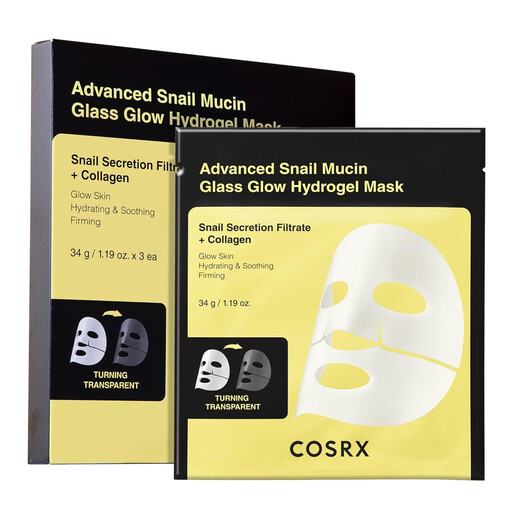
Why it suits this profile: The set contains three 55 ml hydrogel masks and is designed for two to three hours of use or overnight application, according to the product instructions. This suits users who plan to spend longer enjoying a mask treatment.
The packaging mentions a patch test and a fixed wear time. The transparent finish is a product feature, not evidence of a guaranteed result for your skin.
According to the ingredients list, the formula contains snail secretion filtrate, hyaluronic acid, panthenol, niacinamide and ceramides.
We have put together a complete, up-to-date list of products that fully meet these strict selection criteria and the applicable European safety regulations.
That depends on the formula and the packaging. Many sheet masks are suitable for use once or a few times a week. Intensive hydrogel masks are often used once or twice a week. Always follow the manufacturer’s instructions and pay attention to how your skin reacts.
According to their product information, some products are marketed as a face mask for all skin types, but this does not mean that every skin type will tolerate the same ingredients. Fragrance, plant extracts and certain preservatives may cause irritation for some users. A patch test is advisable, especially if you have sensitive skin.
A collagen face mask contains collagen or hydrolysed collagen as part of the formula. A hyaluronic acid mask focuses on formulas containing one or more forms of hyaluronic acid. Both types can leave your skin feeling temporarily hydrated and smooth. Compare the full ingredients list, amount per mask and wear time rather than looking only at the name on the packaging.
