
Same-day & Next-day Delivery

Quality Guaranteed

Unlock Your Welcome Offers: FREE Delivery | Up to 80% OFF | Free 30-day JoyPlus trial
Download the APP
A hydrating cream with hyaluronic acid sounds straightforward, but the range varies considerably. A lightweight gel cream for oily skin has different properties from a rich moisturiser for dry skin. A body milk is not automatically suitable for the face either.
If you focus only on a claim such as “72-hour hydration” or “deep action”, you may end up buying a product that feels sticky, evaporates quickly or simply does not feel comfortable on your skin. Use these practical selection tips to compare a facial cream with hyaluronic acid based on your skin type, texture and ingredients.
Brands sometimes state a specific number of hours of hydration. Such a claim may have been established under particular conditions, based on the brand’s own research or clinical data. That does not mean every skin type will have the same experience. So pay attention to the rest of the formula too: glycerine, oils, ceramides and silicones can help lock in moisture and leave your skin feeling comfortable.
Hyaluronic acid works as a moisture-binding ingredient. In ingredient lists, you may see it listed as Sodium Hyaluronate, Hydrolyzed Hyaluronic Acid or another form of hyaluronate. For lasting comfort, a combination of humectant, emollient and occlusive ingredients is often needed as well. If you have dry skin, also look for ingredients such as ceramides, panthenol, shea butter, squalane or plant oils.
A gel cream generally absorbs quickly and feels lightweight. This can be pleasant for combination or oily skin, but a richer cream may be a better fit for very dry skin. Conversely, a rich cream can feel heavy or look shiny on oily skin. So choose your preferred texture first, and the brand afterwards.
Check whether the product is intended for the face, the body or both. A hydrating body milk such as NIVEA Caring Body Milk is designed for dry to very dry body skin. A facial cream usually has a different texture and is applied in smaller amounts.
For facial skin, you can broadly look for the following characteristics:
A product described as suitable for sensitive skin is not automatically problem-free for everyone. Always check the packaging and, if in doubt, carry out a patch test.
A moisture-barrier cream often contains more than just hyaluronic acid. Ceramide NP, cholesterol, panthenol, beta-glucan, squalane and glycerine are examples of ingredients found in various formulas.
Also pay attention to potential points of concern:
Ingredients are generally listed in descending order. However, the exact concentration cannot always be determined from the INCI list.
A pump bottle is practical and limits contact with the contents. A jar can be convenient for a rich night cream, but use clean hands when applying it. Also check the volume: 30 or 50 ml is common for a facial cream, while a body milk often contains 250 or 400 ml.
Apply a hydrating facial cream to cleansed skin. During the day, sunscreen may form part of your routine. A night cream with hyaluronic acid can generally be richer, as a matte finish under make-up is less important at night.
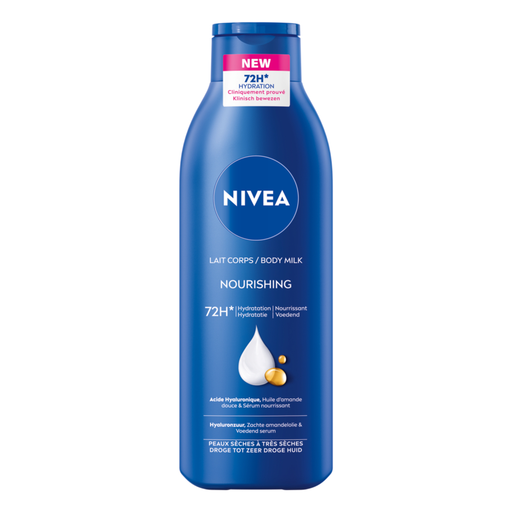
Why it suits this profile: A straightforward choice for anyone mainly looking to care for dry body skin and seeking a lightweight body milk that absorbs quickly. The pack contains 250 ml.
The product description mentions a non-greasy formula and quick absorption. It is clearly intended for the body, so you will not accidentally buy it as a facial cream.
According to the product information, it contains sodium hyaluronate, glycerine and almond oil. Please note: the ingredient list includes perfume and fragrance ingredients.
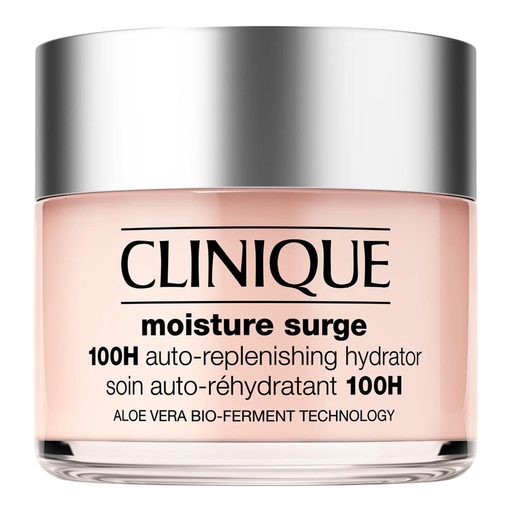
Why it suits this profile: Suitable for anyone looking for an oil-free gel cream that can be used both during the day and in the evening, and is also described as suitable for use as a short-contact mask.
The gel cream is oil-free and the product information states that the formula is suitable for use under make-up. The claims of 100-hour hydration and a 174% moisture boost come from Clinique and should be understood as brand results.
Available in 125 ml and described as suitable for dry, combination and sensitive skin. Check the current ingredient information on the packaging before buying.
We have put together a complete, up-to-date list of products that fully meet these strict selection criteria and the applicable European safety regulations.
It can be, particularly when the cream also contains glycerine, oils, panthenol or ceramides alongside hyaluronic acid. Apply the cream according to the directions for use and pay attention to how your skin reacts. A richer formula may feel more comfortable on dry skin than a very lightweight gel.
Many products are intended for daily use in the morning and evening. However, always check the specific instructions. If the formula contains perfume, salicylic acid or numerous plant extracts, take extra care if your skin is prone to sensitivity.
Check the expiry date and the period-after-opening symbol on the packaging. Some products, for example, state that they should be used within 6 or 24 months of opening. Keep the cream closed, cool and out of direct sunlight. Has the fragrance, colour or texture changed? Stop using the product.
