
Vandaag of morgen in huis

Kwaliteit gegarandeerd

Welkomstaanbiedingen ontgrendelen: GRATIS bezorging | Tot 80% korting | Gratis 30 dagen JoyPlus-proefperiode
Download de app
Dry indoor air can feel particularly uncomfortable in winter. A humidifier can help increase the humidity in a room, but not every model is right for every home. A compact USB humidifier, for example, isn’t designed for a living room, while a large appliance can take up unnecessary space in a small bedroom.
Be wary of marketing claims, too. A long run time usually applies only on a low mist setting. And a model with an aroma function isn’t automatically suitable for a nursery. The right choice depends on room size, noise level, maintenance and how you plan to use the appliance.
A 5 or 6-litre tank sounds practical, but the actual run time depends on the mist output. On a high setting, the tank will empty more quickly. So always check both the tank capacity and the stated humidification output in millilitres per hour.
A quiet humidifier may suit light sleepers, but check whether the stated decibel level specifically applies to sleep mode. Manufacturers sometimes use different testing conditions. A model with a dedicated night mode, dimmable lights and automatic shut-off is more practical in a bedroom.
Micro-organisms can grow in stagnant water. That’s why the manufacturers of several models recommend changing the water regularly and keeping the tank clean and dry. Always follow the instructions. A humidifier that’s difficult to clean may be less suitable for everyday use.
An ultrasonic humidifier uses vibrations to turn water into a fine mist. These models are generally quiet and often compact. Clean water is preferable, and you should keep an eye out for limescale. An alternative is an evaporative model, such as the Xiaomi Smart Evaporative Humidifier Pro. According to the product specifications, this model has an output of 600 ml per hour and a 5-litre tank.
Don’t rely solely on a claimed coverage area in square metres. The room layout, ceiling height, ventilation and outdoor temperature all affect performance. A lower output is often enough for a bedroom or home office; a humidifier for large rooms needs greater capacity and good mist distribution.
For a bedroom humidifier, useful features include sleep mode, a timer and automatic shut-off. Models with a stated noise level of around 20 to 30 dB may appeal to light sleepers, but check whether that figure applies to the quiet setting.
A night light is an extra feature, not a technical necessity. Choose a model where you can turn the light off completely. For a nursery humidifier, a stable surface, child-safe positioning and easy cleaning are also more important than mood lighting or fragrance.
A top-fill humidifier may be easier to refill than a model where you have to turn the tank upside down. Check the opening, too: a wide opening makes cleaning easier. Also see whether the parts can be removed and whether a cleaning brush is included.
Aromatherapy should only be used in the designated dish or tray. Don’t add essential oils to the water tank unless the manufacturer explicitly says it’s safe to do so. The design of a humidifier with an aroma diffuser varies from model to model.
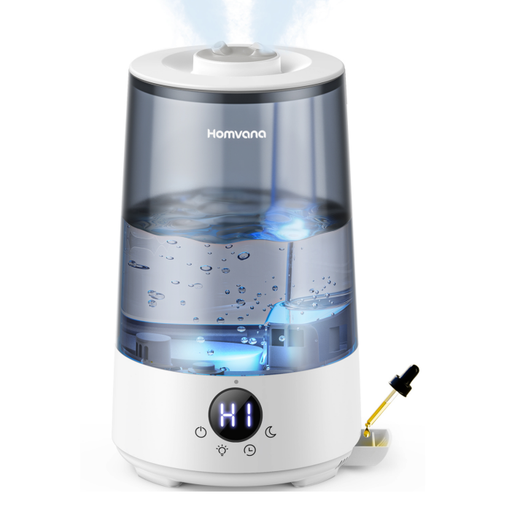
Why it suits this type of buyer: This model combines a top-fill tank with timer settings, an aroma tray and night lighting. According to the product specifications, the noise level on the quiet setting is 16 dB, and the stated run time is up to 34 hours in sleep mode.
The stated run time is linked to different settings, making it easier to see that the high setting has a different run time from sleep mode.
3.6-litre capacity, five timer options, top-fill design and a separate aroma tray.
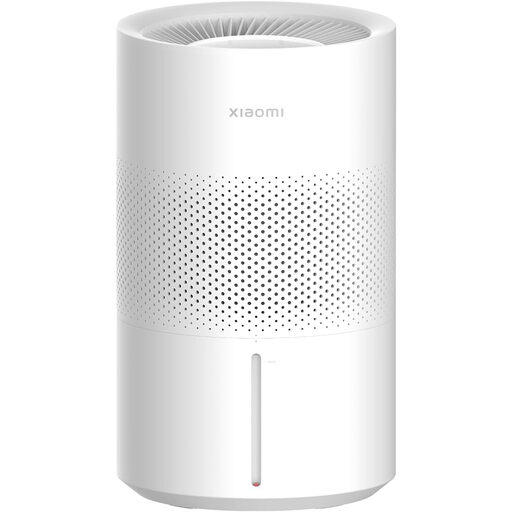
Why it suits this type of buyer: Its evaporative technology, 5-litre tank and stated output of 600 ml per hour make it a good fit for users who prioritise capacity and automatic operation.
You’re not choosing this model based on a large tank alone: its stated humidification output and evaporative system are listed separately.
5-litre capacity, 600 ml/h output and a stated maximum noise level of 55 dB(A).
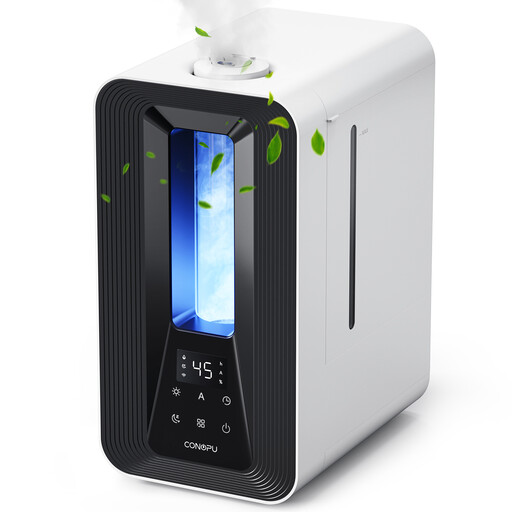
Why it suits this type of buyer: The built-in humidistat, automatic mode, 5-litre tank and timer are practical for users who don’t want to keep adjusting the humidity manually.
The automatic control means you don’t have to rely on guesswork alone. Just clean the appliance regularly and keep an eye on the room’s humidity.
Automatic control between 40% and 80%, according to the product description, plus a 24-hour timer, aroma tray and night mode.
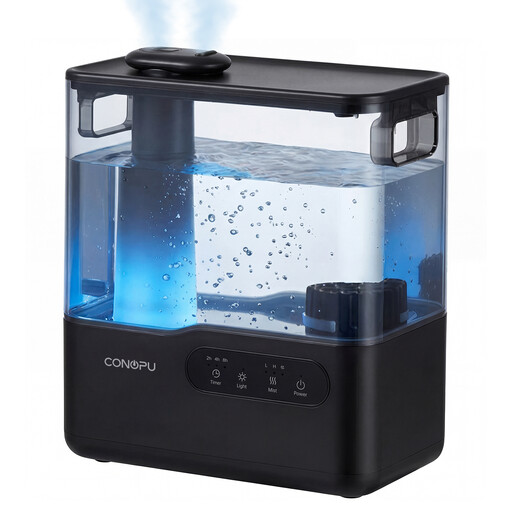
Why it suits this type of buyer: The 5-litre tank, dual 360° nozzles and carry handles are designed for extended use in a living room, office or larger bedroom.
The dual outlet helps distribute the mist in different directions. You’ll still need to position the appliance away from walls, furniture and electronics.
Top-fill design, 5-litre capacity, 2/4/8-hour timer, automatic shut-off and aroma tray.
We’ve put together a complete, up-to-date list of products that meet these strict selection criteria and comply with current European safety regulations.
Place your humidifier on a flat, stable and water-resistant surface. Don’t position it right next to electronics, wooden furniture or textiles that could get damp. Only fill or clean the model when it’s unplugged.
In a nursery, don’t use essential oils without first checking that the product and its surroundings are suitable for them. A humidifier isn’t a substitute for ventilation. Continue to air the room as usual and avoid letting the humidity get too high.
Follow the instructions for your chosen model. Several manufacturers recommend changing the water regularly, often at least every two to three days. Empty the tank when you’re not using the appliance and allow the parts to dry thoroughly.
That depends on its power consumption, the mist setting you choose and how long you use it. A 20 to 30-watt model uses less electricity when running continuously than an appliance with a warm mist function. A timer and automatic mode can help limit unnecessary run time.
Its lifespan depends mainly on daily maintenance, water quality and the quality of replaceable parts such as filters. Clean the tank according to the instructions, remove limescale promptly and don’t use any unauthorised additives.
