
Vandaag of morgen in huis

Kwaliteit gegarandeerd

Welkomstaanbiedingen ontgrendelen: GRATIS bezorging | Tot 80% korting | Gratis 30 dagen JoyPlus-proefperiode
Download de app
Dry indoor air can be particularly noticeable in heated rooms. A humidifier can help you manage humidity levels, but not every model is right for every home. Putting a small unit in a large living room, leaving water in the tank for too long or choosing based on a low noise rating alone can often lead to disappointment.
This buying guide explains what to look for and which models suit different needs.
A 5- or 6-litre tank sounds appealing, but running time also depends on mist output. A higher output in millilitres per hour can use up the water more quickly. Always check the combination of tank capacity, humidification output and stated running time.
Also consider how the tank is filled. A top-fill humidifier is generally easier to top up every day, as you don’t need to remove the tank completely.
Brands sometimes list only the lowest noise level, for example in sleep mode. The standard setting may be louder. Check that the stated noise level applies to the mode you intend to use, and see whether the unit has a dimmable display or night mode. This is particularly important for a bedroom or nursery humidifier.
Water tanks need to be emptied and cleaned regularly. Standing water can become contaminated, and limescale can damage components. Always follow the instructions and check whether filters, wicks or other parts are available. In practice, a model that’s easy to clean is more useful than one with lots of hard-to-reach corners.
Also, never add essential oils to the water tank unless the instructions explicitly say you can. Some units have a separate aroma compartment or aroma pad for this purpose. Other models, such as the Beurer LB 300 Plus, specifically state that additives such as essential oils must not be used.
An ultrasonic humidifier uses vibrations to turn water into a fine mist. These models are often compact and use little energy. However, mineral deposits can build up if you have hard tap water. Check what water quality the manufacturer recommends and clean the unit regularly.
An evaporative model, such as the Xiaomi Smart Evaporative Humidifier Pro, uses an evaporation mechanism rather than producing visible mist. According to the product specifications, this model has a 5-litre tank and a humidification output of 600 ml per hour. The manufacturer states that its noise level is up to 55 dB(A). For this type of humidifier, also check the cost and availability of replacement filters.
Warm mist can be useful in some situations, but requires extra care with safety. Luxaid’s warm-mist models state that the mist outlet reaches a higher temperature. Keep this type of unit out of children’s reach and follow the safety instructions carefully.
Use the stated room coverage as a guide, not a guarantee for every home. Open doors, high ceilings and poor air circulation can all affect performance.
A humidifier for large rooms needs more than just a large tank. A rotating outlet, double nozzle or 360° distribution can help spread moisture more evenly.
A humidifier with a hygrometer measures relative humidity. An automatic mode can then adjust the output to reach a set level, so the unit doesn’t keep humidifying unnecessarily. A timer, for example from 1 to 9 hours, is useful if you only want to use the unit while you sleep.
Smart models sometimes offer app control, scheduling and voice control. This can be convenient, but check in advance that the app is compatible with your smartphone and whether you’ll need a stable Wi-Fi connection.
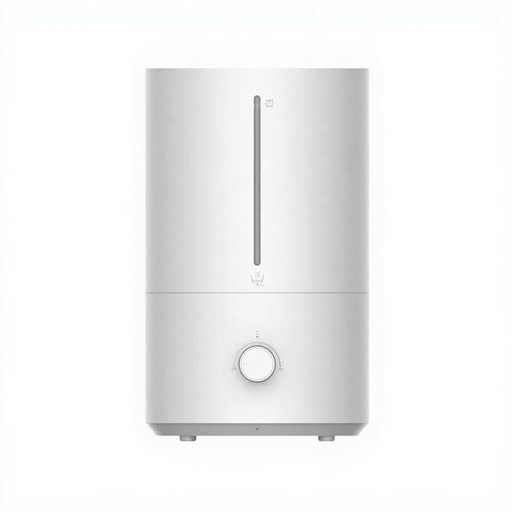
Why it suits this profile: A straightforward model for anyone looking for a basic option for a bedroom, home office or smaller living room.
The product specifications list a 4-litre tank, an output of up to 300 ml per hour and a noise level of up to 38 dB(A), making it easy to compare capacity and noise.
A 4-litre tank, a humidification output of 300 ml/h and a compact design. The manufacturer advises changing the water at least every 3 days and cleaning the tank.
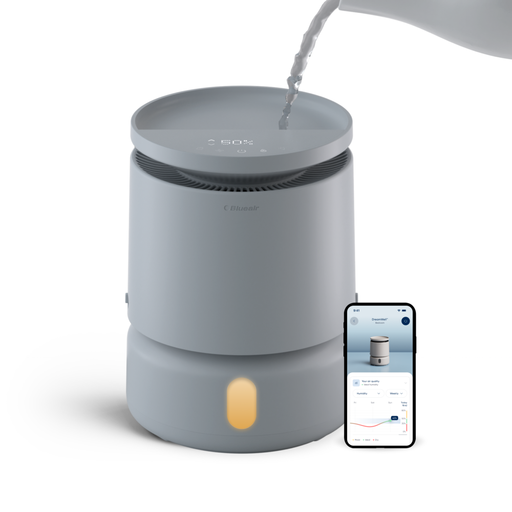
Why it suits this profile: Designed for people who value quiet operation, app control and fuss-free filling and cleaning.
The product description says the tank can be filled from the top or removed for filling, is dishwasher-safe, and has a washable filter. The product specifications state a noise level of 20 dBA.
A tank of around 3.8 litres, with up to 48 hours of use according to the manufacturer, plus app control, scheduling and a separate aroma pad.
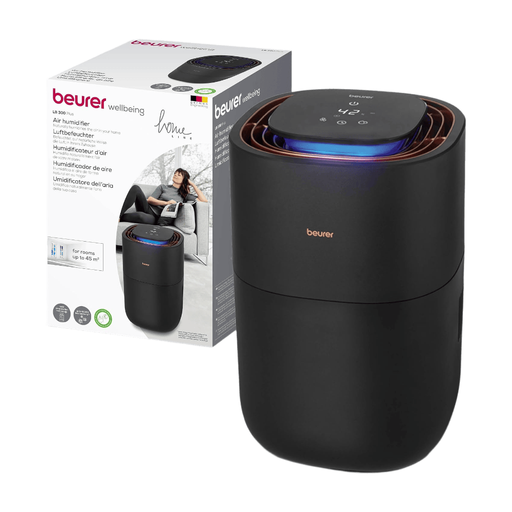
Why it suits this profile: A good option for anyone who values automatic humidity control and clear maintenance information.
According to the product specifications, the automatic mode continuously measures humidity. You can choose settings of 40%, 50% or 60%, and set a timer from 1 to 9 hours.
Cool evaporation technology, a 3-litre tank, a stated output of up to 300 ml/h and coverage of up to 45 m². According to the instructions, the recommended replacement interval for the filter is 6 months.
We’ve put together a complete, up-to-date list of products that meet these strict selection criteria and the applicable European safety regulations.
Many consumers aim for a relative humidity of around 40% to 60%. Use a hygrometer to check the level and adjust the setting to suit the room. Condensation on windows or damp surfaces is a sign to lower the output and improve ventilation.
This varies depending on the model and water quality. Empty the tank regularly, rinse the components as instructed and remove limescale when necessary. If your model has a filter or aroma pad, check the recommended replacement interval too.
Energy use depends on the wattage, setting and how long you use the unit. A timer and automatic mode can help prevent unnecessarily long use. Compare the stated wattage, but bear in mind that a warm-mist function may use more power than a cool-mist or evaporative model.
