
Vandaag of morgen in huis

Kwaliteit gegarandeerd

Welkomstaanbiedingen ontgrendelen: GRATIS bezorging | Tot 80% korting | Gratis 30 dagen JoyPlus-proefperiode
Download de app
Konjac jelly is popular as a drinkable jelly snack: compact, fruity and easy to take to work, school or enjoy on the go. However, attractive packaging does not tell you everything. If you only consider flavour or a low calorie claim, you may choose a product that does not suit your diet, preferred portion size or intended occasion.
Many packs show nutritional values per 100 ml or 100 grams. So a 120 or 150 ml pouch does not automatically contain exactly that amount. Calculate the actual portion before comparing products.
Examples:
Konjac jelly in mango, lychee, peach or watermelon flavour may consist of a combination of water, konjac powder, acidity regulators, flavourings, sweeteners and a small amount of fruit concentrate. So check the ingredients list. For example, Jelly B Konjac Jelly Mango lists concentrated mango juice alongside mango flavouring. This provides information about the composition, but does not mean that the jelly is mainly made from mango.
Terms such as vegan konjac jelly or halal konjac jelly should be verifiable through the product information, certification or ingredients list. Also look out for differences between similar variants. Keumkang’s Yogurt variant contains, among other ingredients, milk powder and whey, so it is not suitable for a vegan diet. Product information may also vary between flavours.
The most common individual portion in this range is 150 ml. That is convenient for a quick snack, but a multipack is more practical if you want to keep several portions in stock. Keumkang Jelly B Konjac Jelly Watermelon comes as 10 × 150 ml. The DELIEF variants are available as 10 × 120 g.
So compare the price not only per pack, but also per pouch. A multipack may offer better value per portion, while individual pouches are ideal if you want to try a flavour first.
At a minimum, check:
A low-calorie snack may still contain sweeteners. If you are sensitive to certain sweeteners, it is wise to read the full ingredients list.
For vegans and vegetarians, the DELIEF Vegan Collagen Konjac Jelly variants are worth considering. According to the product information provided, DELIEF uses plant-based collagen made from root vegetables. The Lychee multipack is listed as vegan and halal. Halal certification is listed for the Mango variant, which is also described as “gluten-free” in the product information.
Always check the current packaging. Here, “vegan collagen” refers to a plant-based collagen-like composition, not animal collagen. If you have allergies, it is still important to check the cross-contamination warning and the 14 main EU allergens.
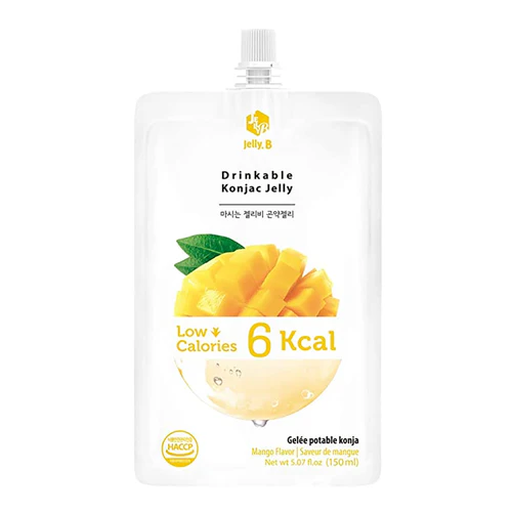
Why it suits this profile: A single 150 ml pouch is ideal for trying a fruity Korean snack without committing to a multipack.
The product information states the 150 ml volume and nutritional values per 100 ml, allowing you to calculate the portion yourself.
Mango flavour, 150 ml per pouch, made in South Korea and, according to the product information, halal-certified and gluten-free.
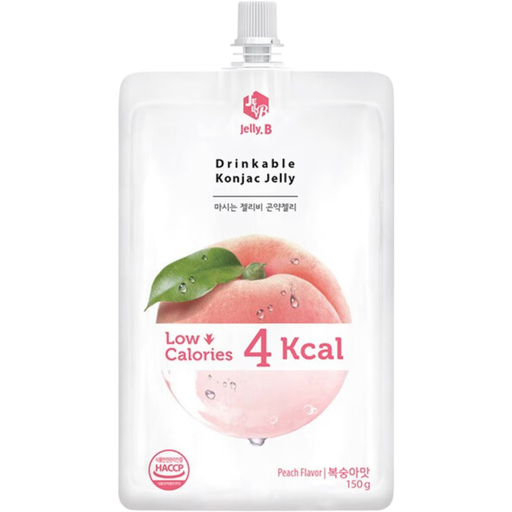
Why it suits this profile: This pouch combines a fruity flavour with clear nutritional and ingredients information for shoppers who compare labels carefully.
The packaging states 150 ml per pouch, 10 kcal per 100 ml, as well as information about sweeteners and allergens.
Portable format, pear/peach flavour according to the product presentation, with none of the 14 main EU allergens listed.
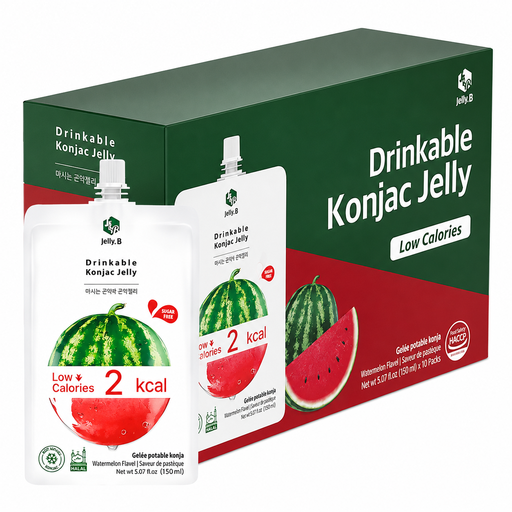
Why it suits this profile: The 10-pouch format is well suited to households or snack occasions where you want a portion readily available on a regular basis.
You can see both the total number of pouches and the portion size in advance. The nutritional value is stated per 100 grams, not per multipack.
10 × 150 ml, watermelon flavour and, according to the stated nutritional information, 1.6 kcal per 100 grams.
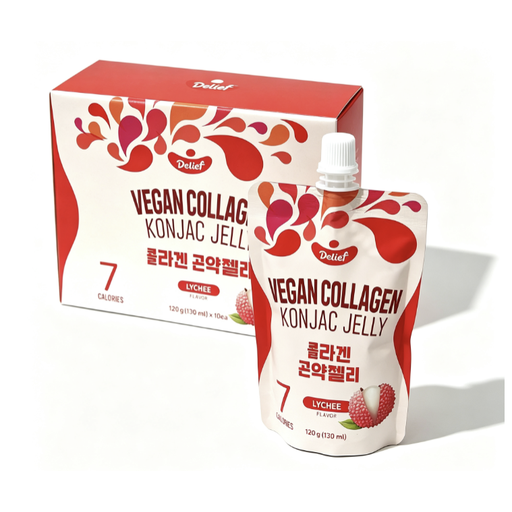
Why it suits this profile: This multipack is aimed at shoppers who want to combine vegan and halal requirements with a regular supply of fruity snack portions.
The product information explicitly states that it is vegan and halal and lists no allergens. Always check the packaging when your order arrives.
10 × 120 g, lychee flavour, 4 kcal per 100 g and a plant-based collagen-like composition according to the product description.
We have put together a complete, up-to-date list of products that fully meet these strict selection criteria and the applicable European safety regulations.
Store konjac jelly according to the instructions on the packaging, usually in a cool, dry place away from direct sunlight. Check the packaging for damage and look at the best-before date. Once opened, you should generally consume a pouch immediately; follow the brand’s specific instructions.
Drinkable jelly is convenient for enjoying on the go, but the texture varies from one recipe to another. If you prefer a firmer jelly, it is best to buy an individual pouch first. Some variants are best served chilled if you enjoy a fresher flavour and texture.
Many variants contain little energy per portion. The exact value varies by brand and flavour. For example, Jelly B Lychee states 3 kcal per 100 ml, while DELIEF Lychee states 4 kcal per 100 grams. Always check the nutritional value per 100 ml or 100 grams, as well as the pouch’s total contents.
The shelf life is shown on the packaging. For unopened pouches, it depends on the product and storage conditions. Once opened, store the jelly according to the instructions and generally consume it promptly. Do not use a pouch if the packaging is damaged.
Above all, compare portion size, energy, sugars, sweeteners, ingredients, allergen information and dietary suitability. Choose an individual pouch if you want to try flavours such as mango, lychee, watermelon or peach. A konjac jelly multipack makes more sense once you know which flavour suits you best.
