
Vandaag of morgen in huis

Kwaliteit gegarandeerd

Welkomstaanbiedingen ontgrendelen: GRATIS bezorging | Tot 80% korting | Gratis 30 dagen JoyPlus-proefperiode
Download de app
Picking up a bag of dog or cat treats might seem simple. However, products can vary widely in their composition, moisture content, texture and purpose. A treat for training needs to be different from a long-lasting chew for in-between meals. Similarly, a cat that doesn't drink much might benefit more from a moist treat than from dry kibble.
As a Joybuy Product Recommendation Officer, I filter product information to highlight the practical details. This helps you quickly see which dog and cat treats are right for your pet and avoid a purchase that ends up gathering dust in the cupboard.
Packaging often features large pictures of chicken, tuna or beef. That's why it's important to check the ingredients list. For example, Felix Crispies Cat Snack Beef & Chicken states that the product contains a minimum of 1% beef and 1% chicken. The base is made up of cereals, meat and animal derivatives, vegetable protein extracts, oils and fats.
This doesn't automatically make the treat unsuitable, but it's important to understand the difference between a product made “with chicken” and a treat where chicken is the main ingredient. With MeatyWay Chicken Tenders, chicken is listed as the only ingredient. The choice, therefore, depends on whether you prefer a simple or a composite recipe.
Some cat treats have a high moisture content. For instance, INABA Churu Cat Chicken lists 90.5% moisture, and INABA Fun Bites Cat Chicken Wraps Chicken with Pumpkin lists 93% moisture. This can be a practical way to add extra fluid to a reward or food topper.
However, fresh drinking water is still essential. These products are complementary foods and do not replace a complete meal or your pet's water supply. Also, be aware of the difference between a moist treat for cats and a soft treat for dogs: their composition and recommended portion sizes are not interchangeable.
Soft dog treats are useful during training because you can give them quickly and sometimes break them into smaller pieces. A hard chew stick, on the other hand, takes longer to eat. This doesn't mean that every chew is suitable for every dog.
For a product with a hard exterior, like the Pedigree Jumbone Mini, a specific target group is mentioned: adult small dogs up to 15 kg. The packaging also specifies a limited feeding frequency. So, don't choose based on size or flavour alone; always check the age, weight, and instructions on the label.
Most of the dog and cat treats in this range are complementary foods. They are intended as a reward, a snack, or a food topper, not as a replacement for a daily meal. An exception noted in the product information is complete dog food, such as Orijen Original Prey Dog Food.
As a practical guideline, treats should not make up more than about 10% of your pet's daily calorie intake. If necessary, reduce their main meal accordingly. For products with a stated energy content, also check the portion size: a single large treat can contain more calories than several small training treats for dogs.
The moisture percentage helps you distinguish a dry treat from a liquid or semi-moist one.
Also look at the crude protein, fat, crude fibre and ash. A grain-free dog treat isn't automatically low in calories. MeatyWay products state they have a grain-free recipe with chicken, but they still contain 5% fat. This means the total amount and daily portion size remain relevant.
A product might be suitable for all life stages, only for adult animals, or specifically for kittens. For example, Felix Double as Nice Junior is intended for kittens from 6 to 52 weeks old. Pedigree Jumbone Mini is aimed at adult small dogs.
Also, pay attention to feeding guidelines:
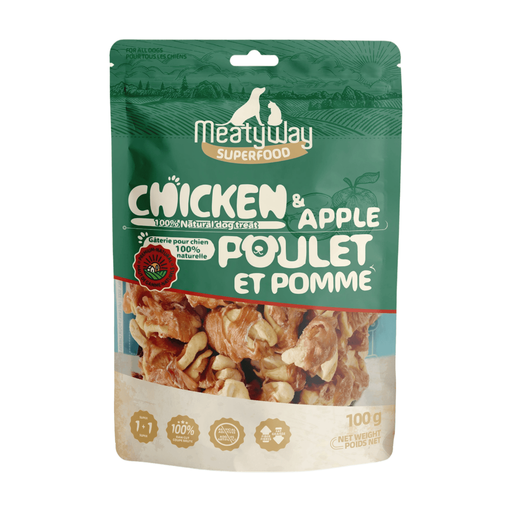
Why it's a good match: A 100 g bag with chicken and apple is straightforward for anyone comparing dog treats for the first time and looking for a simple format for daily rewards.
The product information lists chicken and apple as ingredients and states it's a grain-free recipe with no artificial additives, fillers or preservatives.
100 g contents; 20% crude protein; soft, chewy texture according to the product description.
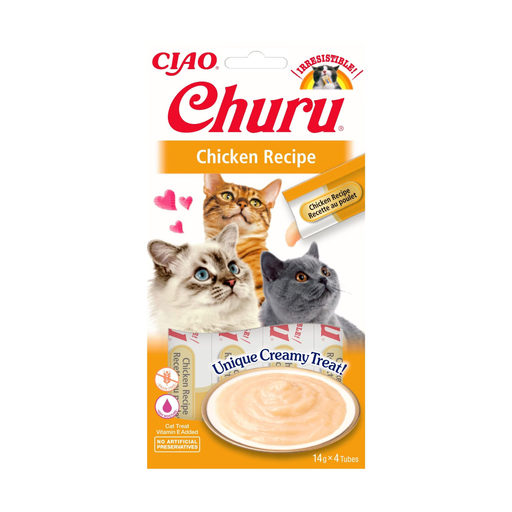
Why it's a good match: This soft cat treat is ideal for cat owners who want a high moisture content and a clearly defined portion per tube.
The 90.5% moisture content is clearly stated in the product details. The treat is labelled as a complementary food, so you won't confuse it with a complete meal.
6 calories per treat according to the product information; 90.5% moisture; can be used as a treat, topper or reward.
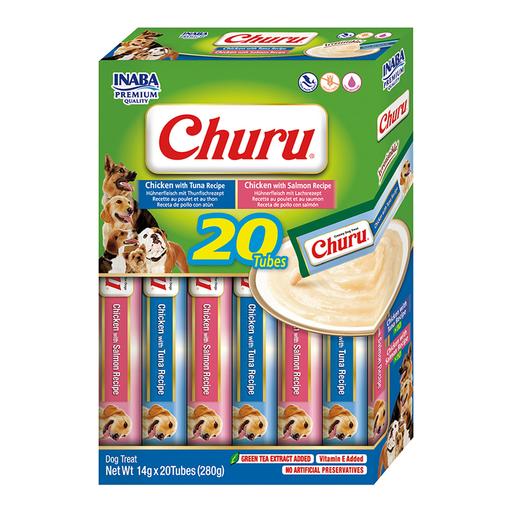
Why it's a good match: This multipack contains 20 x 12 g tubes and is practical for frequent training sessions, adding variety, or using as a food topper.
The dosage per tube is clearer than with loose, large treats. Once opened, the tube should be refrigerated and used within 24 hours.
240 g total weight; minimum 90% moisture; two chicken and seafood varieties; can be used as a reward or topper.
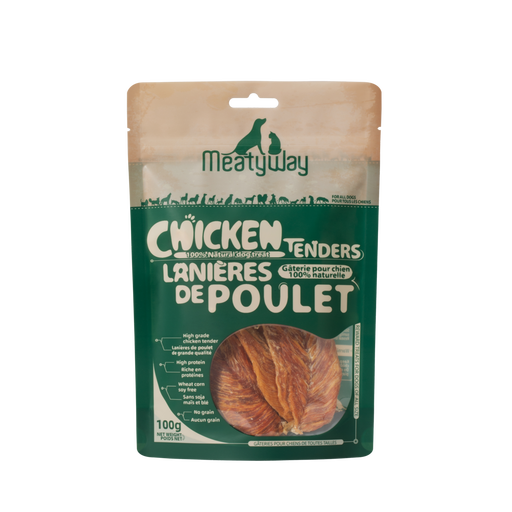
Why it's a good match: For dog owners who want the shortest possible ingredients list, this treat lists chicken as its only ingredient.
The product information mentions no grains, fillers or artificial additives. The moisture and fat content are listed separately, making comparison easier.
100% chicken according to the ingredients list; minimum 70% crude protein; can be broken into pieces for portion control.
We've put together a complete, up-to-date list of products that fully meet these strict selection criteria and comply with current European safety regulations.
Use the recommended amount on the packaging as a starting point and adjust their main meal accordingly. As a general guideline, treats should not make up more than about 10% of their daily calorie intake. Weight, age, activity level and body condition all make a difference.
Often, yes, because soft pieces can be eaten quickly and are usually easy to portion. Check if the manufacturer lists the product as a reward or training treat. Give small portions and always supervise your pet.
No. A product with 90% or more moisture can provide extra fluid through the treat, but fresh drinking water must always be available. Use hydrating cat treats as a complementary treat or topper, not as a replacement for complete food.
