
Vandaag of morgen in huis

Kwaliteit gegarandeerd

Welkomstaanbiedingen ontgrendelen: GRATIS bezorging | Tot 80% korting | Gratis 30 dagen JoyPlus-proefperiode
Download de app
A backpack may seem easy to choose, but the wrong details often only become apparent during everyday use. A bag may look spacious in a product photo, while books, clothes or a laptop barely fit inside sensibly. Terms such as “waterproof”, “ergonomic” and “durable” do not always mean what you might expect either.
So focus mainly on verifiable information: capacity in litres, dimensions, material, compartment layout, carrying adjustments and care instructions. This will help you find a backpack that suits how you use it in the UK, from commuting and school to cycling, fitness and walking.
A water-repellent backpack can help keep out light rain or splashes, but that does not automatically mean the contents will stay dry during prolonged rainfall. Check whether a rain cover, coated fabric or waterproof fastening is mentioned. A standard zip often remains a vulnerable point.
For everyday cycling, a separate rain cover can be practical. For a laptop backpack, a padded laptop compartment is also more important than a marketing claim about water resistance alone.
A 20-litre backpack, 24-litre backpack or 50-litre backpack may be suitable for entirely different purposes. The shape and compartment layout determine how much you can actually carry.
A large bag is not automatically more convenient. Unfilled space can cause items to move around and make the backpack feel heavier.
Thin shoulder straps, a back panel without ventilation and missing chest or hip straps can become impractical when the bag is full. Check whether the straps are adjustable and, where appropriate, padded. A stable fit is particularly relevant for a hiking backpack or cycling backpack.
A chest strap helps keep the shoulder straps in place. A hip belt can help distribute the load differently on larger models. The correct adjustment still depends on your build and how the bag is packed.
Do not look only at the capacity; consider the external dimensions too. For example, a 24-litre backpack may be too wide for a small locker. According to the product information, the Joma Training III has a capacity of 24.2 litres and dimensions of 48 × 35 × 24 cm. This provides room for sportswear, a towel and accessories, but it is larger than a compact gym bag.
For children, a 13-litre model such as the PUMA Phase Small Backpack is often easier to manage than an adult-sized design. Always check that the back length and shoulder straps are suitable for the user.
Polyester, nylon and Oxford fabric are widely used. Pay attention to the specific description:
According to the manufacturer's product description, the OutdoorMaster Snow Sport Travel Backpack is made from water-repellent recycled fabric and comes with a separate rain cover. This supports protection in wet weather, but it does not automatically make the bag completely waterproof. According to the product information, the vidaXL Military-Style Backpack uses coated Oxford fabric; always check the current product specifications before use.
A school backpack or laptop backpack should offer more than one large main compartment. Useful points to check include:
A drawstring backpack is generally simple and lightweight. According to its product name, the WhereHike Drawstring Backpack has a zipped pocket and is designed for sport, fitness, swimming and other short activities. For books or delicate electronics, a more structured model is usually more practical.
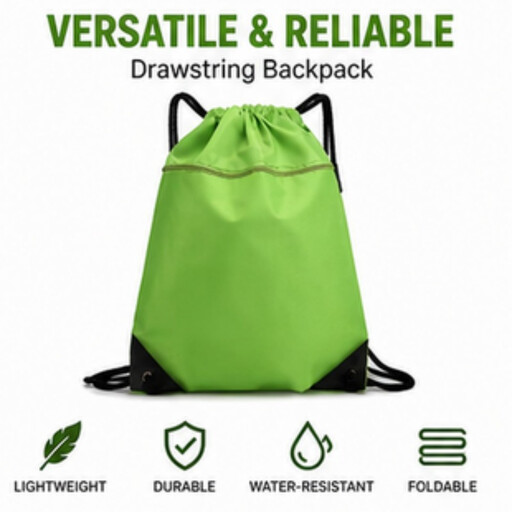
Why it suits this profile: A simple gym bag for sportswear, swimming gear or light everyday essentials, without the bulk of a large backpack.
The product name mentions a separate zipped pocket, so small items do not have to be left loose in the main compartment. Do check the dimensions before ordering.
Lightweight design, drawstring closure and zipped pocket according to the product listing; suitable for the gym, swimming and short trips.
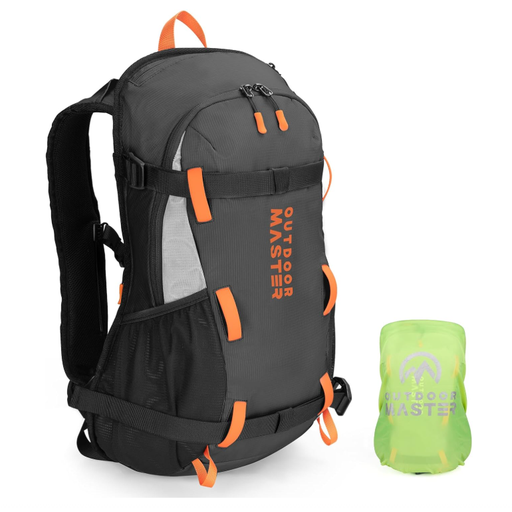
Why it suits this profile: Designed for outdoor enthusiasts who value compartments, attachment options and a stable carrying solution.
The capacity is specified as 18 litres and a separate rain cover is listed. This allows you to assess the capacity and rain protection more precisely than with a general claim.
3D ventilated back panel, adjustable chest strap and hip belt; compatible with a 2-litre water reservoir, which is not included.
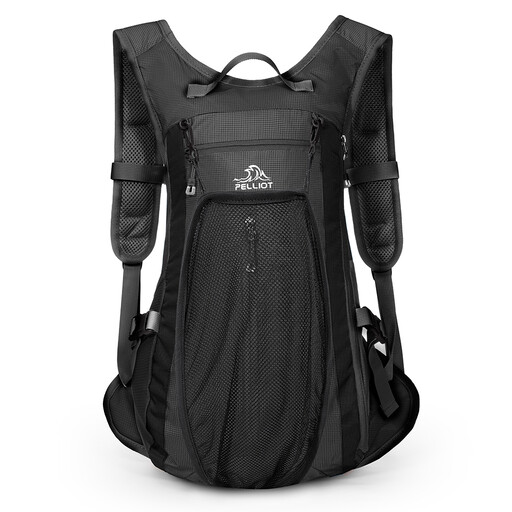
Why it suits this profile: The adjustable sizing and design for cycling and trail running suit users who are highly active and want a stable fit.
The product information specifies size ranges, an adjustable torso length and a capacity of 10–15 or 15–20 litres depending on the size. This makes comparison more practical than simply relying on “one size”.
Grid polyester according to the product description, multiple compartments and an ergonomic harness with breathable mesh lining.
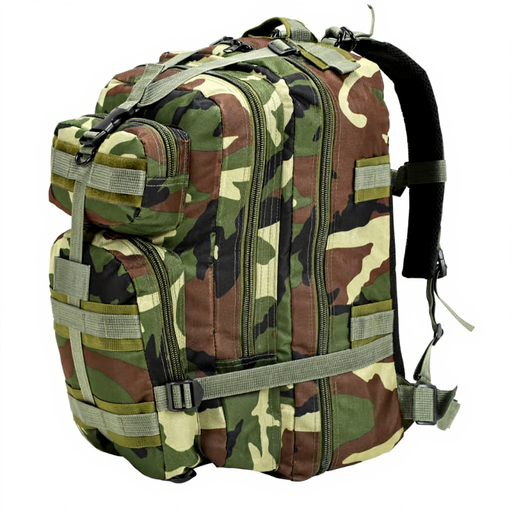
Why it suits this profile: A travel backpack for users who want to carry extra clothing, equipment or essentials on longer trips.
The product information states a capacity of 50 litres, four compartments and the dimensions. You can assess in advance whether this size suits your luggage and mode of transport.
Adjustable shoulder straps, chest strap and hip belt; the manufacturer describes the coated Oxford fabric as tear- and weather-resistant.
We have put together a complete, up-to-date list of products that fully meet these strict selection criteria and the applicable European safety regulations.
Adjust the shoulder straps so that the bag sits close against your back without feeling tight. Ideally, place heavy items close to the back panel. A laptop should go in a suitable protective compartment, not loose against hard objects.
Clean a backpack according to the manufacturer's instructions. Some models may only be cleaned with a damp cloth and left to air-dry. Do not automatically put a bag in the washing machine: coatings, padding and zips can be damaged as a result.
For many school uses, 20 to 24 litres is a sensible choice, depending on books, lunch, sportswear and a laptop. Alongside the capacity, check the dimensions and whether there is a laptop compartment. For younger children, a smaller model of around 13 litres may be easier to manage.
That depends on the construction. Water-repellent fabric helps in light rain, but does not guarantee protection against prolonged rainfall. A model with a separate rain cover, as listed for the OutdoorMaster, provides an additional layer of protection. You can also carry electronics in a separate cover or waterproof container.
The lifespan depends on the material, load, zip use and care. A bag that is filled heavily every day will wear out faster than a gym bag used a few times a week. Check the seams, shoulder straps, base and zips. Store the backpack somewhere dry and do not overfill the compartments. For products covered by a statutory guarantee, your rights are set out in the applicable EU and UK consumer regulations.
