
Vandaag of morgen in huis

Kwaliteit gegarandeerd

Welkomstaanbiedingen ontgrendelen: GRATIS bezorging | Tot 80% korting | Gratis 30 dagen JoyPlus-proefperiode
Download de app
A good desk is the foundation of a productive work or study space. But the search can be frustrating. Online images look perfect, but the reality is sometimes different. Many buyers fall into the same traps, ending up with a wobbly, impractical, or undersized desk. Before you make a decision, it's smart to know what to look for.
We'll discuss the most common problems and how to avoid them, so you can find a desk that truly works for you.
A desk that doesn't meet your needs is a source of daily frustration. Watch out for these common pitfalls:
To avoid a bad purchase, focus on a few objective specifications. These determine the functionality and lifespan of your desk.
The right dimensions are crucial. A standard home office desk needs a depth of at least 60 cm to accommodate a laptop and a separate monitor. For a large desk with multiple screens, 80 cm of depth is more comfortable.
The stability of a computer desk depends on its frame. A steel frame generally offers the most sturdiness. Look for the following features:
An industrial desk often combines a robust metal frame with a wood or wood-look top, which can offer a good balance of style and sturdiness.
The desktop determines the look and durability.
Below are some popular choices, matched with different user profiles.
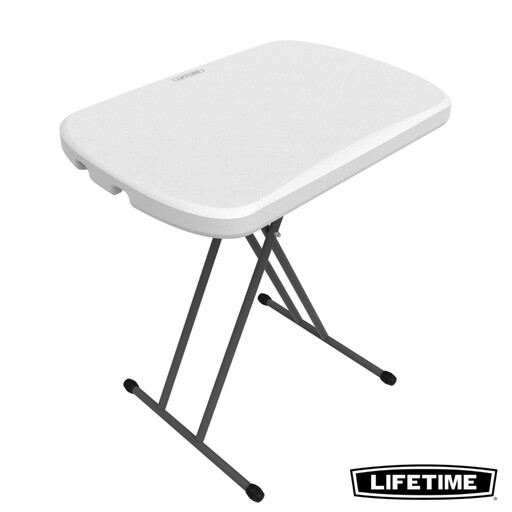
Why This Fits Their Persona: Ideal for those who need a compact, multi-functional workspace that is also easy to store. Perfect for small apartments, as a side table, or as a temporary desk.
The wide-set legs provide good stability, and the adjustable height (61, 66, 71 cm) prevents the 'just-doesn't-fit' mistake in terms of ergonomics. The HDPE top is more durable and stain-resistant than cheap particleboard.
Height-adjustable, foldable for storage, and suitable for indoor and outdoor use.
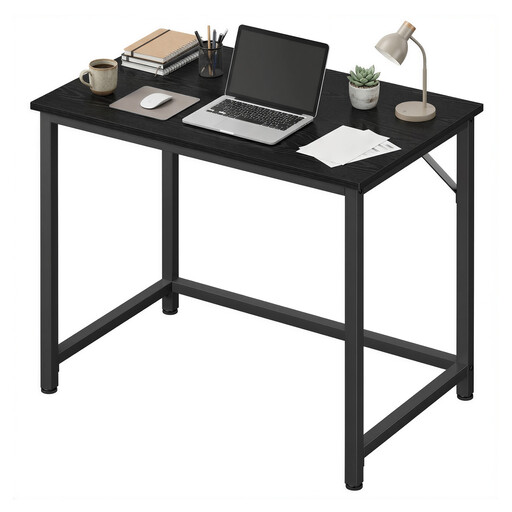
Why This Fits Their Persona: Perfect for students or remote workers with limited space. This compact, modern desk offers a functional, no-fuss workspace that fits well in a bedroom or study.
The steel frame and adjustable feet directly address the 'wobble trap'. Its clear dimensions (80x50 cm) make it a safe choice for anyone looking for a small desk and wanting to avoid the 'just-doesn't-fit' mistake.
Simple assembly thanks to clear instructions and labelled parts. Stable on uneven floors.
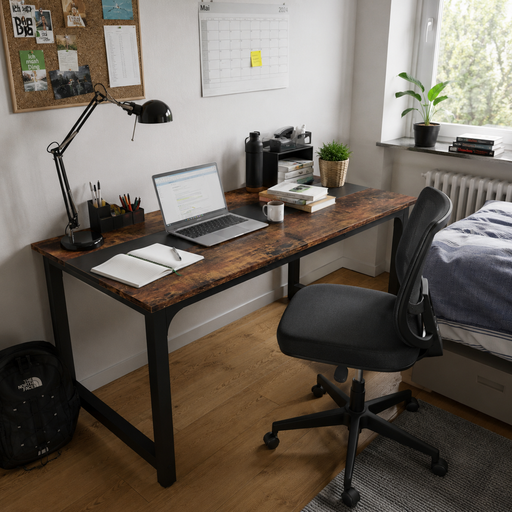
Why This Fits Their Persona: For the remote worker, gamer, or creative professional who needs a large desk for multiple monitors, a printer, and other equipment. This desk offers an abundance of space and a high degree of stability.
This desk is engineered for stability. The heavy-duty steel frame (5x5 cm legs), extra support beams, and triangular joints completely eliminate wobble. The high load capacity, rated by the manufacturer up to 400 kg, is an indicator of its robust construction.
Very large work surface (160 x 80 cm) and an exceptionally stable construction.
We have compiled a complete, up-to-date list of products that meet these selection criteria and comply with current safety regulations.
The ideal height of a desk depends on your height and your chair. Most desks have a fixed height of about 75 cm. A good rule of thumb is that your forearms should be able to rest on the desktop at a 90-degree angle with your shoulders relaxed. If you struggle with this, a height-adjustable desk might be a solution.
This varies greatly by model. A simple small desk made of particleboard can often hold around 50 kg, which is enough for a laptop and a monitor. A heavier, more robust computer desk with a steel frame can handle significantly more. Always check the maximum static load capacity in the product specifications, especially if you plan to place heavy equipment on it.
Most modern desks are designed for self-assembly. Manufacturers who emphasize "easy assembly" often provide clear instructions, numbered parts, and the necessary tools (like an Allen key). It's advisable to review the manual beforehand and check that all parts are present.
