
Vandaag of morgen in huis

Kwaliteit gegarandeerd

Welkomstaanbiedingen ontgrendelen: GRATIS bezorging | Tot 80% korting | Gratis 30 dagen JoyPlus-proefperiode
Download de app
A blender can earn a permanent place on your worktop, but only if it suits the way you cook. A compact smoothie blender is handy for a single serving, while a powerful blender with a large jug is better suited to families and larger quantities. A hand blender is more practical for soup, purée and baby food.
The product name does not always tell the whole story. Pay particular attention to the specifications, capacity and accessories you actually need.
A higher wattage tells you something about the motor’s power consumption, but it does not automatically determine the end result. The shape of the jug, the blades, the programme and the quantity of ingredients all play a part too. A portable blender rated at 125 to 150 W is intended for light portions such as smoothies or shakes. For ice, frozen fruit and larger quantities, a 1,100 or 1,200 W model is usually the more sensible choice.
A 500 ml cup is not always suitable for filling to the brim. Check the maximum fill line in the manual. You should also allow enough room for the ingredients to move around the blades. A blender with a travel cup can be useful when you are out and about, but a 2.1-litre jug is more suitable when you want to prepare several servings at once.
Blades that trap food, lots of separate parts and accessories that cannot go in the dishwasher make an appliance less appealing for everyday use. Check which parts are removable and dishwasher-safe. The motor base must not be immersed in water. With a rechargeable blender, you should also check the charging method, battery instructions and how the cup is sealed.
Match the power to your recipes:
Brands may present performance in different ways. A claim about a smooth result or crushing ice comes from the brand’s product information and should not be treated as a universal guarantee. Also consider the type of blades, jug capacity and available programmes.
For one person, a capacity of around 400 to 530 ml is often enough. A larger 700 ml cup is useful for a generous shake. For families or meal prep, a 2.1-litre jug is more practical.
When choosing cups, look for:
A personal blender saves space, but it usually has a smaller capacity and a more limited range of uses than a kitchen blender with a fixed jug.
Simple one-button operation is convenient for quick preparations. Multiple speeds, a pulse function and automatic programmes give you more control. Also check whether you actually need a food processor, hand blender or food mixer. A blender makes liquid mixtures, while a food processor mainly slices, grates and chops. A hand blender works directly in a saucepan or bowl, making it suitable for soup and purée.
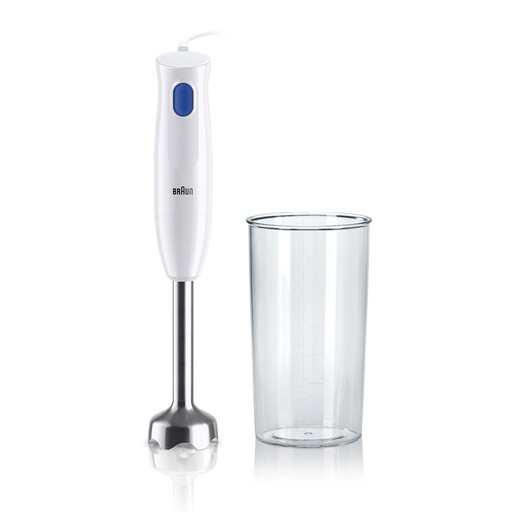
Why it suits this profile: This hand blender is designed for simple preparations and comes with a 600 ml measuring jug. You can use it to make sauces, purée and small portions without having to keep a large jug on your worktop.
The specifications are straightforward: 450 W, one-button operation and a removable accessory solution. You do not pay for features you may not use.
600 ml BPA-free measuring jug, 450 W of power, plus a whisk and chopper included according to the product description.

Why it suits this profile: If you prepare a range of different recipes, the 2.1-litre jug, 14 manual speeds and four automatic programmes give you more ways to customise the results.
The large capacity and stated power of 1,200 W make it clear that this is not a mini blender for a single serving, but an appliance for larger quantities.
2.1-litre jug, 700 ml cup, 1,200 W and automatic programmes for tasks including chopping, grinding and pulsing.
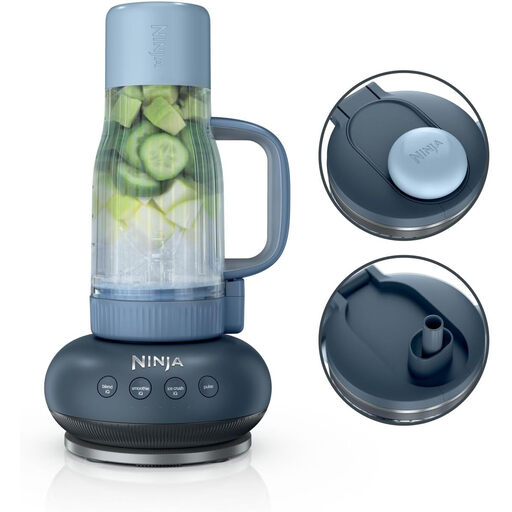
Why it suits this profile: This blender and smoothie maker combination is designed for users who make smoothies, shakes and iced drinks and want to take their drink with them in the same cup.
Its portability is backed up by specific features: a 710 ml cup, a leakproof lid and removable dishwasher-safe parts, according to the product information.
1,100 W, three automatic programmes, pulse function and a travel cup with straw included.

Why it suits this profile: This compact personal blender has a capacity of 0.48 litres, a handle and a rechargeable battery. That makes it suitable for use in the office, while you are out and about or after exercise.
The product description mentions a closable drinking lid and USB-C charging. However, check the charging and cleaning instructions before use.
0.48-litre capacity, 17,000 revolutions per minute according to the product specification, BPA-free contact parts and a rechargeable design.
We have put together a complete, up-to-date list of products that fully meet these strict selection criteria and the applicable European safety regulations.
Not every blender is suitable for hot liquids. Always check the manual. A hand blender can be practical for soup, but you must follow the safety instructions in this case too. Portable models often state explicitly that hot liquids must not be used.
The lifespan depends on usage, maintenance, overloading and following the instructions. Allow the motor to cool down when advised, do not fill the cup above the marking and check the blades and lids regularly. In the European Union, consumers generally benefit from a statutory guarantee of conformity; the exact rights depend on the purchase and the applicable rules.
Consumption depends on the power rating and how long the blender is used. A 1,200 W appliance uses more power per minute than a 150 W model, but a short blending cycle often keeps total consumption limited. With a rechargeable blender, battery capacity, charging frequency and charging method also play a part. So do not look only at the wattage; also consider how often and for how long you use the appliance.
