
Vandaag of morgen in huis

Kwaliteit gegarandeerd

Welkomstaanbiedingen ontgrendelen: GRATIS bezorging | Tot 80% korting | Gratis 30 dagen JoyPlus-proefperiode
Download de app
A toaster might seem like a simple kitchen appliance, but the real differences between models lie in the details. A slot that’s too narrow, a fiddly crumb tray, or a limited number of browning settings can cause frustration every single day. So if you’re looking to buy a toaster, it’s worth thinking about how you’ll use it, the size you need, and the features that matter — rather than just focusing on looks or wattage.
Not every toaster can handle thick slices, bagels or rolls. A standard model can struggle with artisan bread, brioche or chunky slices. So check whether it’s a toaster with wide slots and whether the slots are long enough for your favourite bread.
Defrost, reheat, cancel and a bagel setting can all be handy. But sometimes you’re paying for functions you rarely need. Think ahead: do you often toast bread straight from the freezer, want to reheat previously toasted bread, or regularly eat bagels?
Crumbs collect at the bottom of the appliance. Without a removable tray, cleaning becomes unnecessarily difficult. Also look for a stable base, automatic shut-off or eject function, and enough space around the toaster. A toaster should sit on a flat, heat-resistant surface, away from curtains and other flammable materials.
A 2-slice toaster usually works well in a smaller kitchen or for a household where one or two portions at a time are enough. This type generally takes up less worktop space.
A 4-slice toaster is practical for families or when you want to prepare several slices at once. Just check how much space you have on your worktop. Four slots don’t always mean every slot is equally suitable for thick slices, or that you can set different browning levels per pair.
A toaster with adjustable browning control gives you more choice, from lightly toasted to crispy. Seven settings, like those on several models in this round-up, offer more flexibility than a simple dial with just a few levels. The final colour can also depend on the type of bread, its thickness and moisture content.
Power is measured in watts. A higher wattage can help the toaster heat up quickly, but on its own it doesn’t tell you how evenly the bread will toast. So look at the combination of power, automatic centring and the features available. Examples include 850 W for the Russell Hobbs, 900 W for the Aigostar and 1,400 W for the DSP.
A toaster with wide slots is ideal for thick slices, rolls and bagels. A warming rack can be useful for a croissant or a roll you just want to warm through. Never use metal objects to remove stuck bread, and always unplug the toaster before cleaning.
A stainless steel toaster has a metal casing or finish that fits neatly into modern kitchens. A black toaster may show fewer small marks, but the material and finish matter more than the colour. Always check the product description: some models combine stainless steel with plastic parts.
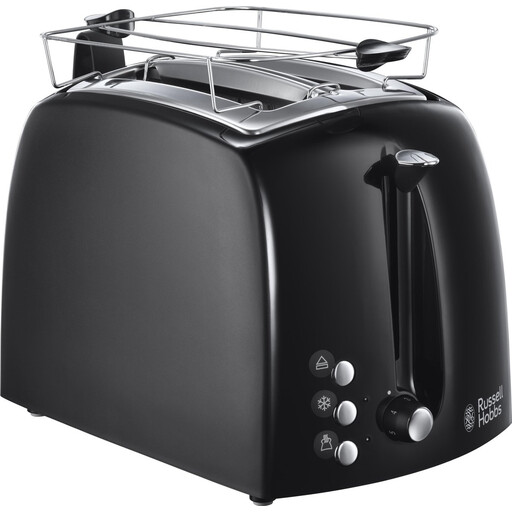
Why it fits this profile: This 2-slice model is ideal for everyday use in a smaller household and features a black gloss and matt finish with chrome details.
The wide and long slots are designed, according to the product information, for thicker slices, rolls and bagels. The removable crumb tray makes maintenance easier.
850 W, adjustable browning control, defrost, reheat and cancel functions, warming rack and included toast tongs.
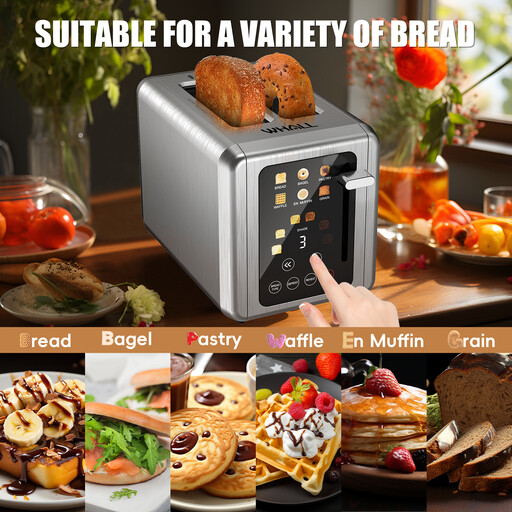
Why it fits this profile: The digital controls suit users who prepare different types of bread and want to adjust settings clearly and easily.
The 1.5-inch wide slots are suitable, according to the product description, for thick toast, bagels and various bread types. A crumb tray and cable storage help keep things tidy.
6 browning levels, 6 bread modes, countdown timer, memory function, defrost, reheat and bagel function.
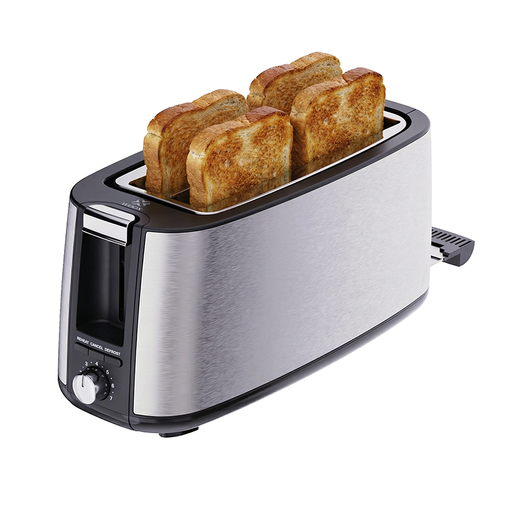
Why it fits this profile: Four slots are practical for families and households that want to toast multiple portions at once.
The product description mentions an anti-jam mechanism, automatic centring and a removable crumb tray. This takes stuck bread and daily cleaning into account.
1200–1400 W, seven browning levels, defrost and reheat functions, non-slip base and stainless steel finish.
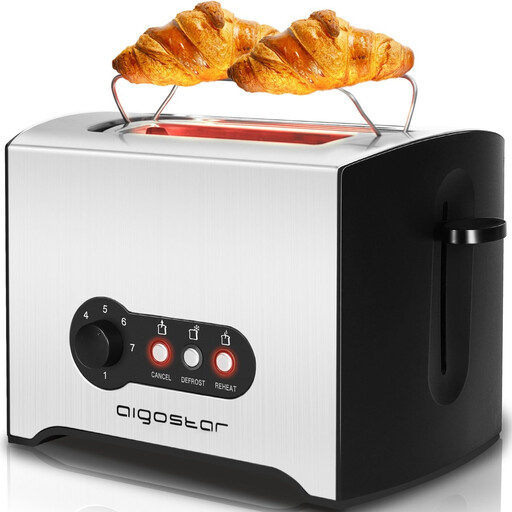
Why it fits this profile: This compact 2-slice model combines a stainless steel casing with features suited to everyday toasting.
Seven temperature settings mean you’re not limited to just light or dark. The removable crumb tray makes regular cleaning easy.
900 W, seven temperature settings, defrost, reheat and cancel functions, hidden roll warmer and 220–240 V.
We’ve put together a full, up-to-date list of products that fully meet these strict selection criteria and comply with current European safety regulations.
For one or two people, usually yes. You save worktop space and can toast two slices per round. For a family or multiple portions at once, a 4-slice toaster is more practical. Also consider the slot length and width if you often use large or thick slices.
The lifespan depends on usage, maintenance and materials. Empty the crumb tray regularly, don’t use metal objects, and let the appliance cool down when the manual advises it. Check the warranty and information about the statutory consumer warranty in the EU when you buy.
A toaster usually only runs for a few minutes per use. The consumption depends on the wattage and how long you use it. A model with a higher wattage may use more power per minute, but according to the product specifications it can also heat up faster. Unplug the toaster when it’s not in use, if that’s recommended in the instructions.
