
Vandaag of morgen in huis

Kwaliteit gegarandeerd

Welkomstaanbiedingen ontgrendelen: GRATIS bezorging | Tot 80% korting | Gratis 30 dagen JoyPlus-proefperiode
Download de app
A toaster might seem like a simple kitchen appliance, but the differences between models are genuinely noticeable in everyday use. A slot that’s too narrow won’t fit thick farmhouse bread, an awkward crumb tray makes cleaning a chore, and digital controls add little value when all you want is to quickly toast two slices of bread.
So the most important question isn’t which toaster looks the best, but which specifications match your daily routine.
A 2-slot toaster is fine for a student, a couple or a small household. But you should also check the length and width of the slots. Two short slots can be less practical than one long slot if you often toast sliced bread, sourdough or baguettes.
A 4-slot toaster can save time in a family home, but it also takes up more worktop space. Pay attention to the controls too: on some models the slots are linked, while others offer independent settings.
A toaster with adjustable browning settings gives you flexibility, but the result also depends on the thickness, moisture content and type of bread. Seven or eight settings are useful for different preferences, but a large number of settings is no guarantee of even toasting.
Automatic centring helps position the bread between the heating elements. Also check whether the manufacturer mentions a cancel function, automatic shut-off and an anti-jam feature.
A defrost function is handy when you use bread straight from the freezer. The reheat function warms already toasted bread without browning it further, according to the product description. A bun warmer can be useful for rolls and croissants, but it takes up extra space above the appliance.
A digital toaster with a display and timer is mainly interesting if you want to see the remaining time. For simple daily use, a dial can actually be quicker and clearer.
Choose based on the types of bread you actually eat:
Power is measured in watts. Models in the range vary from 650 to 1,800 watts, for example. A higher wattage can be relevant for multiple slots, but on its own it doesn’t tell you anything about how evenly the toaster works. Also look at:
A stainless steel toaster often has a neutral look and is easy to wipe down on the outside. However, stainless steel doesn’t mean the appliance is scratch-proof or stays cool during use. The casing and metal parts can get hot.
A toaster with a crumb tray is practical for regular maintenance. Unplug the appliance, let it cool down completely and then remove the tray. Never use a knife, fork or any other metal object to dislodge stuck bread. An electrical appliance should also come with a manual containing safety information and a suitable plug for the local mains voltage.
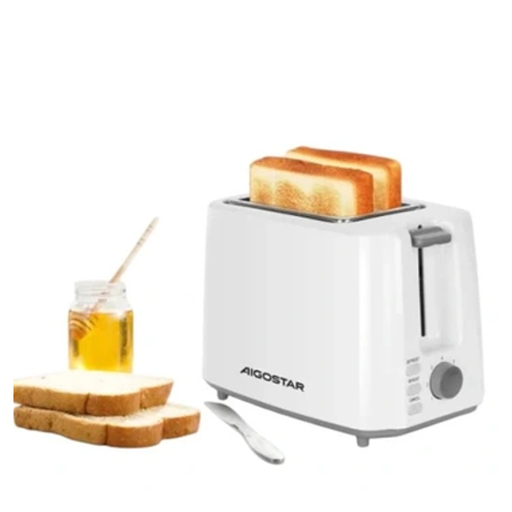
Why this fits the profile: This 2-slot model has a compact size, 750 watts of power and simple controls with seven browning settings.
The specifications mention adjustable settings and functions for defrost, reheat and cancel, so you’re not stuck with a single fixed cycle.
Two slots, seven settings, 750 W and a stainless steel and plastic housing.
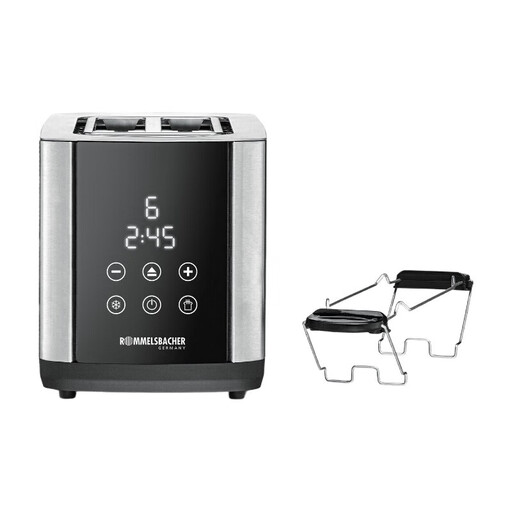
Why this fits the profile: This stainless steel model combines wide slots with nine browning settings, a display and a countdown timer.
The product information states the maximum bread size of 12 x 12 cm. This lets you compare the slot with your own usage rather than just relying on looks.
Two extra-wide slots, nine settings, defrost, reheat, bun warmer and removable crumb tray.
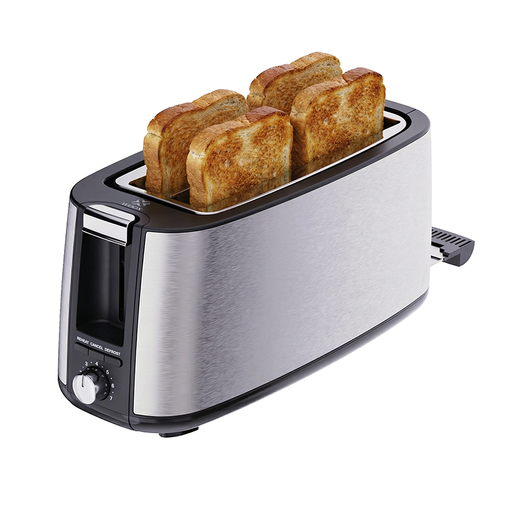
Why this fits the profile: Four slots and 1,200–1,400 W of power are practical when several people want toast at the same time.
The listed anti-jam function, automatic centring and cancel button offer practical control during repeated use.
Four slots, seven settings, defrost, reheat, stainless steel finish and a removable crumb tray.
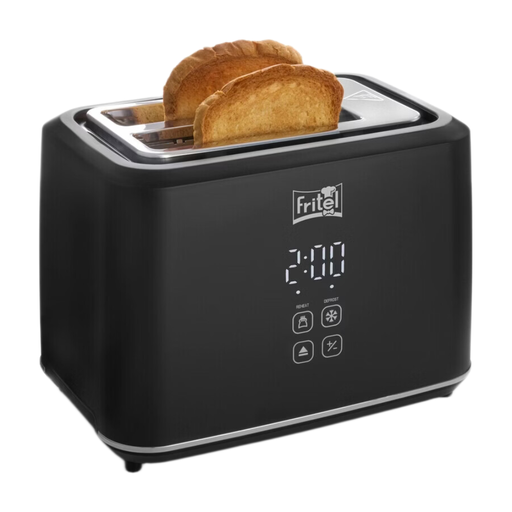
Why this fits the profile: The built-in bun warmer, touch display and seven settings suit users who warm rolls and croissants as well as toast.
The product information lists separate functions for defrost, reheat and cancel. The crumb tray is removable for easier maintenance.
Two slots, 850 W, touch controls, seven settings, bun warmer and automatic shut-off when bread gets stuck.
We’ve put together a full, up-to-date list of products that fully meet these strict selection criteria and comply with current European safety regulations.
That depends on the number of slots and how you use it. Models around 750 to 900 watts are common for two slots. A four-slot model may use more power. Don’t just look at wattage – also consider slot size, browning settings and automatic features.
Always unplug the appliance and wait until it has completely cooled down. Empty the crumb tray and wipe the outside with a slightly damp cloth. Don’t shake the toaster hard to remove crumbs, and never submerge the appliance in water.
The lifespan depends on usage, maintenance and the quality of the components. Regularly removing crumbs, not bending the cord sharply and not leaving the appliance running unattended all help keep daily use safe. Also check the warranty conditions when you buy; for many electrical consumer products in the EU, the minimum legal conformity guarantee applies under the relevant rules.
