
Vandaag of morgen in huis

Kwaliteit gegarandeerd

Welkomstaanbiedingen ontgrendelen: GRATIS bezorging | Tot 80% korting | Gratis 30 dagen JoyPlus-proefperiode
Download de app
Choosing a new table seems simple until you look online and get overwhelmed by the options. It's a central piece of furniture, whether for the dining room, living room, or garden. The wrong choice leads not only to regret but also to unnecessary costs. Many buyers fall into the same traps, swayed by beautiful photos and marketing jargon.
Before you make a decision, it's wise to consider a few common mistakes:
By keeping these points in mind, you can search more effectively for a table that truly suits you and your lifestyle.
To make an informed choice, it's helpful to focus on a few key specifications. These determine whether a table is functional, durable, and suitable for your space.
The material determines the look, durability, and maintenance of your table.
Measure twice, cut once. Before buying a table, measure the available space accurately. Keep the following rule of thumb in mind: ensure at least 90 cm of space between the edge of the table and the wall or another piece of furniture. This allows everyone to get up and walk past easily.
Think about the main purpose of the table. A desk must be stable and offer sufficient workspace, while a coffee table might need extra storage. A side table in the hallway is often narrow and serves as a place for keys and mail. For a garden table, weather resistance is the most important requirement. Pay attention to the construction of the base and whether there are extras, such as drawers, shelves, or adjustable feet for an uneven floor.
Based on objective product specifications, we have selected a number of popular choices that suit different living needs and situations.
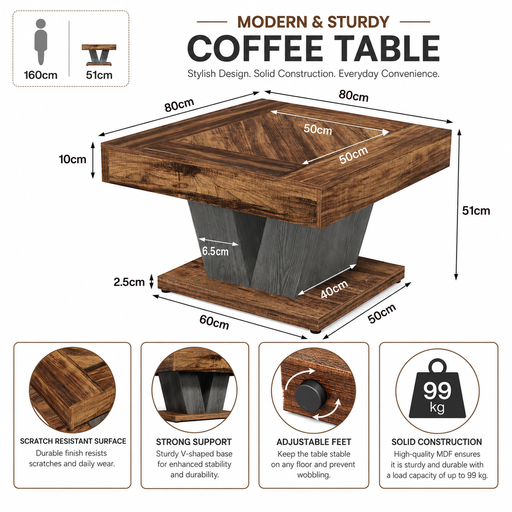
Why This Fits Their Persona: This square model with a wood-look top and a striking frame fits well in a modern or industrial living room. At 80x80 cm, it's a practical size for the average living room setup: large enough for drinks and decoration, but not too dominant.
The sturdy frame, constructed from two intersecting panels, tackles the "wobble problem" often seen in minimalist designs. This ensures a stable base.
According to the manufacturer, the table has a load capacity of up to 100 kg. The adjustable foot pads help to place the table stably and protect the floor from scratches.
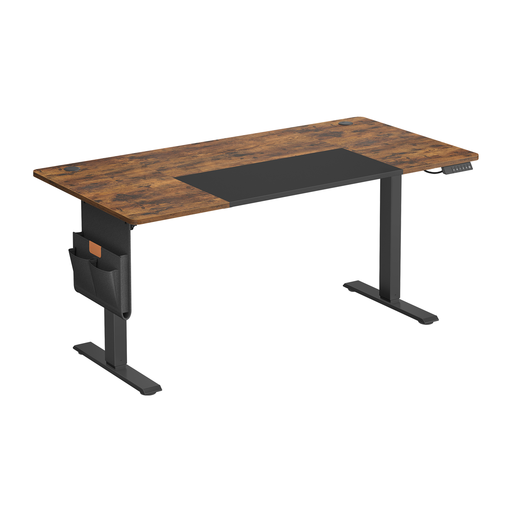
Why This Fits Their Persona: For those who work long days at a desk, ergonomics are crucial. The ability to alternate between sitting and standing makes this a practical choice for a healthy and productive home office.
This is more than just a simple desk. It tackles the pitfall of an impractical workspace with a memory function for preferred heights, cable management, and a built-in USB-C port.
Electrically adjustable from 72 to 120 cm with a quiet motor. The steel frame ensures stability, even at its highest setting. The manufacturer includes handy extras like a storage bag and hooks.
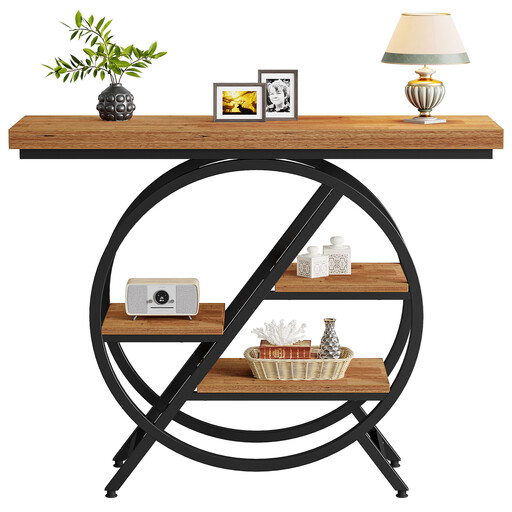
Why This Fits Their Persona: This narrow side table is a great solution for anyone looking for a practical storage spot in the hallway, entryway, or behind the sofa. Its open design provides space for decor, baskets, or books without making the room feel cluttered.
Many console tables are purely decorative. This model tackles the "lack of functionality" pitfall with three staggered shelves that provide actual storage space.
The combination of a 4 cm thick top and a metal frame ensures a sturdy construction. According to the manufacturer, the table can support up to 150 kg. Adjustable feet provide stability.
We have compiled a complete, up-to-date list of products that meet these strict selection criteria and practical requirements.
A good rule of thumb is to leave about 90 cm of space between the edge of the table and the wall or other furniture. This provides enough room to walk behind a seated person and to slide chairs back comfortably.
A solid wood table is made from natural wood. This material is strong, durable, and can often be sanded and refinished if damaged. It is typically more expensive. MDF (Medium-Density Fibreboard) is 'engineered wood', made from compressed wood fibres and resin. It is more affordable, does not warp, and has a smooth surface, but it is more susceptible to moisture and cannot be easily repaired if deeply damaged.
For a black table, especially one with a matte finish, prevention is key. Always use coasters and placemats to protect the surface. Clean the table with a soft, slightly damp cloth and avoid abrasive cleaning agents. Small, superficial scratches can sometimes be concealed with a special furniture marker, but caution is advised.
