
Vandaag of morgen in huis

Kwaliteit gegarandeerd

Welkomstaanbiedingen ontgrendelen: GRATIS bezorging | Tot 80% korting | Gratis 30 dagen JoyPlus-proefperiode
Download de app
Buying a fridge seems simple, until you discover it won't fit through the door, makes too much noise, or doesn't have enough freezer space. Marketing terms can also be confusing. A long list of features doesn't automatically mean a model is the right fit for your household.
Watch out for these common pitfalls:
A freestanding fridge offers flexible placement and can be taken with you if you move. For a student room, office or small kitchen, a compact fridge or tabletop fridge with around 68 to 126 litres is often sufficient.
A fridge with a freezer compartment combines both functions in one appliance. With a fridge-freezer, it's important to look at the fridge and freezer capacities separately. A model with around 250 to 350 litres is often suitable for a small to medium-sized household. If you store a lot of food, you might consider a fridge of 300 litres or more.
An American-style fridge freezer typically offers a large capacity and wide compartments. However, bear in mind they are usually around 90 cm wide, use more energy, and may have extra installation requirements for a dispenser. Therefore, measure your kitchen, doorways and lift beforehand.
Look at the net fridge capacity and net freezer capacity, not just the total volume. A 4-star freezer compartment is designed for freezing and storing fresh produce at around -18 °C. The freezing capacity, expressed in kilograms per 24 hours, shows how much fresh food the appliance can freeze according to its product specification.
Also, pay attention to:
A reversible door is practical in a small kitchen. However, check the manual to see if you are allowed to reverse it yourself.
Since the European revision of energy labels, fridges are rated from A to G. The letter is useful for a quick comparison, but the stated annual consumption in kWh is just as important. Multiply this figure by your electricity tariff to get a rough idea of the annual running costs.
Compare appliances with a similar capacity. A small, highly-rated fridge isn't automatically more efficient in proportion than a larger fridge with a different layout. Also, check if any claims about energy savings come directly from the brand. For example, according to its own product information, TCL states that its inverter can offer up to 15% energy savings; this is a brand claim and not a general guarantee for every household.
For an open-plan kitchen, studio or office, a noise level of around 35 to 40 dB is usually a relevant product specification. The actual noise can vary when the compressor kicks in, but the dB rating helps when comparing models.
A No Frost fridge or a Total No Frost system reduces ice build-up in the freezer section and usually means you won't have to defrost it manually. Check the exact product description: automatic defrosting of the fridge section is not the same as No Frost in both compartments.
Place the fridge on a level surface and leave the recommended clearance space around the appliance. Insufficient ventilation can affect its performance. After transport, let the fridge stand upright for as long as the manual specifies before plugging it in.
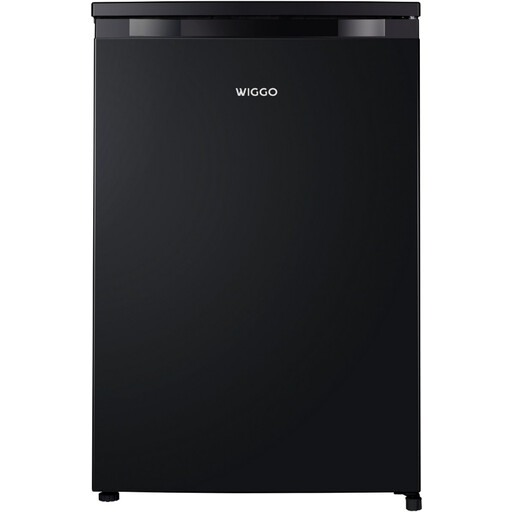
Why it's a good fit: This compact fridge offers 126 litres of cooling space and a 17-litre freezer compartment, making it suitable for a student room, office, or small kitchen where a basic model is all you need.
The dimensions of 84.5 × 54.9 × 54.9 cm and the 39 dB noise level are clearly stated. The reversible door is helpful in tight spaces.
126-litre capacity, 17-litre freezer space, LED lighting, mechanical temperature control and a D energy rating.
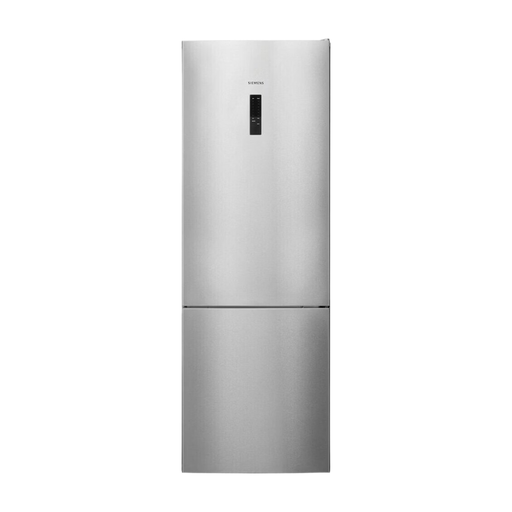
Why it's a good fit: With a total capacity of 440 litres, five shelves and three freezer drawers, this model offers a well-organised layout for households that regularly store groceries.
The No Frost feature limits ice build-up in the freezer section. The 203 cm height must be measured carefully beforehand.
B energy rating, 142 kWh per year, 35 dB, No Frost, and a freezing capacity of 11.5 kg per 24 hours.
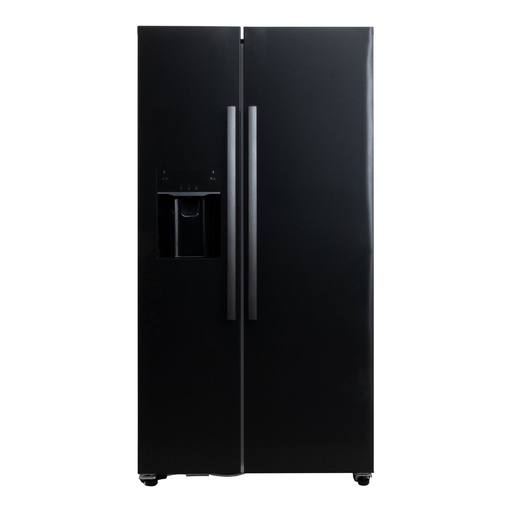
Why it's a good fit: The 513-litre total capacity is aimed at families and users who store a lot of fresh and frozen food. According to the product information, the water and ice dispenser requires a permanent water connection.
The required water connection is explicitly mentioned. Be sure to measure the 90 cm width, 177 cm height, and 66 cm depth before ordering.
344-litre fridge capacity, 169-litre freezer capacity, Total No Frost, digital controls and 39 dB.
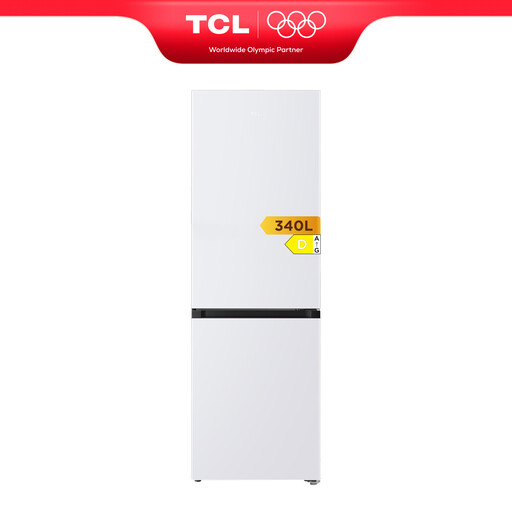
Why it's a good fit: This model combines 223 litres of fridge space with 117 litres of freezer space in an appliance that's 59.5 cm wide. This is practical for a family that doesn't have room for an American-style fridge freezer.
The product information lists the separate capacities, the compact 55 cm dimensions, and the reversible door. Please note: this model requires manual defrosting and is not No Frost.
340 litres total, 73-litre freezer space, LED lighting, adjustable shelves and a 40 dB noise level.
We've put together a complete, up-to-date list of products that fully meet these strict selection criteria and comply with current European safety regulations.
For one person, around 100 to 150 litres can be enough, depending on how often you do your shopping. A household of two to three people often looks for 200 to 350 litres. Families who buy in bulk may need more space. Always divide your desired volume between fridge and freezer space.
Follow the manufacturer's installation requirements. You'll often need space at the back and top for ventilation. Also, measure the route to the kitchen, the swing of the door, and the location of the plug socket. For a model with a water dispenser, you'll also need to check whether a water line or a reservoir is required.
That depends on its annual consumption in kWh and your electricity tariff. For example, an appliance that uses 100 kWh per year uses less electricity than a model that uses 300 kWh, but the capacity, layout and features will often be different too. Use the energy label to compare similar models and check the latest specifications on the product page.
