
Vandaag of morgen in huis

Kwaliteit gegarandeerd

Welkomstaanbiedingen ontgrendelen: GRATIS bezorging | Tot 80% korting | Gratis 30 dagen JoyPlus-proefperiode
Download de app
A belt might seem like a simple accessory, but the wrong choice soon becomes obvious. A buckle can dig in uncomfortably, the strap can be too short, and a material that looks like leather isn’t necessarily the real thing. So, if you’re planning to buy a belt, it’s worth considering its use, size and material first.
This applies just as much to a women’s belt, men’s belt or unisex belt for everyday wear as it does to a sports belt, fitness belt or powerlifting belt for strength training.
A size 80, 90 or 95 often refers to a waist measurement on many fashion belts, while other products list the total length. These values aren’t directly comparable. The buckle may also fall outside the stated length.
So, measure the waist where you’ll actually wear the belt. For a trouser belt, this isn’t always the same as your body circumference. Also check whether the product page lists the total length, the measurement to the middle hole, or an adjustable range.
A black belt or brown belt with a smooth surface could be made from genuine leather, faux leather, textile or a synthetic fibre. Faux leather belt usually means no animal leather has been used. Look at the material composition rather than just words like “leather look” or “classic appearance”.
A leather belt may need different care to a model made from polyurethane or polyester. Water, heat and harsh cleaning products can affect the lifespan of any material, but the recommended treatment varies from product to product.
An ordinary belt with a buckle isn’t automatically suitable for heavy training. A weightlifting belt or powerlifting belt is designed to be thicker and stiffer than a fashion accessory. This can be useful during exercises like squats and deadlifts, but makes such a belt less suitable under smart trousers.
According to the product description from Thor Athletics, the Lever Belt 10 mm is intended for strength training and features a lever closure. Only use this type of belt in line with the manufacturer’s instructions, and check the closure, seams and material before every training session.
Also pay attention to the care instructions. Some models should not be washed and must be cleaned with a damp cloth. For other products, a cold, gentle machine wash is permitted. Always follow the label and the product page.
An adjustable belt is practical when you wear several different trousers or want a flexible fit. The black canvas model comes in one size, with a length of 120 cm and a width of 3.8 cm. According to the product description, the strap can be adjusted continuously.
The faux leather belt is available in sizes S to XL. The stated lengths range from 100 to 130 cm, excluding the 5 cm buckle. So measure your waist before selecting a size. A belt that’s too long can stick out awkwardly; one that’s too short won’t fasten comfortably.
A classic belt with buckle is suitable for everyday wear and usually offers a familiar, traditional fit. A lever closure works differently: it’s designed for quick, secure adjustment during strength training. With a Thor Athletics Lever Belt 10 mm, the size determines the suitable waist range; the product information states a range of 61 to 131 cm across the available sizes XS to XXXL.
Don’t wear a training belt as a substitute for good technique. The product information states that the belt provides support when bracing during strength training, but is not a safety device against incorrect lifting.
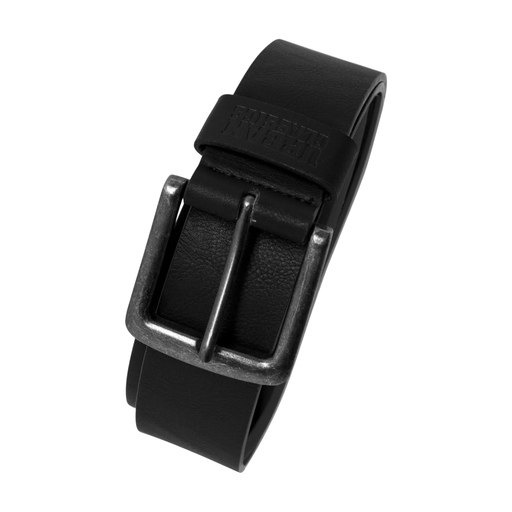
Why this fits the profile: An accessible black belt for everyday use, suitable for both men and women. Size M has a stated length of 110 cm, excluding the buckle.
The product information clearly states 100% polyurethane. This means you won’t confuse faux leather with real leather.
Matte rectangular buckle, fixed loop and a black colour that works with both formal and casual clothing.
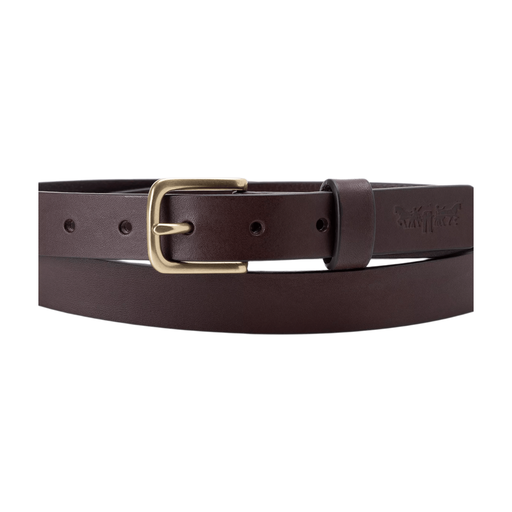
Why this fits the profile: This brown, narrow unisex belt is made from 100% full-grain cowhide according to the product information, and is intended for casual and smart-casual combinations.
The material composition and strap width of 25 mm are specified. This makes the choice verifiable rather than based on appearance alone.
Full-grain cowhide, slim silhouette and a brown colour for everyday outfits.
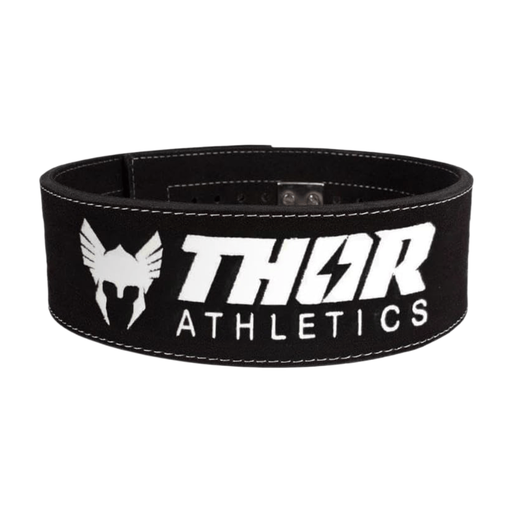
Why this fits the profile: The 10 mm thick split leather belt is designed for heavy strength training, including squats, deadlifts and powerlifts, according to the product description.
The intended use, thickness and adjustment range are all described. This means it’s not an ordinary fashion belt that you might accidentally use for training.
10 mm thickness, split leather, fully stitched construction and a steel lever closure for quick adjustment.
We’ve put together a full, up-to-date list of products that fully meet these strict selection criteria and comply with current European safety regulations.
Measure the circumference at the point where you’ll wear the belt, for example over a pair of trousers. Compare this with the size chart for the product you’ve chosen. Pay attention to whether the manufacturer uses the waist size, the belt length or the adjustment range.
The lifespan depends on the material, how often you use it and how you care for it. A daily belt that’s frequently bent or exposed to moisture may wear out more quickly. Regularly check the buckle, seams, loop and edge of the strap. If you notice visible damage, it’s wiser to replace it than to keep using it.
The price is determined by factors including the material, buckle, finish and adjustment mechanism. A faux leather belt can be a practical choice for everyday wear, while a leather or specialised weightlifting belt has different properties and a different price point. So compare the specifications against your intended use first, and only then look at the price.
