
Vandaag of morgen in huis

Kwaliteit gegarandeerd

Welkomstaanbiedingen ontgrendelen: GRATIS bezorging | Tot 80% korting | Gratis 30 dagen JoyPlus-proefperiode
Download de app
The right appliance can save you plenty of time when dealing with stains, pet hair, washing-up or spilt drinks. However, the range of household cleaning appliances is extensive. A carpet cleaner, spot cleaner, wet and dry vacuum and steam cleaner do not work in the same way. With a dishwasher, capacity, connections and drying function are also more important than a long list of programmes.
Pay particular attention to these common pitfalls before you place your order.
A higher figure in Pa, kPa or watts may sound appealing, but it does not tell you everything about the results. The design of the suction head, airflow, filter system and dirty-water drainage all affect how practical an appliance is to use.
A compact spot cleaner with a small tank can be useful for dealing with an accident on the sofa, but less suitable for cleaning an entire carpet. Conversely, a wet and dry vacuum with a 30-litre tank takes up more space and is less suitable for a small student room.
Brands may refer to deep cleaning, hygiene or the removal of bacteria. Do not automatically treat these as guaranteed results. Such features may be mentioned in a brand’s own research or product description, but the outcome depends on factors including the material, the stain, the cleaning product and the duration of use.
Start by checking practical details such as tank capacity, cable length, programmes, dimensions, noise level and maintenance instructions. A CE mark indicates compliance with relevant European requirements, but it does not mean that an appliance will deliver the same performance on every surface.
For appliances that use water, you should empty and dry the clean- and dirty-water tanks after use. Residual moisture can cause unpleasant smells and build-up. Also check whether the filters, hoses and brushes are easy to access. An inexpensive appliance that is difficult to clean may prove less convenient in everyday use.
With a carpet cleaner or upholstery cleaner, two separate tanks are practical: one for clean water and one for dirty water. This keeps used water separate. Also consider the capacity. A larger tank means you need to refill it less often, but it also makes the appliance heavier.
A portable carpet cleaner with a hose and long mains cable is useful for stairs, sofas and car interiors. For larger surfaces, a model with a wider suction head and larger collection tank may be more efficient. After cleaning, always check how long the material will take to dry and follow the instructions for the particular fabric.
A corded model will continue working as long as it is connected to a suitable socket, but you will have less freedom of movement. A longer cable may therefore be more practical than a small battery. For dishwashers, the noise level in decibels is relevant in an open-plan kitchen or flat. A difference between 40 and 47 dB can be noticeable, particularly when the appliance is used in the evening.
Energy consumption depends on the programme, frequency of use and drying method. For dishwashers, the EU energy label ranges from A to G. Compare the label alongside water consumption per cycle and capacity.
Measure the available space before buying a mini dishwasher, countertop dishwasher or compact dishwasher. Also check whether it can be filled manually or requires a fixed water connection. For a flat, student room, caravan or holiday home, a built-in water tank can be a decisive feature.
With a standard dishwasher, you should also check the recess, drainage, earthing and the space required for the door to open. Only use dishwasher detergent and rinse aid intended for the appliance. Washing-up liquid can cause excessive foaming.
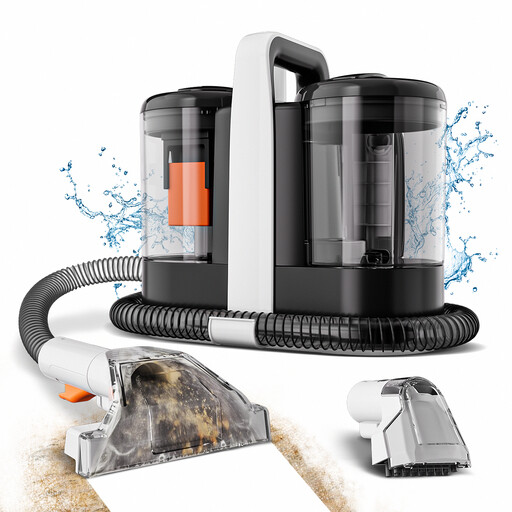
Why it suits this profile: This portable appliance is designed for smaller cleaning jobs involving sofas, carpets, mattresses and car interiors. According to the product description, the dual tanks have a capacity of 1.5 litres for clean water and 0.8 litres for dirty water.
The tanks and 9.84 ft cable are clearly specified. This allows you to assess in advance whether the appliance is suitable for spot cleaning and how far from the socket you can work.
600 W power, stated suction power of 15 kPa, two brushes and a compact design for storing in a cupboard.
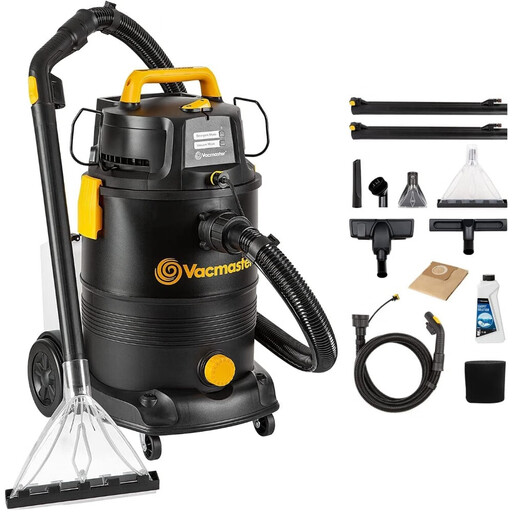
Why it suits this profile: Households with pets, several rooms or textiles that need cleaning regularly can benefit from the combination of wet vacuuming, dry vacuuming and carpet cleaning.
The specifications list separate filters for dry and wet use. This makes the difference between the operating modes clearer than a general claim of versatility.
1300 W power, a 30-litre collection tank, a 6-litre detergent tank and HEPA material in the dry filter according to the product information.
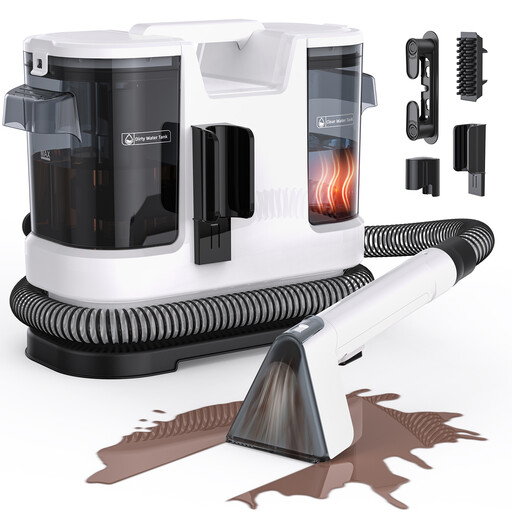
Why it suits this profile: This corded model is designed for carpets, sofas and car interiors. Its stated suction power of 15,000 Pa, 1400 W power, large tank and long mains cable make it suitable for regular use on larger textile surfaces.
The product name specifies the key technical parameters, while the cable means you are not reliant on a battery. Before buying, check the exact tank capacity and available attachments on the product page.
1400 W, stated suction power of 15,000 Pa, a large tank and a long mains cable according to the product information.

Why it suits this profile: According to the product description, this countertop dishwasher has a built-in 5-litre water tank and dimensions of 420 × 435 × 435 mm. This is practical when there is no fixed connection or large kitchen available.
You do not have to rely solely on a fixed water connection. However, check the space required for drainage, the diameter of your crockery and the required 220-240V connection.
6 programmes, 3 additional functions, a 5-litre water tank and a stated steam function of up to 98 °C.
We have put together a complete, up-to-date list of products that fully meet these strict selection criteria and the applicable European safety regulations.
A spot cleaner with separate clean- and dirty-water tanks is usually practical for localised dirt. Pay attention to the hose and cable length, tank capacity and permitted water temperature. Always test cleaning products on an inconspicuous area first, and do not use boiling water unless the manual explicitly allows it.
Its lifespan depends on how often it is used, how it is stored and how well it is maintained. Empty the tanks after every wet-cleaning session, rinse the hoses and nozzles, and allow the filters to dry completely. Do not use the appliance for liquids or substances it was not designed to handle. If in doubt, consult the manual and check whether replacement filters are available.
Running costs include electricity, water, cleaning product, filters and, where applicable, dishwasher salt or rinse aid. A dishwasher with an ECO programme may use less water and energy per cycle than washing up by hand, but actual consumption varies by model and programme. Before deciding, compare energy consumption per 100 cycles, water consumption per cycle and how often you expect to use it.
