
Vandaag of morgen in huis

Kwaliteit gegarandeerd

Welkomstaanbiedingen ontgrendelen: GRATIS bezorging | Tot 80% korting | Gratis 30 dagen JoyPlus-proefperiode
Download de app
A new household cleaning appliance can seem like a straightforward purchase. But the wrong choice could leave you with a machine that takes up too much space, is difficult to maintain or isn’t suited to your floors, windows or household. With a robot vacuum cleaner, steam cleaner, carpet cleaner or dishwasher in particular, the specifications matter more than eye-catching marketing claims.
Vacuum cleaners often display one prominent suction power figure. But that doesn’t automatically tell you how well the appliance will work on carpets, hard floors or pet hair. Check these features too:
A stick vacuum cleaner with a large battery can be handy in a larger home, while a corded handheld vacuum cleaner may be more practical for a small flat. A cord also means you won’t have to stop cleaning to recharge.
A steam cleaner isn’t suitable for every surface. Untreated wood, certain plastics, delicate fabrics and waxed surfaces can be sensitive to heat and moisture. Always test the cleaner on an inconspicuous area first and follow the instructions.
According to Monsga’s product information, this steam cleaner uses clean water. You mustn’t add cleaning products, perfume or alcohol to the water tank. This is an important detail that isn’t always highlighted in adverts.
A mini dishwasher or small washing machine can save space, but check the connections, door clearance and capacity before you buy. An appliance for six place settings may suit a studio flat, but it’s less suitable for a family that uses a lot of crockery every day.
When choosing a washing machine, check these features as well as the capacity in kilograms:
Choose a capacity to suit your household. A 7 kg model may be suitable for a small family or a one-person household. For several people or larger loads, 8 to 10 kg may be more practical. Measure the space carefully and allow for hoses, ventilation and room to move.
For a built-in dishwasher, the height and width of the recess and the dimensions of the door panel are essential. For a tabletop model, check that the drain can be connected safely. According to the product information, the Comfee CDWMTO201D(W) has a built-in 5-litre tank and measures 420 × 435 × 435 mm. This makes it worth considering if you have limited kitchen space, but always check that your plates will fit.
You can only compare energy ratings properly if you also consider the programme and consumption per cycle. A long eco programme may use less energy than a short, intensive one. With washing machines, a higher spin speed and a more efficient programme can help clothes dry faster, but actual consumption depends on how you use the machine and how full it is.
For dishwashers, water consumption, half-load options and programme duration are important. Check whether the appliance needs a standard socket and whether using an extension lead is discouraged. According to the product information, the Comfee CDWPB1215PB-EU is designed to be plugged into an earthed 220–240 V socket.
A window-cleaning robot needs extra care. Check whether it can only be used on smooth glass, always attach the safety cable and keep the appliance plugged in while it’s in use if the internal battery is only for power-cut protection. The PuRuiKai PRK-309 has a 4.5-metre safety cable, a 50 ml water tank and an internal back-up battery. The product information also states that it doesn’t work wirelessly.
Clean filters, brushes, water tanks and dust containers regularly. With a carpet cleaner, keep clean and dirty water separate, and don’t fill the tanks above the indicated maximum mark.
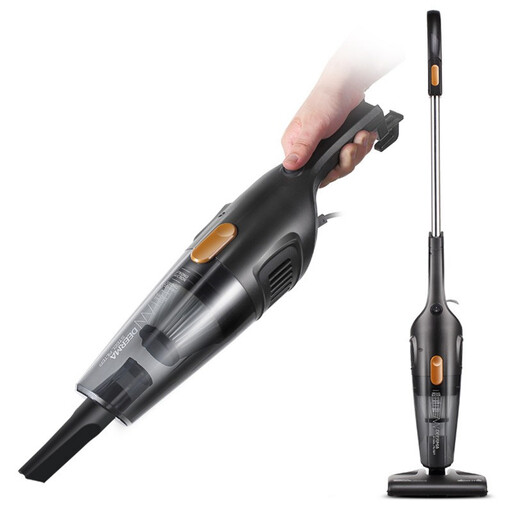
Why it suits this household: This corded model is practical for smaller homes, quick clean-ups and households that don’t want to recharge a battery. The 1.2-litre dust container is easy to see and empty.
The constant power supply means you won’t have to stop unexpectedly because of a flat battery. Bear in mind that the cable is a maximum of 5 metres long.
600 W power, stated vacuum value of 15 kPa, HEPA and sponge filters, and stick and handheld modes.
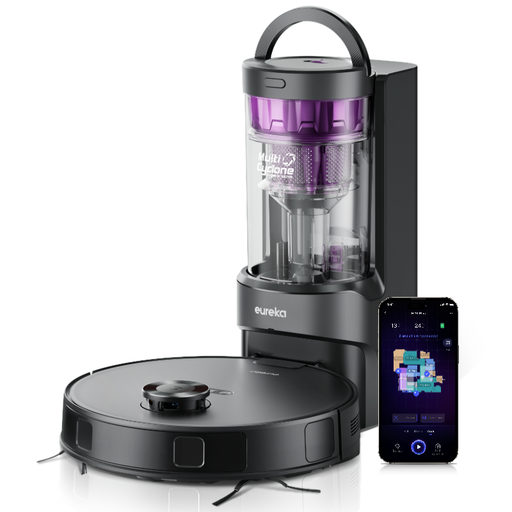
Why it suits this household: This model is designed for households looking to automate everyday floor cleaning and prioritise features such as app control, route planning and obstacle detection.
The product information lists carpet detection and a mop module that can lift by 10 mm. Check in advance that the app and 2.4 GHz Wi-Fi are compatible with your network.
Stated suction power of 8000 Pa, up to 180 minutes’ runtime, a 2-litre dust container and LiDAR-based navigation, according to the product description.
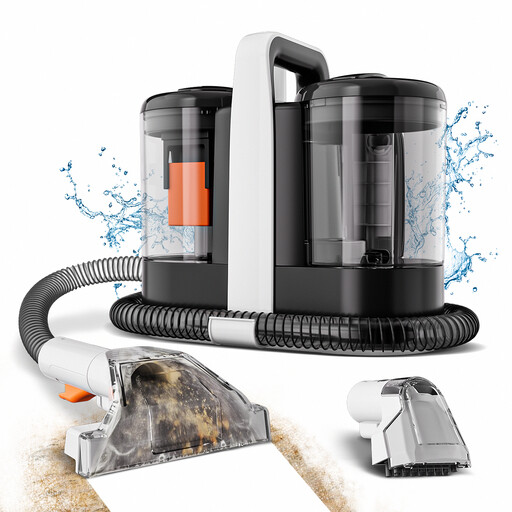
Why it suits this household: A good choice if you want to target stains on carpets, sofas, mattresses, car seats or other fabric surfaces.
The separate tanks help keep clean and dirty water apart. Don’t fill the clean water tank above the marked MAX line.
600 W power, stated suction power of 15 kPa, a 1.5-litre clean water tank and a 0.8-litre dirty water tank.

Why it suits this household: This tabletop model is designed for households of two to three people, student rooms, flats and kitchens without a permanent dishwasher connection.
According to the product information, you can fill it by hand or connect it to a tap. Check the available worktop space and drainage before you buy.
6 programmes, 3 extra functions, a built-in 5-litre tank and compact dimensions of 420 × 435 × 435 mm.
We’ve put together a complete, up-to-date list of products that meet these strict selection criteria and current European safety regulations.
A model with a brush that helps prevent hair from tangling, an easily accessible filter and plenty of dust capacity is practical. A cleaning appliance for pet owners doesn’t necessarily need a high stated suction power; check the brush design and maintenance requirements too.
Its lifespan depends on use, maintenance, storage and components such as filters, batteries and brushes. Empty containers promptly, clean filters according to the instructions and only use the appliance on the surfaces it’s designed for. For a washing machine or dishwasher, also check the warranty terms and available servicing.
This depends on its power, programme duration, how often you use it and the cost of energy. So don’t just compare the purchase price; check the stated energy and water consumption too. With a robot vacuum cleaner, replacement brushes, filters or dust bags may also contribute to the overall running costs.
