
Vandaag of morgen in huis

Kwaliteit gegarandeerd

Welkomstaanbiedingen ontgrendelen: GRATIS bezorging | Tot 80% korting | Gratis 30 dagen JoyPlus-proefperiode
Download de app
An extra fridge, mini freezer or portable air conditioner may seem easy to choose. But limited space, unexpected energy costs and unclear product claims can often lead to a disappointing purchase. If you live in a flat, student accommodation, office or garage, the right size and clear specifications are often more useful than a long list of marketing features.
This guide will help you compare household appliances by capacity, dimensions, energy consumption, noise level and ease of use.
A compact fridge or freezer may take up little floor space but still be awkwardly deep. Always check the width, depth and height. Leave room for ventilation and to open the door or lid, too.
If the door is reversible, also check that it will open in the right direction for your kitchen. A model such as the COMFEE’ RCU40WH2(E) has a reversible door hinge and adjustable feet, but you’ll still need to make sure it fits the space available.
An energy label, such as energy rating E, indicates a standardised class. You should also check the stated annual consumption in kWh. Two appliances with the same rating may still use different amounts of energy because of differences in size, insulation and usage.
For example, the CHiQ JR92DSE has a stated annual consumption of 85 kWh and a capacity of 92 litres. The COMFEE’ RCU40WH2(E) mini freezer is listed at 147 kWh per year for 31 litres. The difference isn’t down to capacity alone: freezers generally run continuously at a lower temperature.
No Frost, an inverter compressor, Wi-Fi, a remote control and multiple cooling settings can be useful, but only if you use them. A No Frost freezer can reduce the need for manual defrosting, while a mechanical thermostat is often simpler to operate.
Claims such as ‘whisper-quiet’, ‘energy-efficient’ or ‘suitable for a particular room size’ should be considered alongside the official specifications. A manufacturer may state that a model can deliver certain performance levels, but the results in practice depend on factors such as room temperature, ventilation, how full it is and how long it runs.
First, measure the space where you plan to put the appliance. Then compare the usable capacity:
Also check that the appliance will fit through doorways, stairwells and lifts. The packaged dimensions can be considerably larger than the product dimensions.
A 4-star freezer is designed for long-term storage at around -18 °C or below. Its freezing capacity, given in kg per 24 hours, indicates how much fresh food the appliance can freeze in a day according to its specifications.
A No Frost freezer uses air circulation to reduce ice build-up. A Low Frost model can reduce the amount of ice, but it isn’t completely maintenance-free. You’ll need to manually defrost a conventional compact freezer when a noticeable layer of ice forms.
Noise levels matter in a bedroom, open-plan kitchen or office. Product specifications usually list them in dB(A). A difference of a few decibels may be noticeable, but placing the appliance against a wall or on an uneven floor can affect the noise, too.
When choosing a portable air conditioner, check the following as well as its energy label:
An A or A+ energy rating doesn’t mean that a portable air conditioner uses little electricity if you run it without limits. Compare the stated power and calculate the cost using your current electricity tariff.

Why it suits this type of user: This small model is designed for households, students and office spaces that need extra freezer space without having to make room for a large appliance.
The product information gives the specific capacity of 31 litres, a noise level of 41 dB and annual consumption of 147 kWh, so you don’t have to rely on the word ‘compact’ alone.
31-litre capacity, 4-star rating, reversible door and adjustable feet; the stated freezing capacity is up to 2 kg per 24 hours.

Why it suits this type of user: For anyone looking for an extra freezer with organised drawers, low stated energy consumption and a relatively low noise level.
The specifications list a capacity of 87 litres, annual consumption of 84 kWh and a noise level of 37 dB. This lets you compare its size, energy use and noise with other models before you buy.
87 litres, three transparent drawers, 4-star rating, energy rating B and a reversible door. This model doesn’t have No Frost.

Why it suits this type of user: Suitable for families, garages or households that want extra storage and the option to use the appliance as a fridge later on.
The official product sheet lists a capacity of 122 litres, annual consumption of 193 kWh and a noise level of 39 dB. It also specifies No Frost as the automatic defrost method, rather than using it as a marketing term alone.
122 litres, 4-star freezer compartment, No Frost, inverter compressor, reversible door and the option to switch to fridge, cooler or soft-freeze mode.
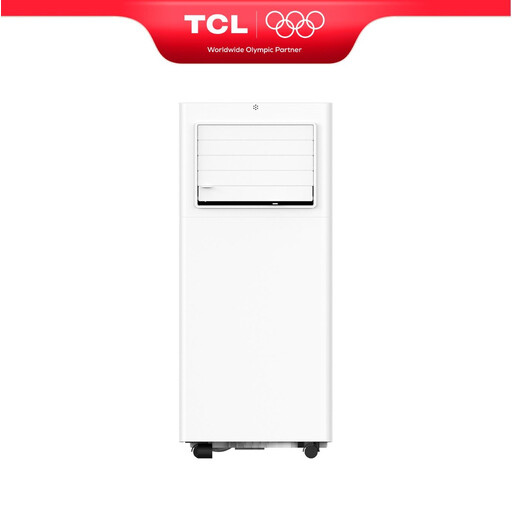
Why it suits this type of user: A practical choice if you’re looking for a portable air conditioner for different rooms and want to install it yourself.
The product information lists the exhaust hose and window kit. This lets you check in advance whether your window is suitable; the unit needs to sit on a flat surface next to a window.
9000 BTU, cooling, fan and dehumidifying modes, remote control, 24-hour timer, sleep mode and washable dust filter.
Place a fridge or freezer on a stable, level surface and keep the ventilation openings clear. Don’t put a freezer directly next to a heat source or in full sun. A garage is only suitable if the climate class and minimum ambient temperature are appropriate.
The exhaust hose is essential for a portable air conditioner. Keep it as straight and short as possible, and don’t block the air inlet. Clean the filter according to the instructions and unplug the appliance before carrying out maintenance. In high humidity, even a model with self-evaporation may need to be emptied manually.
When your appliance is delivered, check for transport damage and read the instructions, warranty terms and details of the manufacturer responsible for it. For fridges and freezers, you should also follow the instructions on how long to wait after transport before switching the appliance on.
We’ve put together a complete, up-to-date list of products that meet these strict selection criteria and the applicable European safety regulations.
It depends on the type of appliance and how long you use it. A freezer and fridge are always on, while a portable air conditioner is often used temporarily but has a higher power rating. So compare the stated annual consumption for fridges and freezers, and the power rating in watts or kW for air conditioners.
Not necessarily. The rating indicates the efficiency class within the relevant product category. A larger appliance with an A rating may use more kWh in absolute terms than a smaller model with an E rating. Always check the annual consumption or stated power consumption.
Its lifespan depends on quality, use, ventilation, maintenance and workload. Regular cleaning, leaving enough clear space around the appliance and avoiding leaving the door or lid open for too long can help it work well. When you buy, also check the statutory guarantee and any additional manufacturer’s warranty.
