
当日/次日达

品质保障

开启新人专享福利: 全场免邮 | 低至 2 折 | 免费试用 30 天 JoyPlus 会员
下载 Joybuy
Choosing a new vacuum cleaner, fridge or kitchen extractor fan may seem straightforward at first glance. Yet unclear specifications, limited space and hidden maintenance costs regularly lead to disappointment. Households across the Netherlands often run into the same problems: an appliance will not fit through the doorway, is noisier than expected or turns out to cost more to run because of filters, accessories or high energy consumption.
This guide helps you compare household appliances based on practical considerations. Not empty marketing claims, but dimensions, capacity, noise level, maintenance and energy data.
High suction power sounds impressive when you are looking at a vacuum cleaner. However, the brush, airflow, floor head and filtration also affect how well and comfortably the appliance works. A cordless stick vacuum cleaner with a long battery life may also run for much less time when you use it exclusively on the highest setting.
The same applies to the maximum power of a kitchen extractor fan. Also check the extraction rate in m³/h, the noise level and whether the appliance is suitable for ducted extraction or recirculation only.
An appliance with a suitable capacity may still be impractical. So measure not only the available space, but also doorways, stair widths and the clearance needed for ventilation.
For a fridge or freezer, check:
For an integrated dishwasher, you should also check that the niche dimensions match the model’s height, width and depth.
A filter that needs replacing regularly increases running costs. For example, a HEPA-filter air purifier has a limited filter lifespan according to the product specifications. With an extractor fan in recirculation mode, you need to check the carbon filter and replace it promptly when instructed by the manufacturer.
Also compare energy consumption using the energy label. A cheap appliance may be less attractive over the long term if it uses a lot of electricity each year.
For a typical household, these points are particularly relevant:
A pet vacuum cleaner does not only need high suction power. A brush that prevents hair from wrapping around the roller as quickly, along with a furniture attachment, is just as relevant.
An extractor fan with external ducting removes cooking fumes through a ventilation channel. Your home must be suitable for installing such a duct. A recirculating extractor fan uses grease and carbon filters, then blows the filtered air back into the room. This is useful in rented homes or flats where installing ducting is not permitted.
Pay attention to:
An extractor fan reduces cooking odours according to the product description, but good ventilation in the kitchen remains important.
For refrigeration and freezing appliances, capacity, energy label, noise level and climate class are important points of comparison. A freestanding 60-litre freezer may be suitable for a student room or office, while a 122-litre model offers more space for families or storing supplies.
When choosing a dishwasher, consider:
Bear in mind that a quick programme often has different cleaning or energy performance from the standard programme.
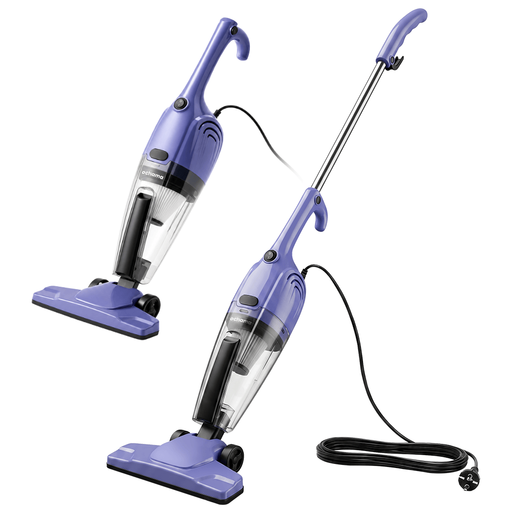
Why it suits this profile: A practical choice for students, smaller homes and anyone who does not want to charge a battery. The 4.5-metre cable provides a constant connection while you clean.
There is no runtime claim that depends on the selected battery setting. According to the product information, the washable filter can be reused.
2-in-1 design, 550W motor, 0.5-litre dust container and suitability for hard floors and everyday cleaning.
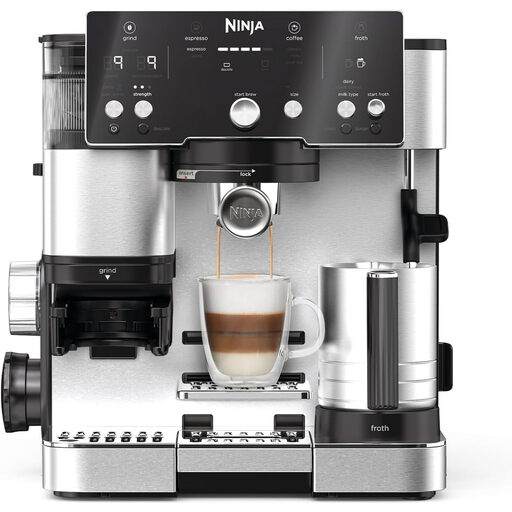
Why it suits this profile: Ideal for coffee drinkers who want several preparation methods and adjustment options without having to buy a separate grinder.
The specifications list specific functions rather than making only a general quality claim: 25 grind settings, a built-in scale and two milk-frothing settings.
Espresso and filter coffee from one appliance, a 2-litre water tank and dishwasher-safe parts according to the product information.
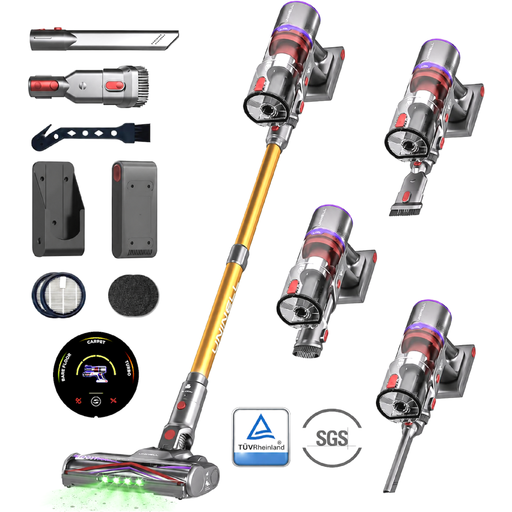
Why it suits this profile: Designed for larger households and pet owners who want to clean carpets, hard floors, furniture and awkward spaces with one appliance.
The product description mentions an anti-tangle brush and a removable battery. The stated runtime of up to 65 minutes should be assessed for each cleaning mode.
LED touchscreen display, folds flat to 180°, handheld vacuum mode and seven-stage filtration according to the product specifications.
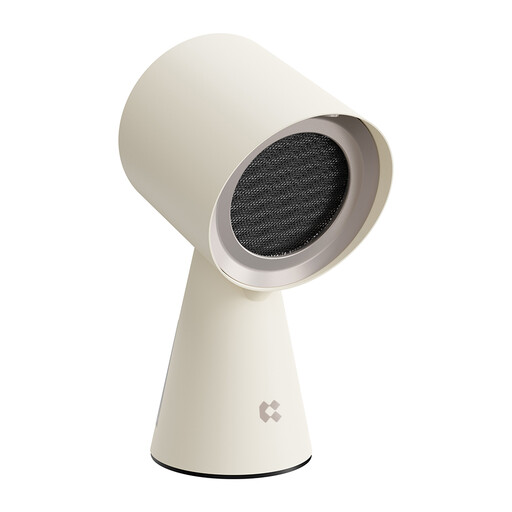
Why it suits this profile: A compact solution for studios, rented homes and temporary cooking areas where a fixed kitchen extractor fan cannot be installed.
You do not need a wall duct or structural alterations. However, bear in mind that this is a recirculation solution.
Two speeds, a maximum stated noise level below 65 dB and a compact size of 165 by 343 mm.
We have put together a complete, up-to-date list of products that fully meet these strict selection criteria and the applicable European safety regulations.
Do not compare the purchase price alone. Make a note of the following for each appliance:
For an air purifier with a HEPA filter, CADR and filter lifespan are more important than the word “HEPA” alone. For example, the Jafända JF268N states a CADR of 268 m³/h, a stated filter lifespan of 3,000 hours and a sleep mode from 20 dB. These are product specifications; they do not constitute a medical or health claim.
For a fridge or freezer, the energy label provides a verifiable starting point. The CHiQ JR122WSD states energy class E and 193 kWh per year. The Wiggo WL-TT82D states energy class D and 72 kWh per year with a capacity of 126 litres. Only compare figures like these when the capacity and usage situation are similar.
Fridges and freezers are switched on continuously and can therefore account for a noticeable proportion of electricity consumption. Check the annual consumption on the energy label and choose a capacity that suits your household. A larger fridge is not automatically more economical if you do not use the extra space.
Lifespan depends on the type of appliance, frequency of use, maintenance and availability of parts. Clean filters, seals, brushes and grease filters according to the manual. Keep your purchase details and check in advance what warranty and service the seller provides.
First check the dimensions, connections, ventilation clearance and the opening direction of the doors. For a kitchen extractor fan, determine whether external ducting is possible or whether recirculation is more suitable. Have electrical connections and fixed installations carried out in accordance with the manual and applicable safety regulations.
