
Vandaag of morgen in huis

Kwaliteit gegarandeerd

Welkomstaanbiedingen ontgrendelen: GRATIS bezorging | Tot 80% korting | Gratis 30 dagen JoyPlus-proefperiode
Download de app
A hotpot soup base makes a shared meal simple: add water, let the base dissolve, and cook meat, tofu, vegetables, noodles or seafood in the same pot. However, not every hot pot base suits every table. A fiery Sichuan broth can be too intense for some diners, while a milder option may underwhelm those who love mala.
The biggest mistakes usually come from three pitfalls:
For a large group, a base with a moderate flavour is often the most practical choice. A mild hotpot soup base, such as a three-delicacy base, works well with chicken, fish, tofu and vegetables without completely overpowering the ingredients. A clear hotpot broth is also useful for noodles, soups and stews.
If you’re after a more exciting meal, you can opt for a Sichuan hotpot base with chilli and Sichuan pepper. This combination delivers the characteristic fiery and slightly numbing mala sensation. Just be aware of the difference between “spicy”, “clear oil” and “mellow”: these terms don’t correspond to a fixed European scale. So be sure to compare the ingredients and usage instructions.
A 200g pack may be intended for 1 to 1.5 litres of water, while smaller single-serving packs might recommend 500 to 600ml. Look out for:
The Hao Ren Jia base comes in two individually wrapped 90g blocks. This makes dosing easier: one block is intended for roughly 800 to 1,000ml of water or broth. A mala tang soup base, on the other hand, can be used in smaller amounts for noodle soup, braised dishes or a quick single-person meal.
A hotpot soup base is a flavour concentrate. The salt and fat content can vary significantly between different varieties. The product information lists ingredients and nutritional values per 100g. Use this data to compare options, but bear in mind that the final values will change depending on the amount of water and other ingredients you add.
Pay particular attention to:
According to the brands’ own product information, several varieties contain flavour enhancers or preservatives. This isn’t proof of any particular effect or quality; it’s simply information to consider when making your purchase.
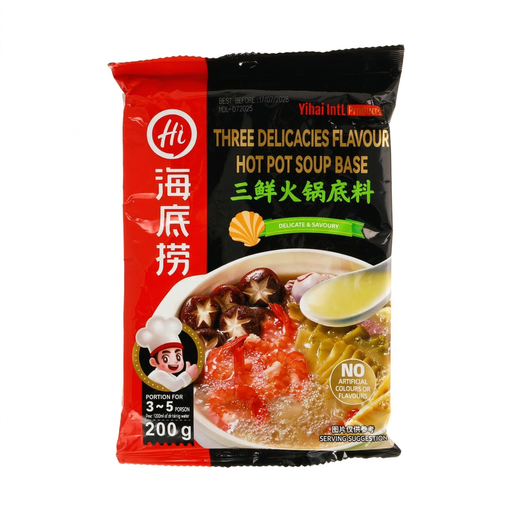
Why it fits this profile: This mild base is simple to prepare and suitable for a table with different preferences. According to the product description, the base contains pickled mustard stem, kelp and shiitake mushrooms.
The instructions specify 1 to 1.5 litres of boiling water. This makes the dosage clearer than with bases that don’t give a fixed ratio.
Mild flavour profile, 200g content, and also suitable for noodle soup or stewed dishes.
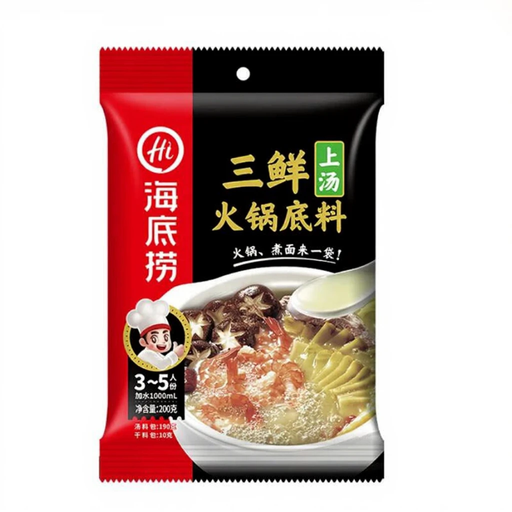
Why it fits this profile: According to Haidilao’s own product information, this variety focuses on an umami-rich broth featuring scallops, mushrooms and goji berries.
The product information lists the ingredients and its use beyond hotpot, so you can plan to use the base for noodles, stir-fries or stews too.
Versatile and suitable for a savoury broth with seafood, vegetables and mushrooms.
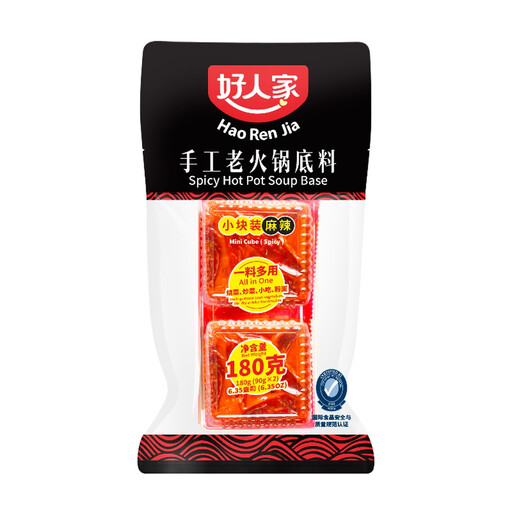
Why it fits this profile: The two 90g blocks are intended for separate pots. According to the product information, the base also works well with mala tang, poached fish and other Sichuan dishes.
The portions take the guesswork out of it. For hotpot, use one block with 800 to 1,000ml of water or broth.
Spicy chilli and Sichuan pepper base, with two individually wrapped blocks for flexible use.
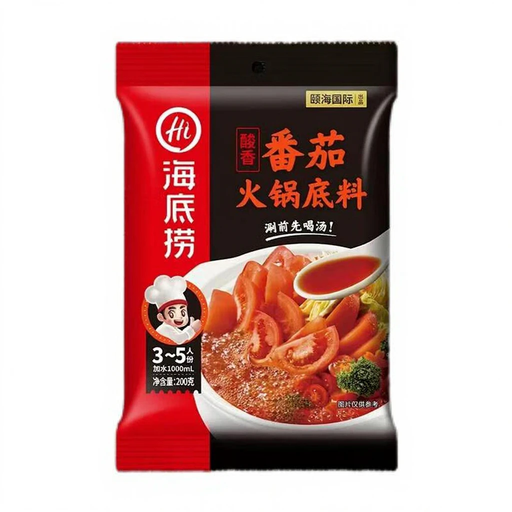
Why it fits this profile: According to Haidilao’s own product information, this tomato hotpot base has a sweet-savoury tomato profile without the typical chilli intensity of mala.
You deliberately choose a mild tomato profile instead of a spicy base that might not suit all diners. The packaging also mentions use for soup, noodles and stewed dishes.
Non-spicy tomato flavour and a 200g pack. Contains wheat according to the product information.
We’ve put together a full, up-to-date list of products that fully meet these strict selection criteria and comply with current European safety regulations.
A mild hotpot soup base or clear broth is usually the most practical choice when several people are eating together. The flavours are less pronounced and work well with vegetables, tofu, chicken and noodles. A tomato hotpot base is an alternative if you want a lightly sweet-savoury flavour without a pronounced mala profile.
This varies by product. Examples from the product information include 500 to 600ml for smaller portions, 800 to 1,000ml for a 90g block, and 1 to 1.5 litres for a 200g pack. Always follow the instructions on the packaging; this will help you avoid a broth that’s too concentrated or too weak.
Yes, according to their product descriptions, several bases are also suitable for noodle soup, stews, stir-fries or mala tang. Start with a small amount, especially with a salty or spicy base. This way you can adjust the flavour more easily to suit the dish.
