
Hoteliers looking for a classic coffee accompaniment
You want to place a familiar stroopwafel alongside the coffee. If so, check the portion size and read the allergen information before choosing the same option for every room.


Choose a classic stroopwafel if you’re looking for a familiar accompaniment to hotel-room coffee. If your guests eat gluten-free or plant-based, or want an option with less sugar, you’ll need to choose specific products: one characteristic doesn’t tell you anything about the others. Check the current label for each option and see whether the packaging is suitable for serving in individual rooms.
You want to place a familiar stroopwafel alongside the coffee. If so, check the portion size and read the allergen information before choosing the same option for every room.
You may want to offer a gluten-free or plant-based option, for example. Check both the product description and ingredients for each option: these characteristics are not interchangeable.
You’re looking for packaging that lets you work out how many waffles to allow per room and how much stock you’ll need. Compare the number of waffles, the weight and whether they’re individually wrapped for the product you’re planning to buy.
First, decide whether the stroopwafel is mainly there to go with the coffee or needs to meet a specific dietary requirement. Then check whether the portions are practical for guest rooms.
| What to consider | What to check when buying | Who it matters to |
|---|---|---|
| Classic stroopwafel | Compare the size of each waffle and read the ingredients and allergen information for your chosen option. | I want to offer a familiar stroopwafel alongside the coffee; for around 37% of consumers, this classic combination comes first. |
| Dietary requirements and allergens | Check the specific gluten-free or plant-based description, the allergens and any warnings about possible traces. | If guests have a dietary requirement or allergy, I need an option whose label I can check carefully. Around 27% of consumers give this the highest priority. |
| Less sugar | Compare the sugar content per 100 g and per intended serving. If the product makes a comparative claim, check which stroopwafel is used as the reference. | I want to consider an option with less sugar within the stroopwafel category, without assuming it has other dietary benefits; this matters most to around 18% of consumers. |
| Portions and stock | Compare the number of waffles, the weight, whether they’re individually wrapped and the storage instructions. | For serving in individual rooms, I want to know how many portions each pack provides and how to store them. This is the first consideration for around 18% of consumers. |
A classic option may contain wheat, milk or soya. Alternatives also need checking: a gluten-free stroopwafel may contain other allergens, while a plant-based option may contain gluten.
Read the current label for every option you choose, and keep products for different dietary requirements separate when serving them.
Albert Heijn compares the amount of sugar in its Roomboter minder suiker stroopwafels with that in AH Roomboter stroopwafels. This comparison doesn’t mean the option is also gluten-free or plant-based.
Check the reference product, the nutritional information per 100 g and the allergens listed on the pack you choose.
The total weight and number of waffles don’t tell you how many individual wrappers are in the pack.
Before buying, check how many waffles are in each wrapper and how to store an opened pack.
If there are no individually wrapped portions, serving them in individual rooms means extra work with packaging and stock.
Availability can vary by product and retailer; Lidl describes the Sondey option mentioned here as available in store only.
Confirm current availability, packaging and product information with your supplier before planning a regular in-room service.
Classic stroopwafels; the Jumbo product description for one Daelmans option also suggests warming it over a hot drink.
Offers separate stroopwafel options described as gluten-free, plant-based or lower in sugar.
Offers both its own-brand stroopwafels and options from other brands.
Lidl lists Sondey butter stroopwafels in a pack of 12, weighing 480 g.
Offers stroopwafels with caramel filling in a pack of 12, weighing 378 g.
Stocks its own-brand stroopwafels and options from Daelmans; the PLUS own-brand pack mentioned here weighs 480 g.
These Kanjers options are stroopwafels for anyone looking for a classic accompaniment to coffee. Compare the number of waffles and check the wrappers and allergen information before allocating them to hotel rooms.
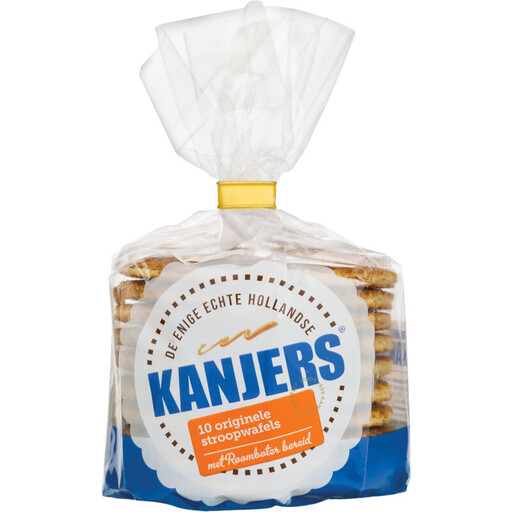 Image unavailable
An option if you want to serve a stroopwafel with hotel-room coffee; the pack contains 10. Before serving them in individual rooms, check whether each waffle is individually wrapped. If guests have dietary requirements, look out for wheat, milk and soya and read the current label.
 Image unavailable
A classic stroopwafel to serve with coffee, with 8 in each pack. If you want to serve one waffle per room, check how many waffles are in each wrapper. For guests with dietary requirements, read the current label, paying particular attention to wheat, milk and soya.
No, don’t assume it is: the classic options described list wheat or gluten-containing cereals, among other ingredients. For a guest who eats gluten-free, choose a product explicitly labelled gluten-free and check the packaging for other allergens too.
Not necessarily. Albert Heijn describes AH Terra Plantaardig stroopwafels as vegan, but also lists wheat and soya. If you need a gluten-free option, check its gluten-free description and label separately.
For the Daelmans jumbo stroopwafel described here, the product description suggests warming it over a hot drink as a serving option. Check the instructions for your chosen product and consider whether this is practical in the room.
Follow the storage instructions on the pack you choose. The PLUS option described here says to store in a cool, dry place away from light; also check the best-before date and the instructions for an opened pack.
Check the allergen information on the label of the specific pack. The Netherlands Food and Consumer Product Safety Authority lists 14 allergens that must be declared; also read any warnings about possible traces if they’re relevant to your guest.