
Travelling with one phone
You mainly want a small, straightforward charging set-up. Check that the charger and cable match your phone’s connector and charging technology.


For one phone, a compact wired charger is often enough; choose a multi-port charger if you want to plug in several devices using a single socket. A folding wireless charging station is only suitable if your phone and accessories are compatible. For a hotel room abroad, take a travel adaptor only if your plug won’t fit, and check your charger’s input voltage too.
You mainly want a small, straightforward charging set-up. Check that the charger and cable match your phone’s connector and charging technology.
You want to plug in your phone and other electronics using a single socket. Check how much power is available when devices are charging at the same time.
You may be looking for a folding stand to keep by your bed. Check that your phone, watch and earbuds are compatible with their respective charging surfaces.
First decide how many devices you want to charge, then check the connector, power output and socket at your destination.
| What to consider | What should you check? | Who is this important for? |
|---|---|---|
| Compact charging for one phone | Check your phone’s connector, which cable you need and whether it’s included. | If I’m only charging my phone, I want a small set-up without extra charging equipment. Around 40% of consumers prioritise compact charging for one device. |
| Several devices using one socket | Check the number and type of ports, and the power output available for each combination of ports in use. | If I want to charge my phone and, for example, my earbuds using the same socket, I check what the ports can deliver when used at the same time. Around 30% of consumers prioritise charging multiple devices simultaneously. |
| Wireless charging | Check the wireless charging standard and whether each device is compatible with its corresponding charging surface. | I want to leave my phone and accessories together in one place to charge wirelessly; all the charging surfaces need to suit my devices. Around 20% of consumers prioritise wireless charging. |
| Different socket when travelling | Check the plug type at your destination and the input voltage your charger supports. | If the plug doesn’t fit the socket at my hotel destination, I want to be able to connect it without assuming I’ll need a voltage converter. Around 10% of consumers prioritise plug compatibility. |
For the IKEA SJÖSS 45W reviewed, IKEA states that one USB-C port delivers 45 W when used on its own, and each port delivers 22 W when both are in use.
Check how power is shared across the number of devices you want to charge at the same time.
The Belkin WIZ024vfBK reviewed is designed for a compatible phone, Apple Watch and suitable earbuds. The stated maximum phone charging power doesn’t apply to every phone.
Check your phone model, watch, earbuds case and the exact contents of the box.
A plug adaptor doesn’t automatically change the mains voltage. For example, ANWB states that the UK travel adaptor reviewed does not convert voltage.
Check the plug type required at your destination and the input voltage of your own charger separately.
The USB-C cable for the IKEA SJÖSS 20W reviewed is sold separately.
Check what’s included and take a cable that fits your phone’s connector.
SJÖSS models for wired charging, with one or two USB-C ports.
The Nexode 65W 10335 is a multi-port mains charger for anyone taking several wired devices along.
The BoostCharge Pro WIZ024vfBK is a folding wireless travel charging station for compatible devices.
The MUV USB A+C 45W world travel adaptor is worth considering if your charger’s plug won’t fit the socket at your destination.
This selection features wired USB-C mains adapters for charging one phone or several devices from a single socket. When buying, check that the specific mains adapter meets the applicable product requirements and carries the required CE marking.
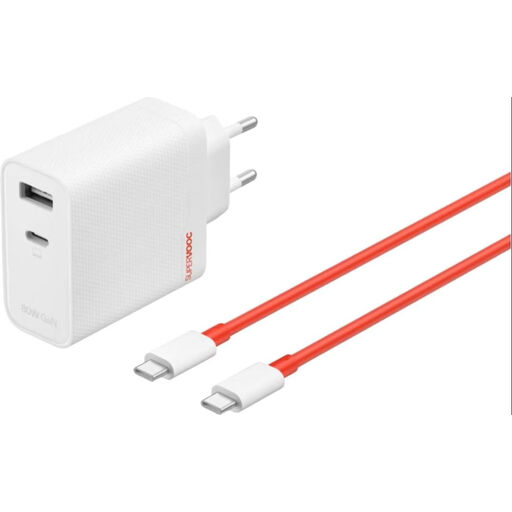 Image unavailable
For anyone who wants to connect a phone and possibly a second device to a wired charger; check that your phone and cable support the charging technology in use.
The product name lists 80 W, two ports (Type A and Type C) and SUPERVOOC.
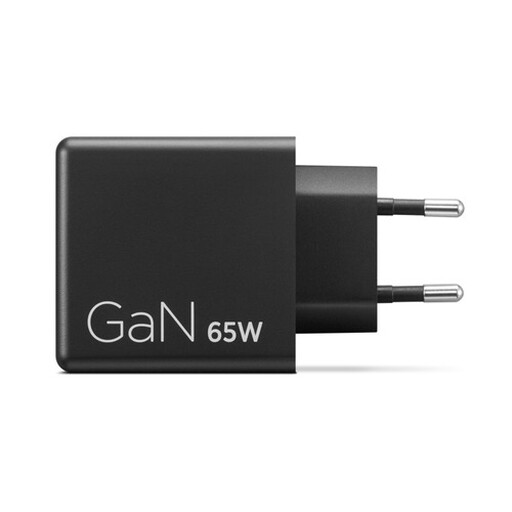 Image unavailable
For anyone who wants to connect a phone and a second USB-C device to the same charger; check how much power is available when charging both at once.
The product name lists 65 W, GaN and two USB-C ports.
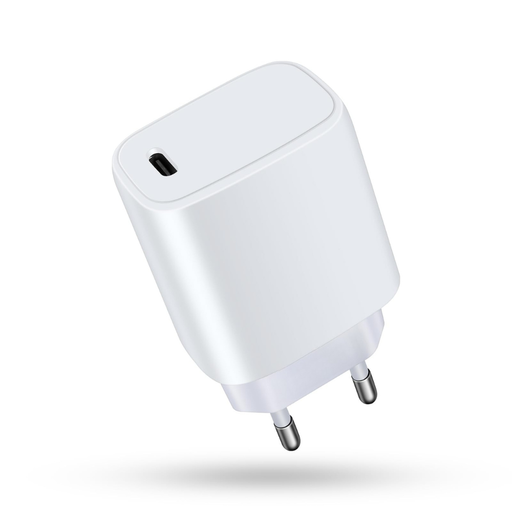 Image unavailable
A wired option for anyone who wants to charge one phone and pack as little charging equipment as possible; check your phone’s connector and charging technology.
The product name lists 20 W, one USB-C port and a compact, portable design.
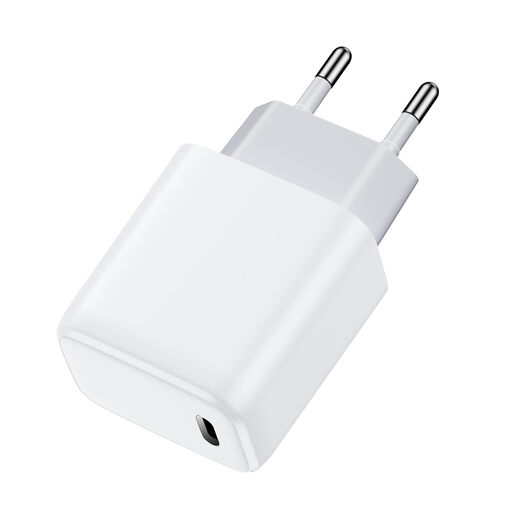 Image unavailable
A wired option for anyone who wants to charge one phone; check that the connector and charging technology are suitable for your device.
The product name lists 30 W, one USB-C port and a compact, portable design.
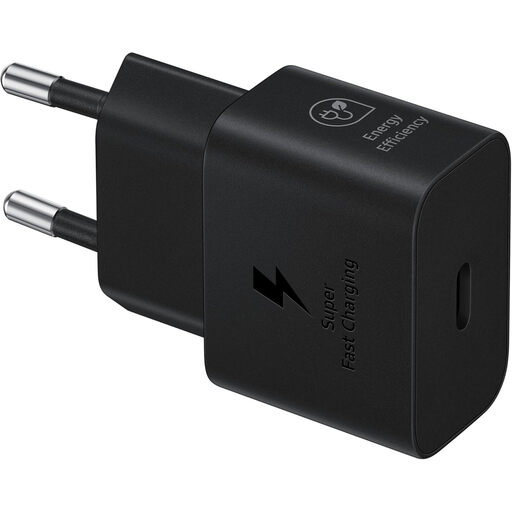 Image unavailable
For anyone looking for a wired phone charger; check that the Type-C connector and charging power are suitable for your phone.
The product name lists 25 W and Type-C.
No. EU rules for mobile phones apply to new devices placed on the EU market since 28 December 2024; older devices don’t get a USB-C connector retrofitted as a result. Check which connector the phone you’re taking with you has.
No. Brandweer Nederland advises leaving chargers uncovered so heat can escape, and not charging devices under a pillow or duvet. Don’t use damaged cables or counterfeit chargers either.
Don’t assume so. ANWB states that the UK travel adaptor reviewed does not convert voltage. Before you travel, check both the plug type you need and the input voltage your charger supports.
According to the Netherlands Food and Consumer Product Safety Authority, electrical equipment covered by the Commodities Act Decree on Electrical Equipment must meet the applicable safety requirements and carry a CE marking. Check the product information for the specific mains adapter; a CE logo alone doesn’t prove that the product has been independently tested.
With normal use, a product should do what you can reasonably expect of it, according to ACM ConsuWijzer; if it’s faulty, the seller must offer an appropriate solution. Online purchases also usually come with a 14-day cooling-off period, separate from the rules for faulty products.