Brands and model examples
These examples show the features manufacturers list for specific models; a brand being mentioned doesn’t mean every model has the same features.
Tomado
Worktop dispensers for individual cups, with features that vary by model.
- Tomado lists a removable 2.5-litre reservoir and serving sizes of 150, 200, 300 and 500 ml for the TWD2503B.
- According to Tomado, the TWD2502B offers 200 ml or continuous dispensing, but no other adjustable temperature. These are manufacturer specifications, not the results of an independent performance test.
Philips
The ADD5910M/10 is a worktop dispenser with multiple volume and temperature settings.
- Philips lists six temperature settings and volumes from 150 to 500 ml, as well as continuous dispensing.
- The individual temperatures aren’t specified; don’t assume a guaranteed dispensing temperature based on the product description.
CASO Design
The HW 660 is a dispenser with small serving size increments and a descaling reminder.
- For model 1879, CASO Design lists a 2.7-litre reservoir, seven settings from 40 to 100 °C and serving sizes from 100 to 400 ml. The manufacturer also lists a CE marking for this model.
- These are manufacturer specifications for the HW 660, not independently measured dispensing results or features of the whole range.
Quooker
Built-in boiling-water taps with a reservoir installed beneath the worktop.
- Quooker describes systems that deliver boiling water instantly and lists standby energy use of 10 W for its system.
- That figure doesn’t prove that a boiling-water tap uses less energy than a kettle in every household; insulation and usage patterns also matter.
Inventum
The HWD722 is an example of a dispenser with a dial and adjustable temperature.
- For this model, Inventum lists a temperature range of 20–100 °C, a removable 2.2-litre reservoir and a removable anti-scale filter.
- Inventum says the HWD722 is no longer available, so its model information is only useful for comparing features.
Hot water dispensers at Joybuy
This selection includes worktop dispensers for making tea. Compare the chosen model’s actual settings with the serving size you need and your tea’s brewing recommendations. For an electrical appliance, check that the relevant CE marking is present; the marking alone doesn’t prove that an individual item is safe.
 No image available
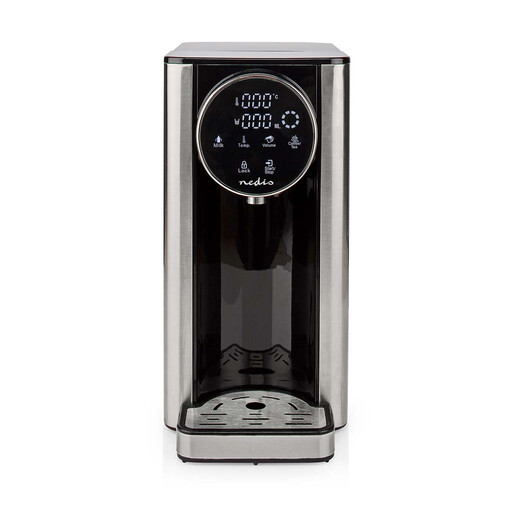
Nedis hot water dispenser, 2600 W, 2.7 l, aluminium and black
Could suit you if you’re looking for a dispenser for individual cups; check which serving size and temperature settings are available on this model.
Power: 2600 W. Capacity: 2.7 l.
Cleaning the drip tray and descaling periodically will require some maintenance.
View at Joybuy
 No image available
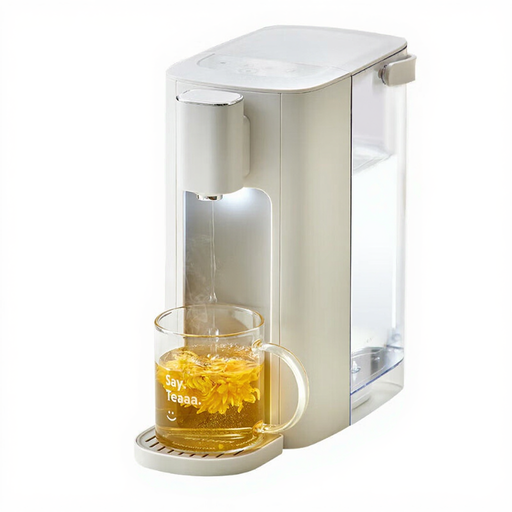
Bear YSJ-E40T2-NEW hot water dispenser, 3 l, 6 temperatures
Could suit you if you want to adjust the temperature and amount of water when making tea; check which settings are available for your needs.
Capacity: 3 l. The product name lists six temperature settings.
The product information warns of a risk of scalding from the hot water outlet and recommends regular descaling.
View at Joybuy
 No image available
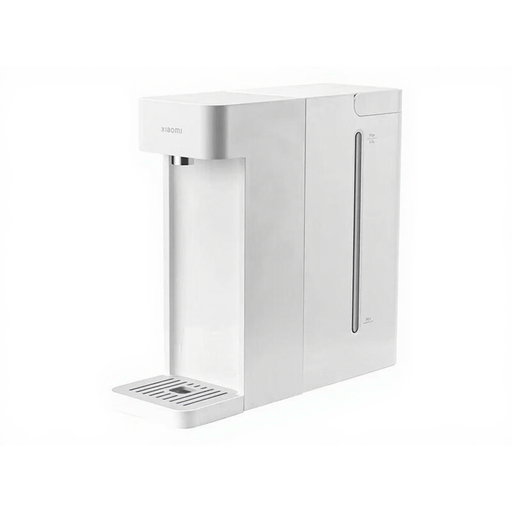
Xiaomi Instant Hot Water Dispenser S1, 3 l, 4 temperature settings
Could suit you if you’re looking for a worktop model with temperature selection; check that the available settings match your tea’s brewing recommendations.
Capacity: 3 l. The product name lists four temperature settings.
View at Joybuy
 No image available
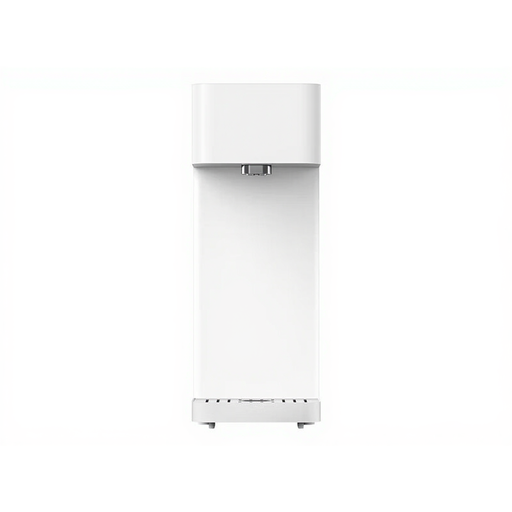
Xiaomi Smart Hot & Cold Water Dispenser, 3 l
Could suit you if you want a cold water function as well as hot water; consider whether this extra feature is useful for your tea breaks.
Capacity: 3 l.
View at Joybuy
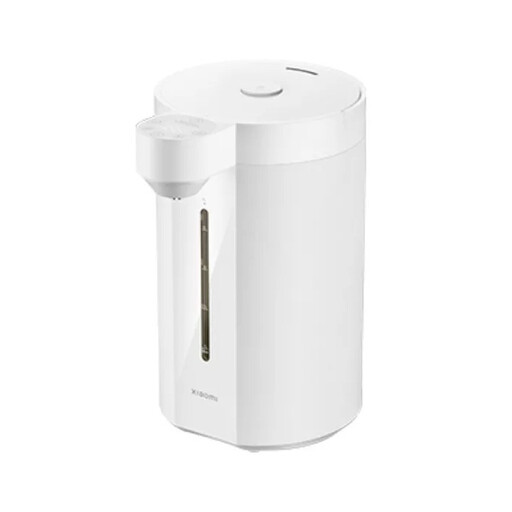 No image available
Xiaomi Smart Electric Hot Water Dispenser, 5 l
Could suit you if you’re looking for a dispenser with a larger capacity; check the temperature settings and controls for the types of tea you make.
Capacity: 5 l.
View at Joybuy
Frequently asked questions
What temperature should I set for tea?
It depends on the tea you’re making. Compare its brewing recommendations with the appliance’s individual settings; a temperature range doesn’t guarantee that every temperature within it can be selected.
How should I position and maintain a worktop dispenser?
Follow the manual for the exact model. For the TWD2503B, Tomado specifies a flat, heat-resistant surface and a suitable earthed wall socket, and warns about the hot water outlet and steam. A removable reservoir or filter doesn’t eliminate the need for cleaning and descaling.
Does a dispenser or boiling-water tap automatically use less electricity?
No, you can’t assume that. Don’t heat more water than you need; for a boiling-water tap, insulation, standby energy use and how often you dispense water also matter. Milieu Centraal highlights the impact of insulation and usage patterns.
Which safety requirement applies to an electric dispenser in the Netherlands?
Electrical products placed on the EU market must carry the relevant CE marking. Check that the marking applies to the model being offered; a CE marking alone doesn’t prove that an individual item is safe. The Dutch government and the Netherlands Food and Consumer Product Safety Authority describe the requirements that apply to electrical products.
What if the appliance breaks too soon during normal use?
In the Netherlands, you have statutory rights against the seller as well as any manufacturer’s guarantee. According to ACM ConsuWijzer, there isn’t a fixed statutory two-year guarantee period that simply applies to every appliance; what you could reasonably expect from the product is what matters.


