
Quick single-cup brewer
You want to dispense enough water for one cup of instant coffee during a short break, with minimal effort.


If you want to make one cup of instant coffee during an afternoon break without adjusting lots of settings, choose a dispenser with a cup setting. If you switch between mugs or drinks, compare the smallest serving size and temperature settings on adjustable models. Also consider refilling, descaling and filter maintenance: claims about speed or energy use don’t automatically tell you what to expect in practice.
You want to dispense enough water for one cup of instant coffee during a short break, with minimal effort.
You switch between cups or hot drinks and want to choose the amount dispensed and the temperature.
You want to know in advance how to keep the reservoir and drip tray clean, and whether the filters need replacing.
Start with the amount of water your mug needs. Then compare the controls and any temperature settings, and consider refilling and maintenance too. If your kettle can already heat small amounts, it could be an alternative.
| What to consider | What to look for | Who is this important for? |
|---|---|---|
| Making one cup quickly | Check that the cup setting and the space beneath the spout suit your mug and how you want to use the controls. Nedis says the KAWD100FBK has a cup setting and an adjustable spout. | If you want to make one cup during a short break with minimal effort, focus on the controls and whether your mug fits. Around 33% of consumers prioritise speed when making one cup. |
| Amount and temperature | Compare each model’s smallest dispensing amount with the capacity of your mug. Philips lists preset volumes from 150 ml for the ADD5910M/10; Princess lists settings from 100 ml for the 237000. | If you use different mugs or make different hot drinks, you’ll want to choose the amount and temperature without compromising ease of use with settings you don’t need. Around 27% of consumers prioritise a suitable amount and temperature. |
| Refilling and maintenance | Check whether the reservoir and drip tray can be removed, and what descaling instructions apply. Inventum says the water filter for the HWD725B should be replaced around three times a year. | If you use the appliance often, you’ll want to know how easy it is to refill and clean, and whether replacing the filter fits into your routine. Around 20% of consumers consider ease of maintenance the most important factor. |
| Safe positioning and energy use | Follow the instructions for the exact model when positioning and using it. Milieu Centraal’s main advice is not to heat more water than you need; this alone does not prove that a dispenser will save energy overall. | If you’re placing a hot water appliance on your worktop, you’ll want to position it according to the instructions and compare its use with your current kettle. Around 20% of consumers give the greatest weight to safe use and energy consumption. |
Energy use also depends on how much water you would otherwise heat. A claim about one model is not an independent comparison for your own use.
If you’re making one cup in the afternoon, compare how much water you actually heat with the amount you use in your current kettle.
The smallest preset serving varies by model. Princess lists a setting from 100 ml for the 237000; Philips lists preset volumes from 150 ml for the ADD5910M/10.
Measure how much water your mug needs and compare it with the settings on the exact model.
Inventum says the HWD725B filter should be replaced around three times a year. Princess recommends descaling the 237000 regularly.
Before you buy, check which maintenance instructions apply and whether the model uses a filter.
With a model that uses replaceable filters, filter maintenance means regular replacements in addition to routine cleaning.
The KAWD100FBK is designed for uses including instant coffee, with a choice of a single cup or continuous dispensing.
The ADD5910M/10 is aimed at users who want several preset volumes and a choice of temperatures.
The 237000 combines small dispensing increments with temperature control and a lock button.
The HWD725B has four temperature settings and removable parts for maintenance.
According to CASO Design, the HW 660 offers several settings for choosing both small and larger amounts.
This selection includes hot water dispensers for single cups or adjustable dispensing, as well as a kettle as an alternative for when you want to choose the amount yourself.
 No image available
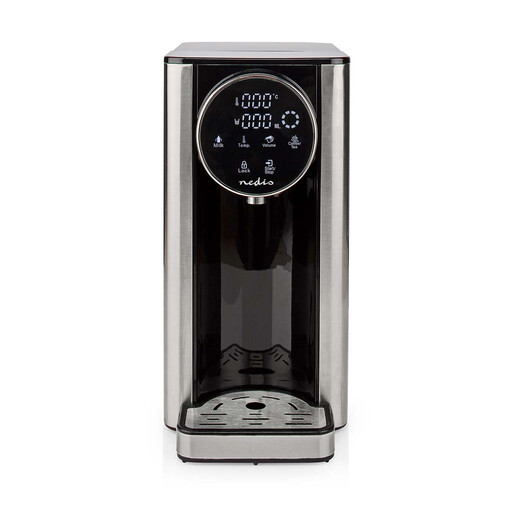
Adjustable volume and temperature are useful if you switch between mugs or hot drinks.
Five volume settings; dispenses from 100 ml up to 2,7 l. Seven temperature settings. Removable reservoir and drip tray.
 No image available
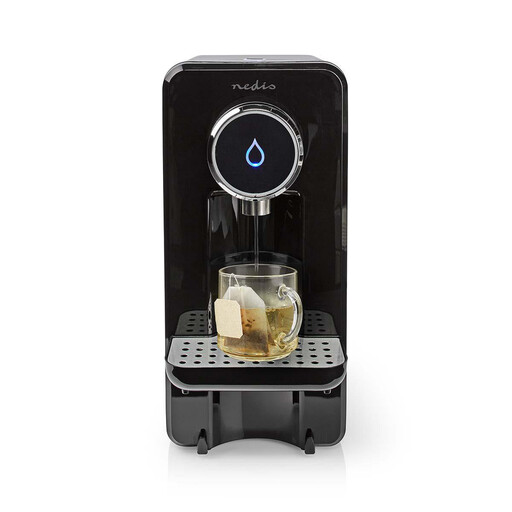
The single-cup control described is designed for making a quick cup during a short break.
According to the product description, a short press dispenses around 200 ml; continuous dispensing is described as up to a maximum of 500 ml per use. The spout is adjustable and the drip tray is removable.
 No image available
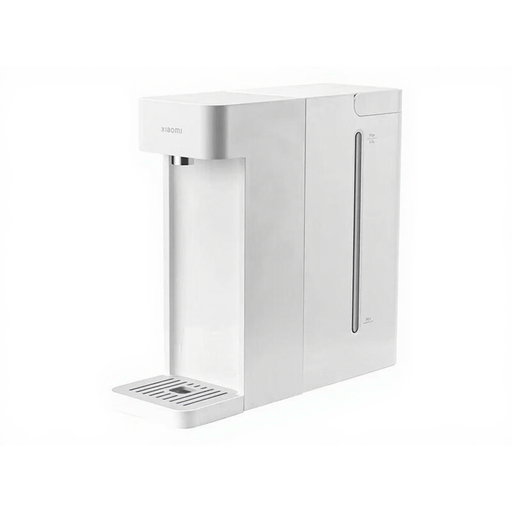
The listed adjustable volumes and temperature options could be useful if you make different serving sizes.
The product description lists dispensing amounts of 250, 500 and 750 ml, as well as temperature settings.
 No image available
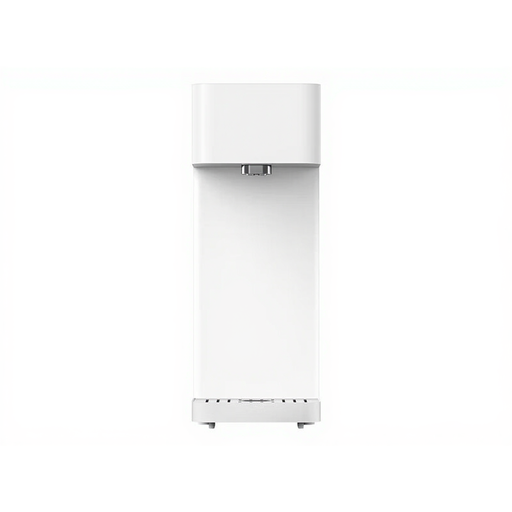
Preset volumes and a choice of temperatures suit use with different cup sizes.
The product description lists water amounts in 100 ml increments, app control and a 95 °C hot water setting.
 No image available
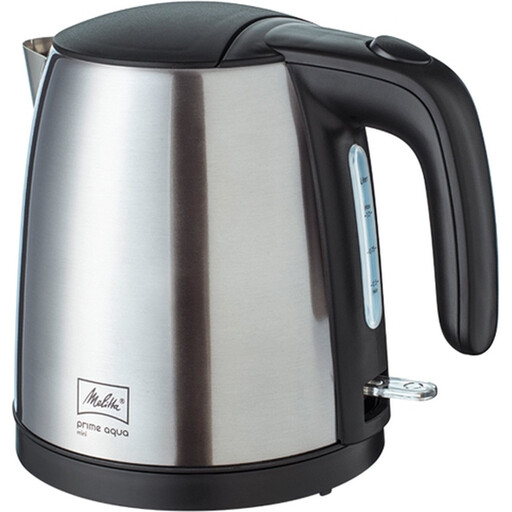
This kettle is an alternative if you want to choose the amount of water yourself.
Capacity: 1 litre. The stated filling range is 0,5 to 1,0 litres; according to the product instructions, you can’t fill it with a smaller amount.
Not necessarily. First, choose a dispensing amount that suits your cup. Compare the temperature settings if you also make other drinks or want a particular drinking temperature; options vary by model.
Follow the instructions for the exact model. The Inventum manual for the HWD722 specifies, among other things, a flat surface, indoor use and keeping the appliance away from flammable objects. Princess recommends descaling the 237000 regularly.
That’s not a safe general conclusion. Milieu Centraal’s main advice is not to heat more water than you need. If your kettle already does that well, consider whether an extra appliance would make a difference for your needs.
If a product is faulty in the Netherlands, contact the seller. According to the Dutch government, a manufacturer’s or seller’s guarantee is in addition to your statutory rights; check what an extended warranty package actually adds before deciding whether it’s worthwhile.
According to EUR-Lex, electrical equipment covered by the EU Low Voltage Directive must carry the CE marking when placed on the EU market. A product listing alone does not confirm that a specific item on offer meets these requirements.