
If you usually make one cup of instant coffee
You want a portion that suits your mug, without heating more water than you need each time. Milieu Centraal advises boiling no more water than necessary.


If you usually make one cup of instant coffee, a dispenser with a portion size that suits your mug could be a good fit. An adjustable model gives you more choice if you use different mugs, while a small kettle is an alternative if you prefer to measure out exactly one cup yourself. Make sure you have enough room for the appliance, filling it and placing your mug. More settings don’t automatically mean lower energy consumption.
You want a portion that suits your mug, without heating more water than you need each time. Milieu Centraal advises boiling no more water than necessary.
You need room not just for the appliance, but also to fill it, operate it and place your mug. Compare its dimensions with the space you actually have available.
If you switch between mug sizes or want to choose the temperature yourself, a choice of portion sizes and temperature settings may suit the way you use it better than a single fixed cup setting.
A good fit if: you mainly make one cup and the fixed portion suits your mug.
The trade-off: a fixed setting gives you less choice over the amount or temperature.
A good fit if: you switch between mug sizes or want to choose the temperature yourself.
The trade-off: compare the controls and maintenance requirements; having more settings doesn’t prove that an appliance is more energy-efficient.
A good fit if: you’re happy to measure out the water yourself and don’t need a dispensing function. Milieu Centraal suggests a small kettle as an option for people who often make one or two cups.
The trade-off: you pour the water yourself and have to wait for it to heat up.
| What to consider | What should you check? | Who is this important for? |
|---|---|---|
| Amount per cup | Compare the capacity of your mug with the fixed portion or available settings. | If I usually use one mug, I don’t want to have to adjust the amount every time. Consumers who prioritise a portion size that suits their cup make up around 36%. |
| Worktop space | Measure the width, depth and height, and leave room to fill the reservoir and place your mug. | On a small worktop, the appliance needs to be easy to use without blocking the filling area or space for your mug. Consumers who prioritise where an appliance can be placed make up around 29%. |
| Temperature and controls | Check the settings for the exact model; these vary between versions. | If I switch between mugs or want to choose the temperature myself, adjustable settings are more useful than one fixed portion. Consumers who prioritise having a choice make up around 21%. |
| Cleaning and maintenance | Check which parts can be removed and follow the instructions for descaling and any filters. | If you want to spend less time cleaning, check in advance which parts need maintenance. Consumers who prioritise easy maintenance make up around 14%. |
The reservoir capacity doesn’t tell you how much water the appliance dispenses at a time. For example, DistinQ specifies a minimum reservoir fill of 0.5 litres and a dispensing volume of 200 ml per press.
Compare both the minimum fill amount and the portion setting with what you actually use.
Energy use also depends on how much water you heat. A small kettle can also work well if you make one or two cups; Milieu Centraal advises boiling no more water than necessary.
Compare how much water you need each time, and don’t treat general energy-saving claims as a measurement for your household.
On a small worktop, you also need room to fill the appliance and place your mug. A flat, heat-resistant surface and a suitable socket are important too; the Tomado TWD2502B instructions list these requirements.
Measure the full space available and follow the positioning instructions for the exact model.
Nedis offers, among other products, a dispenser with a fixed portion and a separate adjustable version. The models have different specifications.
The TWD2502B is designed for a fixed cup portion, while the TWD2503B offers several volume options and temperature control, according to Tomado.
According to CASO, the HW 666 Inox is a dispenser with adjustable volumes and temperatures, and a removable 2.7-litre reservoir.
According to the product page, the DistinQ dispenser has a fixed dispensing volume of 200 ml and a 2.3-litre reservoir.
Below are dispensers with fixed or adjustable settings, as well as kettles as an alternative for heating water for instant coffee. For your chosen electrical appliance, check the CE marking and EU Declaration of Conformity; a general product listing doesn’t confirm these details for every individual model.
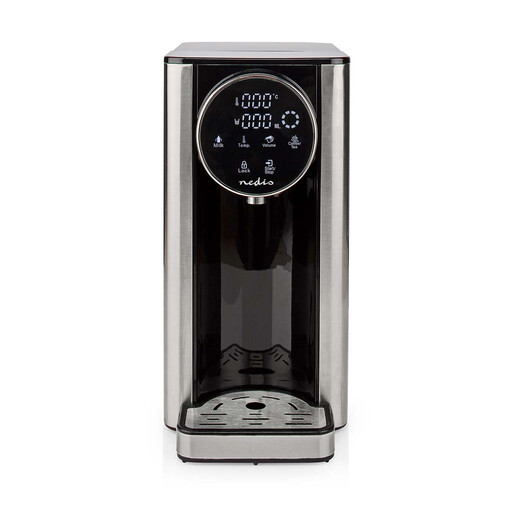 No image available
A good fit if you’re looking for a dispenser with adjustable volume and temperature; check that you have enough space to position and fill it.
The product name lists a capacity of 2.7 l and a power rating of 2600 W.
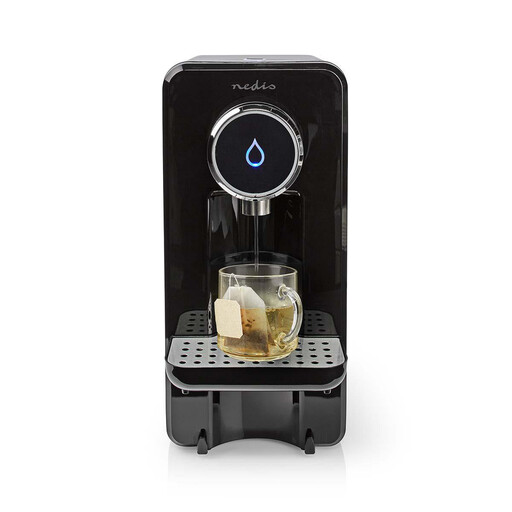 No image available
A good fit if you usually make one cup and find a fixed 200 ml portion suits your mug.
Nedis lists a capacity of 2.5 l and a power rating of 2600 W. The manufacturer also specifies an adjustable spout and a descaling alert.
A short press dispenses around 200 ml; to dispense more water, hold the button down, up to a maximum of 500 ml per use.
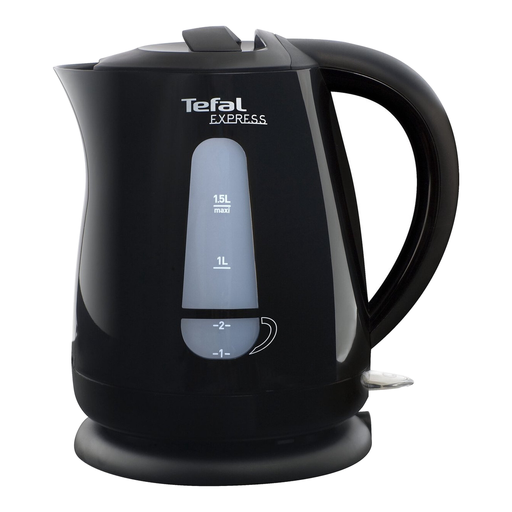 No image available
A good fit if you’d rather measure and pour the water yourself than use a dispenser with a dispensing function.
The product name lists a capacity of 1.5 l and a compact design in stainless steel and black.
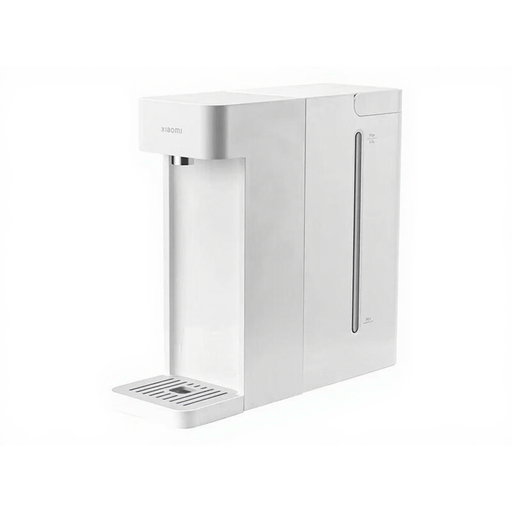 No image available
A good fit if you’re looking for a compact dispenser with temperature control; check that the dispensing volumes suit your mug.
The product name lists four temperature settings and a design for use on the worktop.
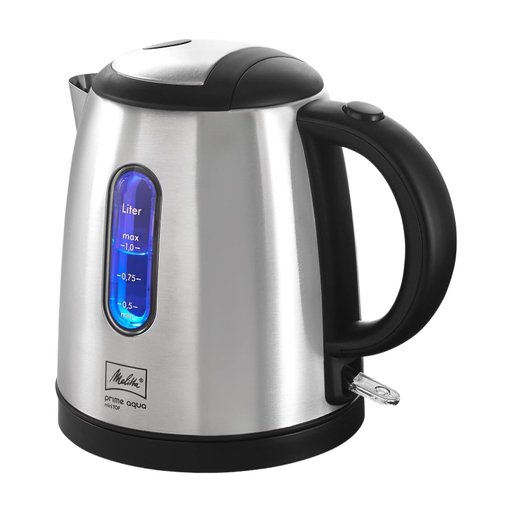 No image available
A good fit if you’re considering a kettle as an alternative to a dispenser; measure the space first and work out how much water you usually need.
The dispensers discussed here are freestanding appliances with a water reservoir. Follow the instructions for your chosen model when positioning and connecting it. For example, the Tomado TWD2502B instructions specify a flat, heat-resistant surface and a suitable wall socket with an earth connection.
Heat only as much water as you need and descale the appliance according to its instructions. Milieu Centraal suggests a small kettle if you often make one or two cups; a dispenser isn’t the only way to heat a small amount of water.
No. According to the Dutch government, there is no fixed statutory guarantee period in the Netherlands: you’re entitled to a product that works properly for as long as you can reasonably expect it to. If a product is faulty, contact the seller; a manufacturer’s guarantee may be available in addition to this.
Electrical appliances placed on the market in the Netherlands must meet the applicable European safety requirements. The Dutch government’s Ondernemersplein states that the manufacturer must apply a CE marking and draw up an EU Declaration of Conformity. Check this information for the specific model; a brand or model listing alone doesn’t confirm the details of an individual product.