Who is this relevant for?

Making porridge without a hob

If you want to make a portion of porridge using only hot water, check the packet for the exact variety first. Quaker recommends boiling water for Pot Protein Naturel, but gives microwave or pan instructions for Oats Express.

Teams with busy breaks

If several colleagues are making a portion one after another, the amount needed per portion and the capacity during the busiest period are important. Culligan lists the number of users, peak demand, desired temperature and available connection as factors when choosing an office solution.

People managing a shared kitchen

When an appliance is shared, it helps to agree in advance who will refill, clean and descale it. Also check that the reservoir and drip tray are easy to access for daily care.

What should you consider when choosing?

Freestanding hot water dispenser

Choose this when: colleagues regularly dispense individual portions and adjustable volumes would be useful.

Trade-off: someone needs to refill and clean the reservoir; a temperature setting doesn’t automatically tell you the water temperature in the bowl.

Kettle

Choose this when: one or a few colleagues occasionally need boiling water and can boil the amount they need.

Trade-off: for successive portions, the kettle needs to be refilled and brought back to the boil.

Installed tap or commercial water dispenser

Choose this when: the kitchen has a suitable connection and space for installation, and lots of colleagues use the same point.

Trade-off: installation and maintenance are part of the decision; for a commercial dispenser, check the temperature of the exact model.

What to consider What should you check? Who should pay particular attention?
Preparation and temperature Read the packet and check whether the exact model specifies the required temperature. CASO lists a 100 °C setting for the HW 1660; Tefal lists settings of 70–95 °C for the BR3508E0. If I can only use hot water at the office, I want it to match the instructions for my porridge variety. For around 31% of consumers, the right preparation method is their main concern when buying.
Capacity during peak use Count the portions needed during the busiest break and compare the portion size with the dispensing settings. If the appliance will be used intensively, ask about its capacity when dispensing successive portions. If colleagues take their break at the same time, I want to avoid the dispenser holding up the queue. For around 25% of consumers, capacity during peak use comes first.
Shared use and maintenance Check the controls and how easy it is to access the reservoir and drip tray, and agree who will refill, clean and descale the appliance. If I manage the kitchen, I want to know who will maintain the appliance and how to use it safely. Around 25% of consumers give shared use and maintenance top priority.
Water and energy consumption Compare how much water is heated per portion and, for a storage boiler, check its stated standby power consumption. Milieu Centraal advises heating no more water than you need. If I want to reduce waste and ongoing running costs, I compare consumption based on how we actually use it. This is the main concern for around 19% of consumers.

Common mistakes

  • Assuming all instant porridge only needs boiling water

    Preparation instructions vary by variety. Quaker recommends boiling water for Pot Protein Naturel, while Oats Express is made in a microwave or pan, according to Quaker.

    Check the packet for the porridge used at your office first, then compare an appliance’s temperature settings.

    Without the required microwave or hob, a variety with those preparation instructions may not be suitable for the office.

  • Assuming ‘hot’ means a specified setting of 100 °C

    According to Tefal, the BR3508E0 has settings of 70–95 °C. This product specification does not confirm a 100 °C setting for porridge that calls for boiling water.

    Check the temperature settings for the exact model, rather than relying solely on the description ‘hot water dispenser’.

  • Assuming it saves energy because it’s fast or based on a standalone claim

    Milieu Centraal advises heating no more water than you need; a tap that keeps water hot may also use power on standby. Tefal’s energy-saving claim relates to a specific comparison with a Tefal kettle, heating one 250 ml cup to 95 °C.

    Compare the amount you actually use and any standby power consumption. Don’t draw a general conclusion about energy savings from one specific test condition.

  • Looking only at the reservoir capacity

    A larger reservoir alone doesn’t tell you how well the appliance can handle successive portions during a busy break. Culligan lists peak demand and the number of users as factors when choosing an office solution.

    Compare portion size, the number of successive portions and who is responsible for refilling.

Brands and models to consider

CASO Design

Freestanding dispensers; the HW 1660 is one model to consider when making multiple portions.

  • CASO lists a removable 4-litre reservoir, temperature settings of 40–100 °C and portion sizes of 100–400 ml for the HW 1660.
  • These are stated model specifications, not independent measurements of dispensing speed or the temperature in the bowl.

Philips

The ADD5910M/10 has temperature and volume settings for different mugs or bowls.

  • Philips lists six temperature settings and volumes of 150–500 ml, as well as continuous dispensing.
  • The product information consulted doesn’t confirm an exact setting of 100 °C. If your porridge requires boiling water, don’t choose this model based solely on the description ‘piping hot’.

Tefal

The BR3508E0 is a freestanding dispenser for preparations suited to its stated temperature settings.

  • Tefal lists a removable 2-litre reservoir and an automatic descaling process.
  • According to Tefal, the temperature settings range from 70–95 °C; there is no stated 100 °C setting. Tefal’s energy-saving claim relates to a specific comparison with a Tefal kettle, heating one 250 ml cup to 95 °C.

Quooker

An installed boiling water tap is an option if your kitchen has room for a tap and reservoir.

  • Quooker lists the PRO3 reservoir as holding 3 litres of water at 100 °C.
  • The tap needs space in and beneath the worktop. The stated specifications and standby power consumption don’t automatically apply to other systems.

Culligan

Commercial water dispensers are worth exploring if team size and service are important.

  • Culligan describes models with hot water and different user capacities.
  • Ask about the temperature, capacity during peak use and service terms for the exact model. ‘Hot water’ doesn’t automatically mean the water is suitable for porridge that calls for boiling water.

Products on Joybuy

This selection includes freestanding hot water dispensers for individual portions and a larger-capacity model for hot preparations. Check whether each product’s temperature suits the instructions for the porridge you want to make.
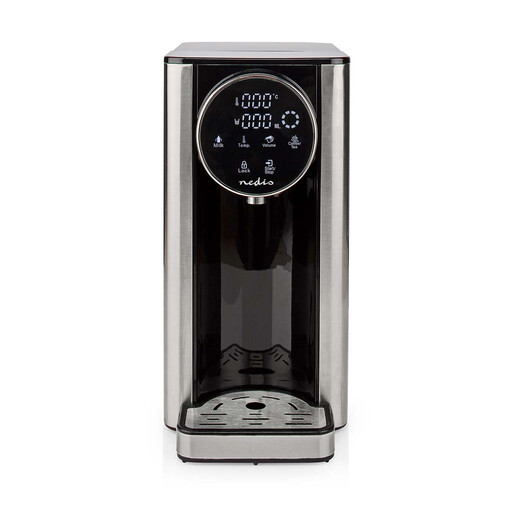
Nedis Hot Water Dispenser, 2.7 l, 2600 W

Nedis Hot Water Dispenser, 2.7 l, 2600 W

The adjustable volumes are useful when colleagues dispense individual portions.

The product information lists five volume settings, seven temperature settings and a 2.7 l reservoir. It also mentions a child lock, boil-dry and overheating protection, and a limescale detection warning.

Joybuy
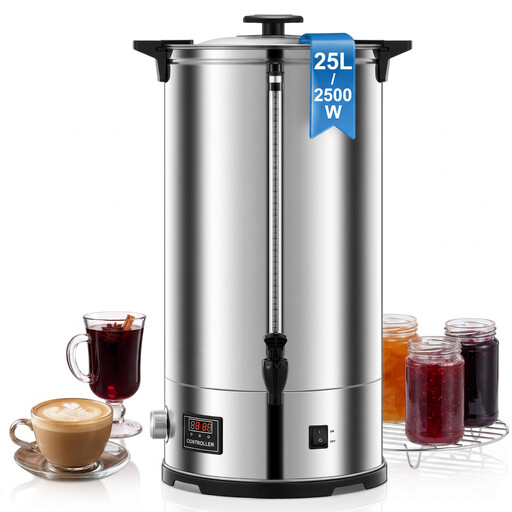
FOHERE 25L Hot Water Dispenser, Soup Maker

FOHERE 25L Hot Water Dispenser, Soup Maker

The stated capacity makes this model worth considering for larger quantities of hot food, not just individual bowls of porridge.

The product name specifies a 25 l capacity, stainless steel cooking pot, timer, temperature control and 2500 W power. Check that the temperature settings suit the preparation you have in mind.

Joybuy
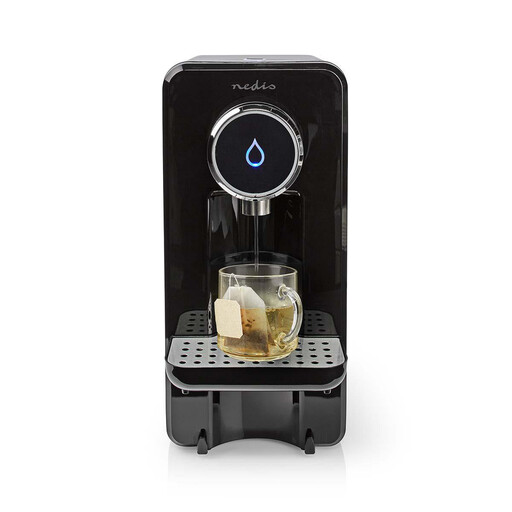
Nedis Hot Water Dispenser, 2.5 l, 2600 W

Nedis Hot Water Dispenser, 2.5 l, 2600 W

The dispensing options described are useful when filling individual bowls; check that the temperature suits your type of porridge.

The product information lists a 2.5 l reservoir and dispensed water at approximately 98–100 °C. According to the description, a short press dispenses approximately 200 ml; holding the button down dispenses up to 500 ml per use. The water can be boiling hot and the spout may remain warm after use, so keep users away while dispensing and immediately afterwards.

Joybuy
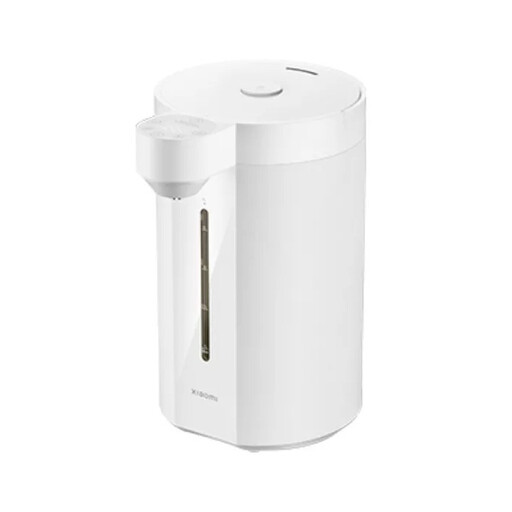
Xiaomi Smart Electric Hot Water Dispenser, 5 l

Xiaomi Smart Electric Hot Water Dispenser, 5L

The stated capacity and temperature settings may be useful when several colleagues share the appliance.

The product information lists a 5 l capacity, adjustable temperature settings, a digital display, child lock and automatic shut-off. Check the settings for the preparation you need.

Joybuy
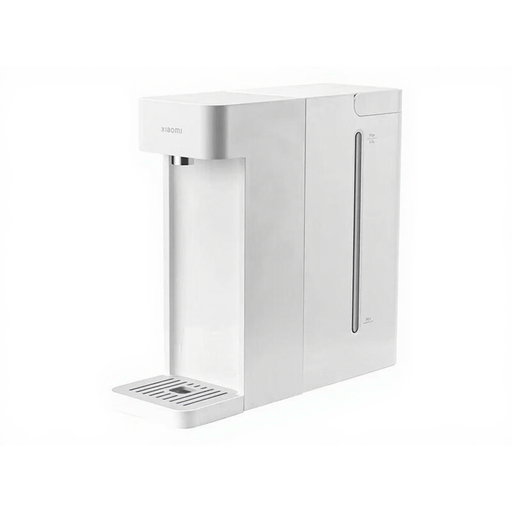
Xiaomi Instant Hot Water Dispenser S1, 3 l

Xiaomi Instant Hot Water Dispenser S1, 3L

The stated portion sizes may be handy for individual bowls, as long as the chosen temperature is suitable for the porridge.

The product information lists a 3 l tank and three portion sizes: 250, 500 and 750 ml. The product description doesn’t specify a 100 °C setting, so don’t assume this model is suitable for porridge whose packet instructions call for boiling water.

Joybuy

Frequently asked questions

Can I make any instant porridge with water from a dispenser?

No, preparation methods vary by variety. Quaker recommends boiling water for Pot Protein Naturel, but gives microwave or pan instructions for Oats Express. Follow the packet for the exact variety; a Voedingscentrum recipe cooks ordinary porridge on the hob.

What should I check before putting an appliance in a shared kitchen?

Check the space and connection required for the type you choose, and agree who will refill, clean and descale the appliance. According to Quooker, a Quooker system consists of a tap on the worktop and a reservoir in the kitchen cupboard; the CASO HW 1660 reviewed is a freestanding appliance with a removable reservoir.

What warranty applies if a business buys the appliance?

The Authority for Consumers and Markets (Autoriteit Consument & Markt) describes the statutory consumer guarantee for products sold to consumers. If you’re buying in a company’s name, don’t assume the same consumer rights apply; check the business sales, service and warranty terms before ordering.

Does an ordinary office need a mandatory Legionella management plan?

According to the Dutch government, the stated requirements for priority drinking water locations don’t apply to ordinary offices. If the building also has a function that is classed as a priority location, that situation must be assessed separately.

Which safety rules apply to an electric dispenser?

The Netherlands Food and Consumer Product Safety Authority (Nederlandse Voedsel- en Warenautoriteit) outlines safety requirements for electrical equipment and states that the manufacturer is responsible for the technical documentation and declaration of conformity. Check the product information and usage restrictions for the exact appliance; this general explanation doesn’t confirm that a specific model has been independently assessed for conformity.
