What should you look for when choosing?
Freestanding hot water dispenser
Choose this if: you often fill a flask and don’t want to alter your plumbing.
The trade-off: the appliance takes up a permanent spot on the worktop, and dispensing and temperature features vary by model.
Small electric kettle
Choose this if: you fill a flask less often or want to put the kettle away after use.
The trade-off: you have to wait for the water to heat up and pour it yourself; check that the minimum fill level suits your needs.
Boiling water tap with reservoir
Choose this if: you often need instant boiling water for other kitchen tasks too, and have space in the cupboard.
The trade-off: installation requires suitable connections and cupboard space; Quooker specifies a standby power consumption of 10 W for the reservoirs mentioned.
When filling a flask in a small kitchen, there are four things to consider: whether your flask fits, available space, dispensing and temperature controls, and maintenance or energy use.
| What to consider |
What should you check? |
Who is this important for? |
| Flask fit and dispensing |
Measure your flask up to its opening and compare it with the clearance beneath the spout; also check the maximum amount dispensed per use. |
If I want to fill my flask directly, I need to know whether it fits straight beneath the spout and whether I can dispense enough water. Around 33% of consumers give flask fit and dispensing top priority. |
| Kitchen space |
Measure the available width, depth and height on the worktop and, for a tap with a reservoir, the space inside the cupboard. |
With limited worktop space, I need to know where the appliance and any other components will go. Around 27% of consumers put space requirements first. |
| Volumes and temperature |
Compare the available volumes and temperature settings for the full model number with the way you plan to use it. |
If I make smaller drinks as well as filling a flask, I want to be able to choose the amount or temperature. Around 20% of consumers choose dispensing and temperature controls as their main consideration. |
| Maintenance and energy use |
Check how to descale the appliance, whether a filter needs replacing and whether a reservoir uses electricity when you’re not dispensing water. |
If I want to factor in ongoing maintenance and energy use, I compare these with how often I need hot water. Around 20% of consumers put maintenance and running costs first. |
Hot water dispensers at Joybuy
This selection features freestanding hot water dispensers. Compare your flask’s height with the clearance beneath the spout, and check that the specific model carries the required CE marking before you choose.
 No image available
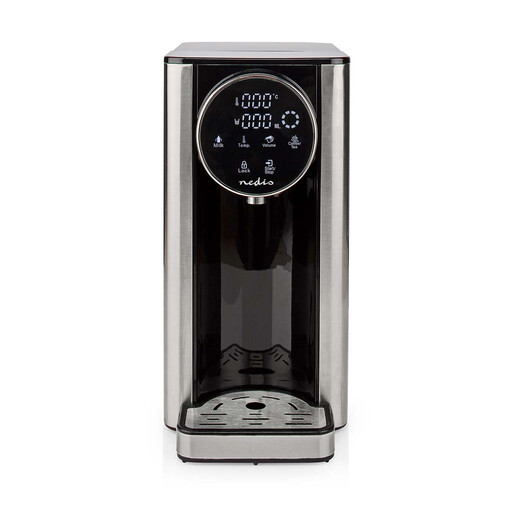
Nedis hot water dispenser 2600 W, 2.7 l
An option to compare if you want to set different volumes and temperatures; measure beforehand to check that your flask fits beneath the spout.
Five volume options, seven temperature settings and a removable reservoir are specified. The maximum vessel height is given as 16 cm; according to the product information, it dispenses from 100 ml up to 2.7 l. Dimensions: 205 × 355 × 320 mm.
View at Joybuy
 No image available
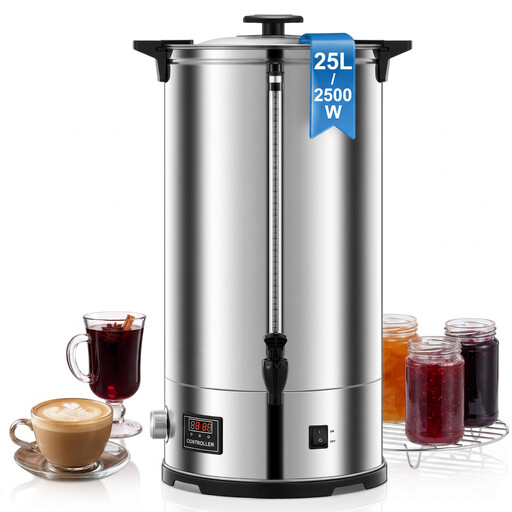
FOHERE 25L hot water dispenser and soup maker
The product title also mentions a soup maker; check that the model and spout are suitable for filling your flask.
The title specifies a 2500 W motor, a stainless steel pot, a timer and temperature control.
View at Joybuy
 No image available
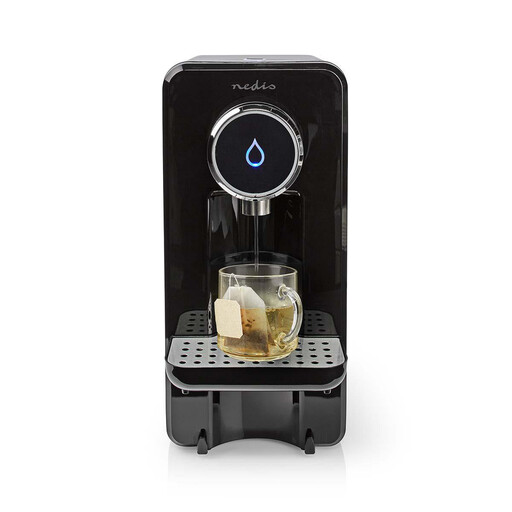
Nedis hot water dispenser 2600 W, 2.5 l
An option to compare if you fill a small thermos flask; bear in mind the specified limit per continuous dispense.
The product information lists an adjustable spout height, a 2.5 l reservoir and a maximum of 500 ml per use. It also mentions a button for around 200 ml.
View at Joybuy
 No image available
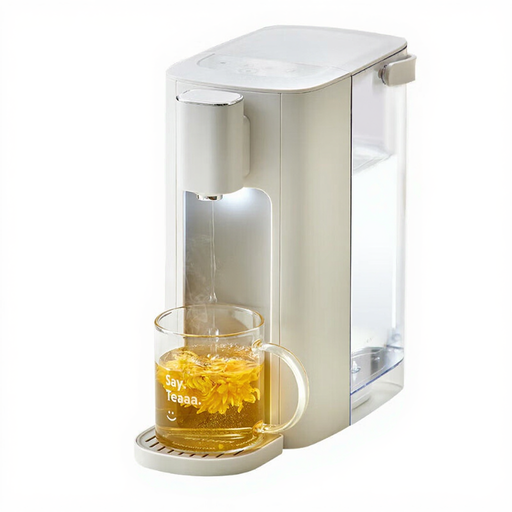
Bear YSJ-E40T2-NEW hot water dispenser, 3 l
An option to compare if you want to choose different volumes and temperatures; check the height of your flask and the controls to make sure they suit your needs.
The product information specifies a removable 3 l reservoir, adjustable volumes of 150, 250 and 500 ml, and six temperature settings.
View at Joybuy
No image available
Xiaomi Instant Hot Water Dispenser S1
A compact model to compare if you want to dispense a set volume; check separately that your flask fits beneath the spout.
The product information lists four preset temperatures, temperature adjustment in 1 °C increments, and volumes of 250, 500 and 750 ml. The title describes the appliance as compact and suitable for a desk.
View at Joybuy
Frequently asked questions
How can I tell if my flask will fit beneath the spout?
Measure your flask up to its opening and compare that measurement with the clearance beneath the spout. Nedis specifies a maximum of 16 cm for the KAWD310FBK; this doesn’t automatically apply to another model.
Does a freestanding hot water dispenser need to be connected to the mains water supply?
The freestanding models in this guide have a water reservoir. The connections needed for a boiling water tap depend on the reservoir you choose; also check the available space and accessibility inside the kitchen cupboard.
How do I use a dispenser safely?
Follow the instructions for your chosen model and place the appliance on a flat, heat-resistant surface. Keep your hands away from the hot outlet and steam, descale it according to the model instructions, and check separately whether and when the filter needs replacing.
Is a hot water dispenser always cheaper to run than a kettle?
No, not simply because of the type of appliance. Milieu Centraal advises heating only as much water as you need; with a boiling water tap, you should also consider the electricity used to keep the water at temperature.
What product safety requirement applies to an electric dispenser in the Netherlands?
According to the NVWA, CE marking is compulsory for electrical equipment covered by the Warenwetbesluit elektrisch materiaal, including equipment with a nominal AC voltage within the range of 50–1000 V. Check the marking on the specific model; CE is the manufacturer’s declaration and is not, in itself, an independent inspection.


