
For filling larger flasks
If you want to dispense more than a cupful, look for continuous dispensing and check how much room there is beneath the spout. Philips and CASO specify a continuous setting on certain models.


Choose a dispenser based on the capacity and height of your flask. Continuous dispensing may be more convenient than fixed portions, but check that your flask fits beneath the spout. If you only fill a flask occasionally, compare the dispenser with a kettle that lets you heat exactly the amount you need; a dispenser is not automatically more energy-efficient. Product specifications are supplied by manufacturers and are not a substitute for independent testing. The Dutch Food and Consumer Product Safety Authority says that electrical appliances must carry the CE mark, but check this for the model on offer.
If you want to dispense more than a cupful, look for continuous dispensing and check how much room there is beneath the spout. Philips and CASO specify a continuous setting on certain models.
If you want different amounts or temperatures for different drinks, compare the settings on the exact model. Philips, Tomado and CASO list various adjustment options for their respective models.
If you don’t fill a flask often, a kettle that lets you heat just the right amount of water may be enough. Milieu Centraal advises heating no more water than you need.
| What to consider | What should you check? | Who is this important for? |
|---|---|---|
| Filling your flask | Measure your flask and compare its height with the clearance beneath the spout. Also check the fixed portion sizes and whether the model offers continuous dispensing. | If I want to fill a larger flask without having to start another portion each time, I’ll pay particular attention to the spout and dispensing options. Around 36% of consumers say that filling a flask is their top priority. |
| Choosing a temperature | Check the temperature settings for the exact model. A selected setting is not the same as an independently measured temperature in the flask. | For different drinks, I want to choose the temperature I dispense. Around 29% of consumers put temperature choice at the top of their list. |
| Convenience for occasional use | Think about how often you fill your flask and whether you can measure out exactly the amount you want with your kettle. | If I only fill a flask occasionally, I want to know whether I really need a separate appliance. Around 21% of consumers value simplicity most for occasional use. |
| Safe positioning and maintenance | Read the manual and check the positioning, cleaning instructions and any replacement filters for the exact model. | When using an appliance that dispenses hot water, I want to position it safely and know what maintenance it needs. Around 14% of consumers prioritise safety and maintenance. |
A large reservoir doesn’t tell you how tall a flask can be beneath the spout. Measure your flask and compare it with the spout height and appliance dimensions.
Before buying, check the clearance beneath the spout and make sure the flask can stand securely.
Energy use depends partly on how much water you would otherwise heat. Information about a boiling-water tap does not necessarily apply to a countertop dispenser.
Compare the appliance with how you use your own kettle, and don’t heat more water than you need. Treat manufacturers’ claims as anything but independent energy-use measurements.
Tomado sells compatible replacement filters separately for models including the Tomado TWD2503B/01.
Check the correct filter number and the model’s maintenance instructions.
Replacement filters can be an ongoing expense; the cost depends on the model, how often you use it and when you buy them.
Philips positions the ADD5910M/10 as a dispenser for cups and larger quantities.
Controls vary by model: the TWD2503B offers fixed volume options, while the TWD2502B dispenses 200 ml or continuously, according to Tomado.
CASO describes the HW 660 as offering temperature and volume selection, as well as a continuous setting.
The manufacturer’s documentation describes the Nedis KAWD300FBK as a dispenser with adjustable dispensing and controls.
These countertop hot water dispensers offer different volume and temperature settings. Check that the electrical model on offer carries the CE mark, which the Dutch Food and Consumer Product Safety Authority says is mandatory.
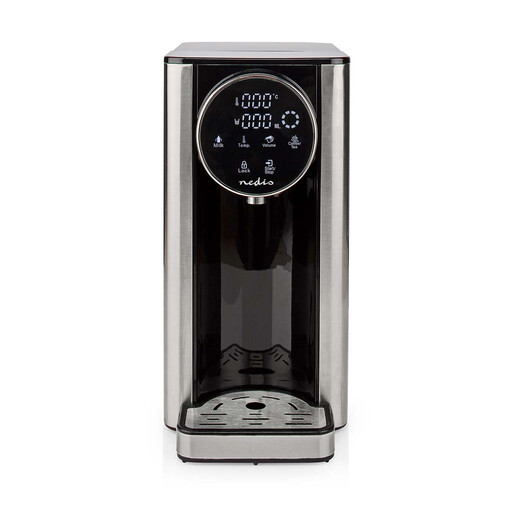 No image available
The stated dispensing options and maximum container height are relevant if you want to fill a flask; check that your flask fits within the stated height.
The description lists seven temperature settings, a removable reservoir and a maximum container height of 16 cm. It also mentions five volume options.
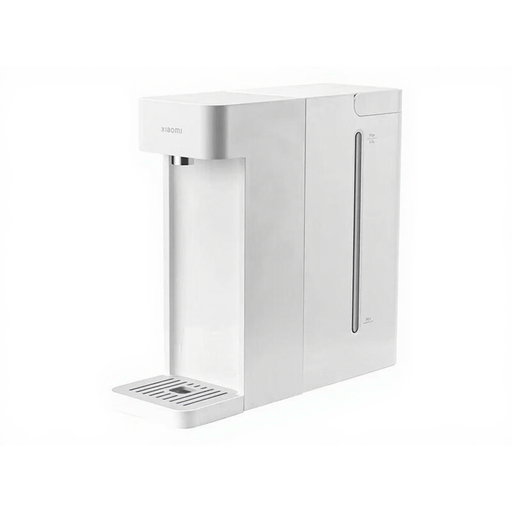 No image available
The choice of dispensing volumes may suit a flask if its capacity matches one of the available settings.
The description lists a 3-litre water tank, dispensing options of 250, 500 and 750 ml, and four temperature presets adjustable in 1 °C increments.
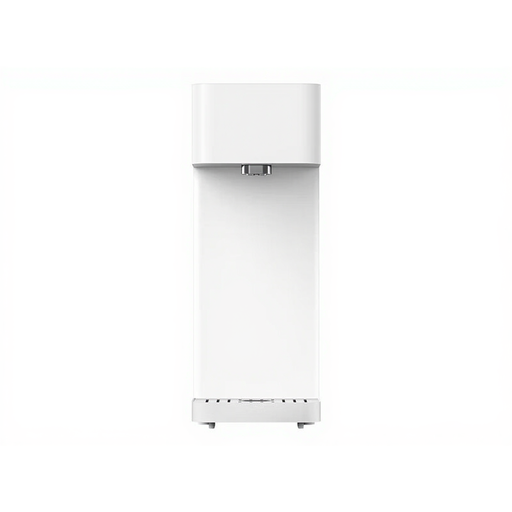 No image available
This model dispenses both hot and cold water. Check that the stated volumes and settings suit the way you want to fill your flask.
The description lists a 3-litre tank, four preset water volumes and five temperature settings.
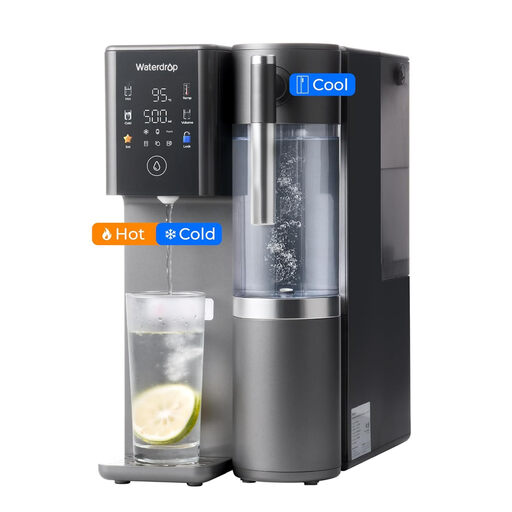 No image available
The adjustable volumes and temperatures may be useful if you want to select an amount and setting to suit your flask.
The description mentions reverse osmosis filtration, a portable 1.1-litre tank, six temperature settings and five volume settings.
 No image available
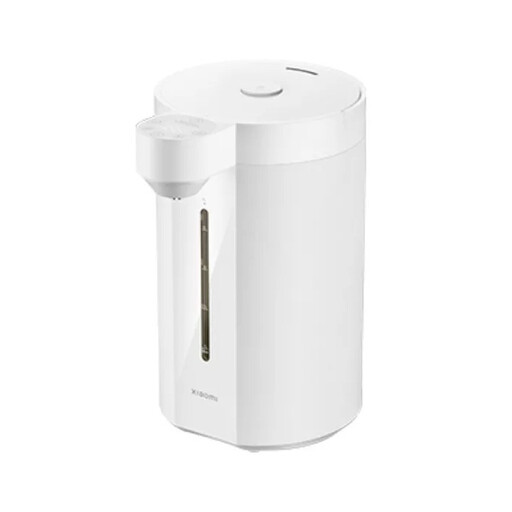
The capacity may be important if you’re looking for a dispenser with a larger supply of hot water. Choose one that suits your needs and the space available.
The description lists a 5-litre capacity and adjustable temperature.
You can’t tell from the tank capacity or available portion sizes. Measure your flask and compare it with the clearance beneath the spout on the exact model. Also make sure the flask can stand securely.
According to their manufacturers, the countertop models reviewed have refillable reservoirs. Follow the manual for positioning and electrical connection. For the TWD2503B, Tomado specifies a flat, heat-resistant surface and a suitable earthed socket.
Descale the appliance according to the manual for the exact model. Milieu Centraal advises descaling water-heating appliances regularly. If your model has a filter, check which replacement filter it takes.
According to the Dutch Food and Consumer Product Safety Authority, electrical products must carry the CE mark. Check the mark on the specific model you want to buy; a reference to a different model is not proof that it carries the mark.
You can’t establish that without comparable measurements and information about how you use it. The amount of water you heat makes a difference; Milieu Centraal advises heating no more water than you need.