
Vandaag of morgen in huis

Kwaliteit gegarandeerd

Welkomstaanbiedingen ontgrendelen: GRATIS bezorging | Tot 80% korting | Gratis 30 dagen JoyPlus-proefperiode
Download de app
A hot air brush can combine blow-drying, brushing and styling. That is useful when you want to create volume, waves or a smoother finish quickly at home. However, many models look similar, even though the differences in use can be considerable.
The main pitfalls are usually not related to appearance, but to the details:
Pay attention to the difference between towel-dried hair, damp hair and completely wet hair. Many hot air brushes are designed for hair that has already been partially dried. A hot air brush suitable for wet hair often has a separate drying setting, but always check the manual.
Multiple settings give you more control:
A cool air setting is useful for finishing a style. It can help the shape last longer, but it is no guarantee that a curl will stay in place all day.
A hot air brush for volume usually has a round or oval brush. A narrower size works better for shorter hair or more definition; a larger brush is practical for longer hair and a softer blow-dry.
For different looks, look out for:
A rotating hot air brush can make styling easier, but it takes some getting used to. Start at a low speed to prevent hair from becoming caught around the brush.
According to brands’ product information, an ionic hot air brush uses ions to help neutralise static electricity. BaByliss and Revlon, for example, describe their ionic systems as supporting a smoother or less frizzy finish. These are claims made by the brands themselves, not a universal guarantee.
A ceramic coating is used to distribute heat more evenly. Also check:
In the Netherlands, many electrical styling appliances use an EU plug and mains voltage of 220–240 volts. This is particularly important to check for models you want to use while travelling.
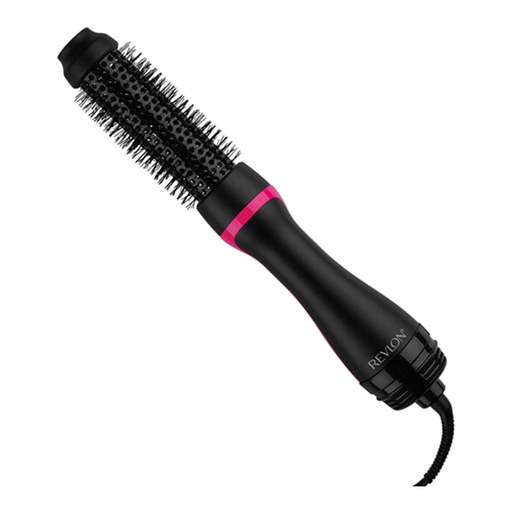
Why it suits this profile: A straightforward model for anyone who wants to dry and style at the same time without a comprehensive set containing lots of separate components.
The product details list three heat settings, a cool air setting and a ceramic heating element. This allows you to adjust the setting instead of always working with one fixed heat level.
800 watt, ionic technology, a 38 mm round brush and an EU plug. According to Revlon, the model is suitable for different hair types.
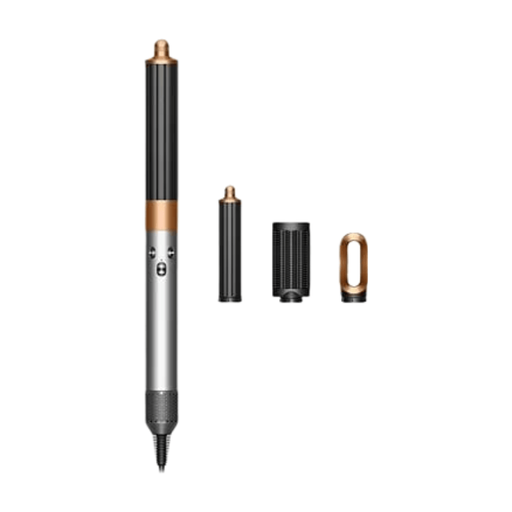
Why it suits this profile: Designed for users who value multiple airflow settings, automatic curling attachments and a well-balanced appliance.
The specifications list three heat settings, three speeds and a cool air setting. According to Dyson, the temperature is checked up to 40 times per second and, according to the product information, remains below 150 °C.
1300 watt, 0.58 kg, a 40 mm curling barrel and a drying attachment. According to Dyson, the Coanda airflow system guides hair around the barrel.
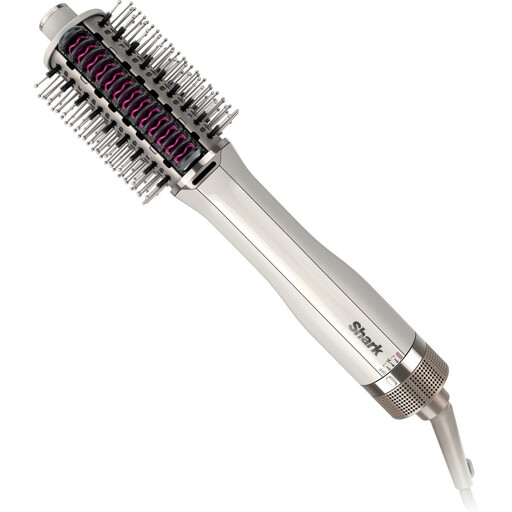
Why it suits this profile: Handy for anyone who wants to use one appliance for drying, adding volume and smoothing dry hair.
The product description distinguishes between Wet Hair mode and Dry Hair mode. According to Shark, the integrated smoothing comb has a ceramic coating and is intended for dry hair at a lower temperature.
Three air temperatures, up to 1,098 watt and two separate use modes. This makes the distinction between drying and touch-ups clearer.
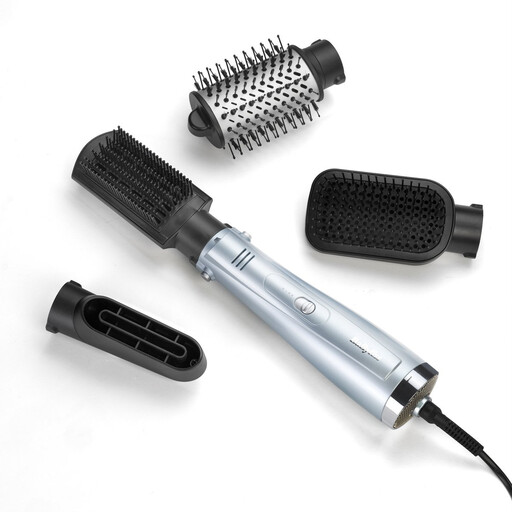
Why it suits this profile: A logical choice for anyone who wants to combine blow-drying, smoothing, volume and gentle curls with one set.
The set contains four attachments, two ionic systems according to BaByliss, a ceramic heating element and a cool air setting. However, check in advance which attachment you need for your hair length.
1000 watt, a minimum of 70 °C according to the product specification, ionic technology and a swivel cord.
We have compiled a complete, up-to-date list of products that fully meet these strict selection criteria and the applicable European safety regulations.
Pay attention to the statutory guarantee: according to the product information, the models mentioned are covered by a minimum of two years’ statutory guarantee within the EU. Some brands offer additional terms, for example after registration. Check these terms at the time of purchase.
Not always. Many models are designed for towel-dried or partially dry hair. A separate drying mode does not automatically mean that the appliance is suitable for soaking-wet hair. Follow the manual and choose a model with an explicitly stated function for wet hair.
Its lifespan depends on use, storage and maintenance. Clean the filter, do not block the air inlet and do not wind the cord tightly around a warm appliance. A ceramic coating or ionic function does not, in itself, say anything about the appliance’s overall lifespan.
Consumption depends on the wattage and how long the appliance is used. A 1,000-watt appliance left on for half an hour theoretically uses 0.5 kWh. In practice, consumption may be lower due to thermostatic control or shorter use. So, as well as the wattage, consider the drying time and the settings you actually use.
