
Vandaag of morgen in huis

Kwaliteit gegarandeerd

Welkomstaanbiedingen ontgrendelen: GRATIS bezorging | Tot 80% korting | Gratis 30 dagen JoyPlus-proefperiode
Download de app
A hot air brush combines drying and styling in one device. You can use it to smooth your hair, create volume or curl it with a brush, without having to use a separate hairdryer and brush at the same time. However, not every hot air brush is suitable for every hair type or length.
Marketing terms such as “salon results”, “anti-frizz” and “protection” may sound appealing, but they do not always tell you how a device performs in practice. Instead, focus on verifiable specifications: the number of temperature settings, the brush diameter, the accessories included and how the warm air is distributed.
A rotating hot air brush can turn the hair to the left or right while styling. This is useful for curls and ends shaped inwards or outwards. However, with long or thick hair, a rotating brush can pull more quickly if you use sections that are too large. So check whether the direction of rotation can be adjusted and whether you can stop the rotation immediately.
A brush measuring 50 mm or more is designed for larger waves and volume. For short hair or a fringe, this diameter can be difficult to handle. Smaller brushes, such as those measuring 25, 30 or 38 mm, are more practical for short to medium-length hair and tighter curls.
According to the product information provided by various brands, ionic technology may help reduce frizz or enhance shine. The effect also depends on your hair structure, humidity and styling technique. Treat “ionic” as a feature, rather than a promise that applies to every hair type.
According to product specifications, a ceramic coating may contribute to more even heat distribution. It does not mean you can style your hair without heat protection. Do not use a hot air brush on soaking-wet hair and always follow the manufacturer’s instructions.
For fine or fragile hair, a lower setting is usually more practical than immediately using the highest temperature. Thick or coarse hair may need more air or heat, but heating one spot for longer is not advisable. A cool air setting, also known as a cool shot, is useful for finishing your style.
Pay attention to the difference between:
For example, the product information for the Philips BHA710/00 lists two temperature settings and a Care+ mode. The Shark SmoothStyle has three air temperatures and separate modes for wet and dry hair. These are specific features that you can compare.
A hair styling brush with several attachments offers more possibilities, but it also takes up more space. First, consider your everyday styling goal:
Also check how easily the accessories click into place and whether they can only be changed once the device has cooled down completely.
A long, swivelling cord is useful when the socket is not directly next to the mirror. A heavy device can become tiring when styling long hair, particularly when working section by section. A removable filter can also help remove dust and hair from the air intake.
According to the product information, the BaByliss AS950E weighs 325 grams and has a 2.5-metre cord. The Remington AS8810 has a 3-metre cord and two temperature and speed settings. Information like this is more verifiable than general terms such as “lightweight” or “professional”.
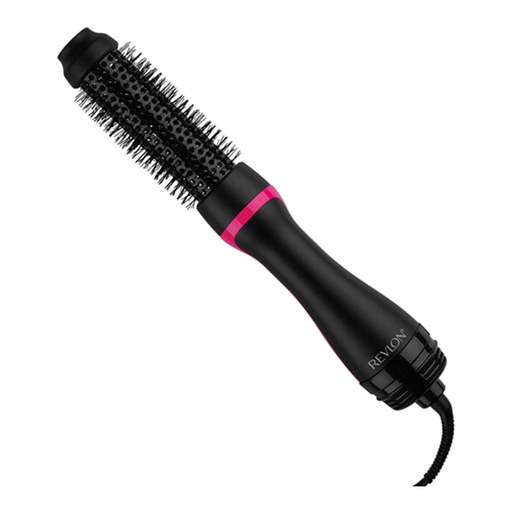
Why it suits this profile: This hair styling brush combines drying and styling with a 38 mm round brush. The three heat settings and cool air setting offer an easy starting point for medium-length hair and a range of everyday looks.
The diameter is clearly specified and there are three heat settings. The product information also lists ionic technology and ceramic heating as features, without guaranteeing a particular result.
800 W, 38 mm round brush, three heat settings, ionic technology and cool air.

Why it suits this profile: This hot air brush comes with several brushes for waves, volume and a salon blow-dry finish. The rotating brush with natural bristles is designed for controlled styling of medium-length to long hair.
The set specifically lists a retractable 30 mm brush, a multifunctional 50 mm brush and a brush cover. This means you do not have to rely on a single brush with an overly large diameter.
1000 W, tourmaline ceramic coating, ionic care and three listed accessories.
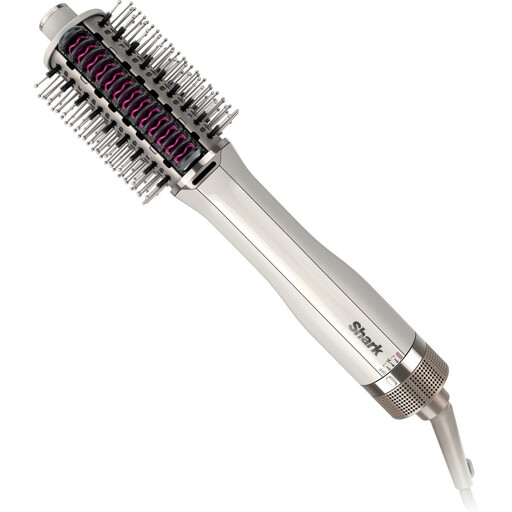
Why it suits this profile: If you regularly switch between drying, adding volume and smoothing, this 2-in-1 hair styler offers separate modes for wet and dry hair.
The three air temperatures and separate Wet Hair and Dry Hair modes make it clear what the device is designed for. The integrated smoothing comb has a ceramic coating.
Wet and dry hair modes, three air temperatures and an integrated ceramic smoothing comb.
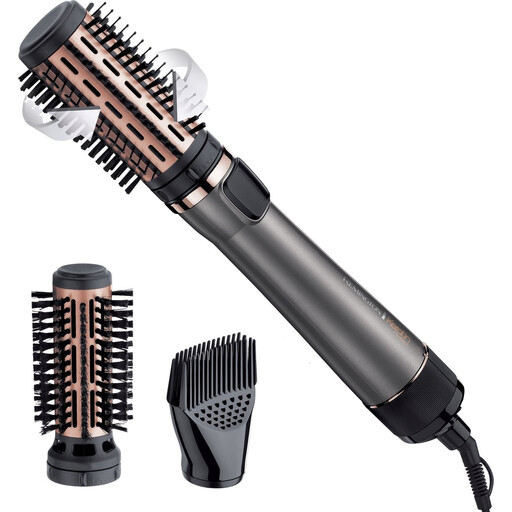
Why it suits this profile: The automatic direction of rotation and several attachments are practical if you often switch between volume, smooth hair and soft curls.
The set includes two thermal brushes and a root boost attachment. The left-right button gives you more control over the direction of the curl than a brush with just one direction of rotation.
1000 W, two temperature and speed settings, cool shot, three attachments and a 3-metre cord.
We have put together a complete, up-to-date list of products that fully meet these strict selection criteria and the applicable European safety regulations.
A hot air brush runs on mains electricity and becomes hot. Do not use the device near water, check the cord regularly and keep hot attachments away from children.
Usually not for soaking-wet hair. Many models are designed for towel-dried or partially pre-dried hair. According to the product information, the Shark HT202EU has a Wet Hair mode, but you should still follow the usage instructions. A model with heated plates, such as the Revlon RVDR5330E, uses its styling mode on dry hair.
Its lifespan depends on how it is used, maintained and stored. Keep the filter or air intake free from dust and hair, do not pull on the cord and allow the device to cool down completely. In the European Union, consumers are entitled to a minimum statutory two-year guarantee of conformity; any additional manufacturer’s warranty may vary by brand and model.
Consumption depends on the wattage and how long the device is used. A 1000 W model running for half an hour theoretically uses 0.5 kWh. In practice, the actual running time may be shorter. So do not look only at wattage; also consider drying time, temperature settings and how often you use the device.
