
Vandaag of morgen in huis

Kwaliteit gegarandeerd

Welkomstaanbiedingen ontgrendelen: GRATIS bezorging | Tot 80% korting | Gratis 30 dagen JoyPlus-proefperiode
Download de app
A hot air brush usually combines the functions of a hair-dryer brush, blow-dry brush and hair styler. You can use one to dry, smooth and add volume to your hair, or sometimes to create curls. It sounds simple, but not every model suits every hair length or styling routine.
So don’t focus only on the number of functions listed on the packaging. A long list of attachments doesn’t mean much if the brush is awkward to use, the temperature is difficult to adjust or the attachment isn’t right for your hair.
Terms such as ionic technology, ceramic coating and less heat damage crop up frequently. These features may be useful, but they don’t guarantee a particular result for everyone. According to brands’ own information, ions may help reduce static and frizz while styling. The final effect also depends on your hair type, moisture level, technique and temperature setting.
Always check the specific features: does it have a cool shot, how many heat settings are there, and is the coating actually listed in the product details?
A 5-in-1 hair styler or 7-in-1 model can be appealing if you like switching between blow-drying and styling, straightening and curling. But more attachments also mean more parts to store and clean. If you mainly want to add volume quickly, a fixed round brush may suit you better than a large multi-styler.
More watts don’t automatically mean better results. A powerful appliance may dry your hair faster, but fine, coloured or fragile hair often needs a lower setting. Ideally, use a hot air brush on towel-dried hair, not soaking-wet hair, and work in smaller sections. A heat-protection product can be part of your routine, but it won’t prevent all possible heat damage.
At a minimum, check how many temperature and speed settings the brush has. Two settings may be enough for a basic blow-dry brush, while three or more give you greater control for different hair types. A cool shot blows cooler air to help set your finished style.
A low setting is usually more practical for fine hair. Thick or long hair may benefit from stronger airflow and a wider brush, but keep the appliance moving at all times.
A narrow concentrator nozzle is useful for drying your hair first. A flat brush helps smooth it, while a round brush can add shape and volume. A diameter of around 30 to 50 mm is often used to create curls, waves or volume, depending on your hair length.
Also check whether the attachments are easy to change and whether they need to cool down before you remove them. If you’re choosing a rotating hot air brush, the direction of rotation matters when you want to style both sides of your face evenly.
With ionic technology, manufacturers generally claim that negative or positive ions help reduce static. According to the brands’ own research or product information, this may help leave hair feeling smoother and looking less frizzy. Treat it as a styling feature, not a medical or permanent hair treatment.
A ceramic coating or ceramic heating element is designed to distribute heat more evenly. Check that this is clearly stated in the product specifications. Also choose a model with a low temperature setting and follow the manufacturer’s safety instructions.
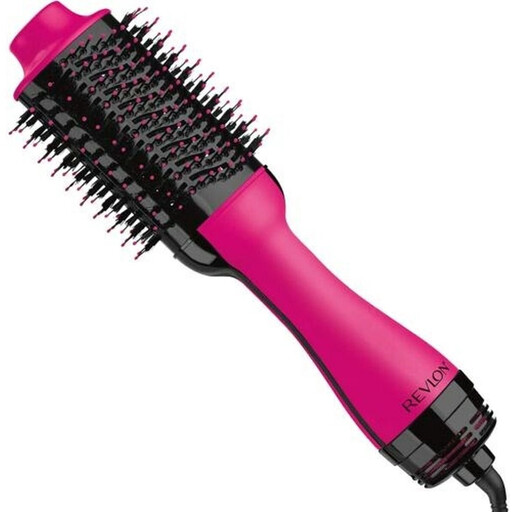
Why it suits this profile: This model is designed for everyday drying and adding volume with a single brush. Its controls are easy to follow if you’re using a blow-dry brush for the first time.
The product information lists ionic technology and a power rating of up to 1098 W. So you don’t have to pay for lots of separate attachments if your main priorities are adding volume and drying your hair.
Ionic technology and a power rating of up to 1098 W, designed for quick drying and added volume.
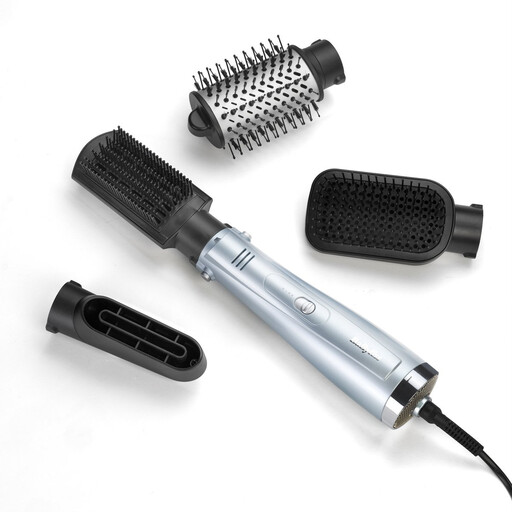
Why it suits this profile: A good choice if you want one appliance for drying, smoothing, straightening and adding volume. Its four attachments offer more versatility than a standard hot air brush.
The features are backed up by specific components: four attachments, ceramic heating, ionic technology and a cool shot. So it’s clear what you get for the higher price.
1000 W, four attachments, ceramic heating element and cool shot.
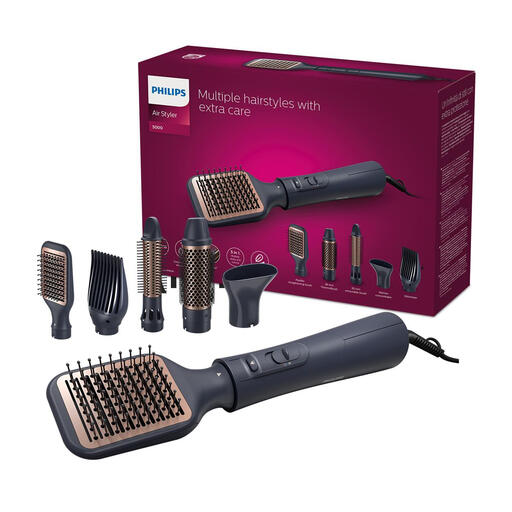
Why it suits this profile: The five attachments are useful if you regularly switch between adding volume, smoothing and creating waves. The Care setting and three heat settings give you extra control when using it frequently.
The number of attachments is clearly specified. Philips also lists a ceramic coating, Care setting, three heat settings and a cool shot in the product information.
1000 W, five attachments, Care setting and a 2-metre swivel cord.
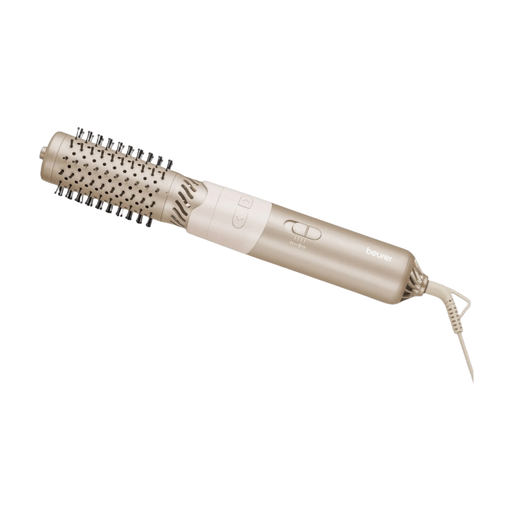
Why it suits this profile: The automatic rotating brush is designed for anyone who mainly wants to create soft or larger curls without having to turn the brush by hand each time.
You can set the rotation direction to the left or right, and the set includes two attachments for different curl sizes. That makes its purpose clearer than a general claim about versatility.
1000 W, two heat settings, ionic function, ceramic coating and a 360-degree swivel cord.
We’ve put together a complete, up-to-date list of products that meet these strict selection criteria and the applicable European safety regulations.
Usually not if your hair is soaking wet. Many models are designed for towel-dried hair. Remove excess water and detangle your hair before you start. Always check the manual for your model.
Its lifespan depends on how you use, clean and store it. Clean the filter or air intake as instructed, and prevent hair from getting tangled around the brush. Many products are covered by a statutory minimum two-year guarantee under European consumer rules; additional manufacturer terms may vary.
Its energy use depends on its power rating and how long you use it. A 1000 W appliance running for 15 minutes uses around 0.25 kWh in theory. The actual cost depends on your energy tariff and how often you use the appliance. A lower power rating doesn’t automatically mean lower overall costs if it means you need to spend longer styling your hair.
