
Vandaag of morgen in huis

Kwaliteit gegarandeerd

Welkomstaanbiedingen ontgrendelen: GRATIS bezorging | Tot 80% korting | Gratis 30 dagen JoyPlus-proefperiode
Download de app
A home office desk needs to do more than look good in a product photo. It should suit your space, screen and posture, while staying stable when you use a laptop, monitor or printer every day. Students, gamers and families often have extra requirements too, such as plenty of legroom, a sturdy frame and a practical work surface.
As a Joybuy Product Recommendation Officer, I focus on verifiable information. So don’t just look at the colour or discount; watch out for these three common pitfalls.
A 160 x 80 cm desk gives you plenty of space, but it won’t necessarily fit in a bedroom or home office. Measure the available wall space first, and allow for your chair, skirting boards, doors and plug sockets. A 120 x 60 cm desk is often more practical for a laptop, one monitor and a few accessories.
Marketing copy may emphasise stability without providing details about the frame, legs or maximum static load capacity. So check:
A lightweight desk isn’t necessarily unsuitable, but a heavy screen, monitor arm and printer do need an appropriate load capacity.
A height-adjustable desk lets you alternate between sitting and standing. That doesn’t mean every height will automatically suit every user. Check the adjustment range, controls and space around the desktop. For an electric model, noise level, maximum static load and safety features are also worth considering.
For everyday computer use, depth matters more than width alone. A desktop that’s 50 cm deep may suit a laptop or compact screen, but leaves less room for a keyboard, mouse and monitor at a comfortable distance. If you work with multiple screens, you may want to consider a large desk measuring 160 x 80 cm.
A compact computer desk or study desk measuring 80 x 50 cm takes up little space and is suitable for writing, studying and light computer use. Just make sure cables and accessories don’t take up too much of your work surface.
Many desks combine a chipboard desktop with a steel frame. That alone doesn’t guarantee quality. Check the stated dimensions and weight, and how the desktop is joined to the frame. Adjustable legs can help you level a desk on an uneven floor.
Be aware of the difference between static load capacity and dynamic load. The static figure generally describes how much weight the desk can support when stationary. A monitor arm pulling on the edge may put a different strain on the frame from a laptop sitting flat on the desktop.
A desk with cable management helps keep adapters and cables tidy. Check whether the system includes a cable tray, organiser or hook, or simply an opening in the desktop. A headset hook and space for peripherals are useful features on a gaming desk. For an electric desk, a controller with memory settings is handy if several people share the same workspace.
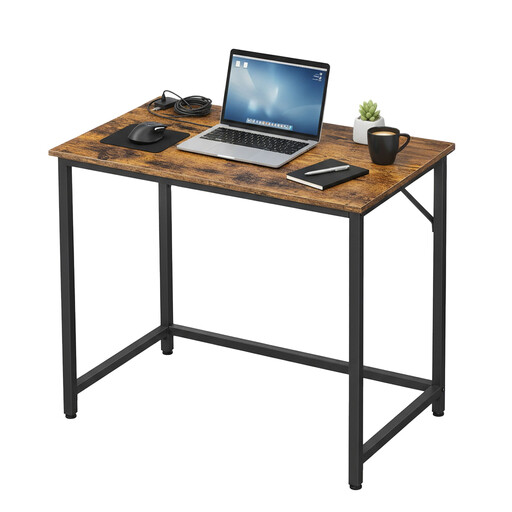
Why it suits this profile: This compact 80 x 50 x 76 cm desk is a good fit for a student room, bedroom or first home workspace. Its brown and black finish complements a calm interior.
The product information lists a steel frame, adjustable feet and a static load capacity of 50 kg. This makes the relevant stability details clearer than they are for a product listing with no specifications.
Compact size, steel frame, adjustable feet and labelled parts, according to the product description.
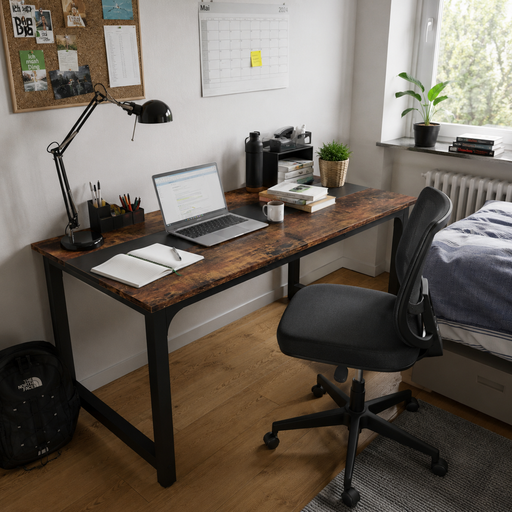
Why it suits this profile: If you work with two screens, a printer or lots of documents, the 160 x 80 cm desktop gives you considerably more workspace. It’s suited to a permanent home office or a shared desk.
The product description lists a steel frame, two extra supports, adjustable feet and a stated capacity of 400 kg. Before buying, check that this size will fit your space.
160 x 80 cm desktop, metal frame, adjustable legs and a stated weight of 26 kg.
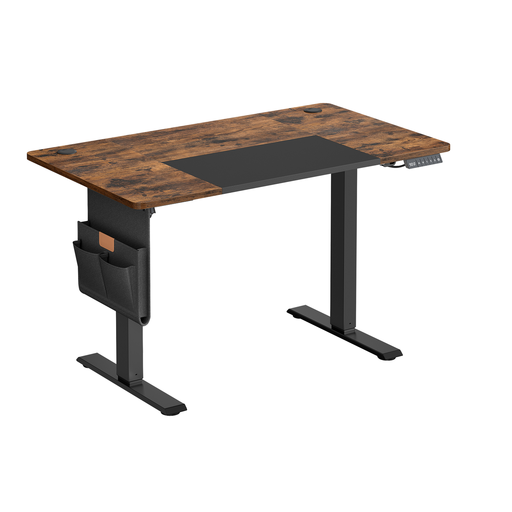
Why it suits this profile: This 120 x 60 cm electric desk is designed for people who want to alternate between sitting and standing during the working day. The memory function and USB-C port are handy for a permanent computer setup.
The specifications list an adjustment range of 72 to 120 cm, a steel frame, cable management and a maximum static load of 70 kg. Leave space between the desk and the wall while adjusting its height.
Electric height adjustment, memory function, USB-C port, three hooks and a stated load capacity of 70 kg.
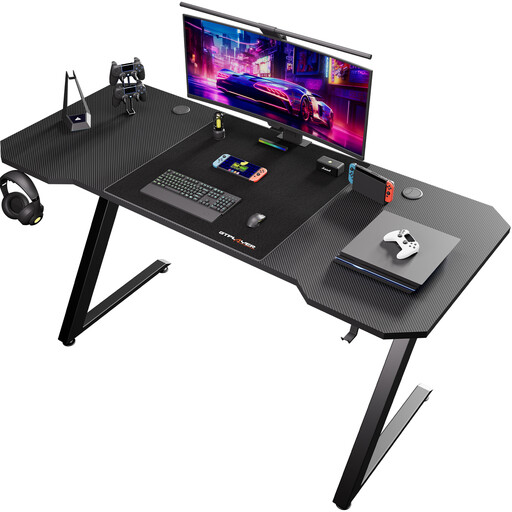
Why it suits this profile: Its size is well suited to a compact gaming or computer corner. The product name mentions a carbon-look surface and a headphone hook.
The 120 x 60 cm dimensions make it easier to work out how much space you have available in advance. Check the product page for further information about load capacity, cable routing and assembly.
120 x 60 cm, black finish, carbon-look surface according to the product name, and a headphone hook.
We’ve put together a full, up-to-date list of products that meet these strict selection criteria and the applicable European safety regulations.
Before assembly, check that all the parts are there and place the desk on a protected surface. Tighten the screws by hand first, then secure them evenly. It’s best to have two people position the desktop on a large desk.
Don’t place an electric desk right against a wall if the desktop could rub against it when adjusted. Keep electrical components away from liquids, and observe the stated rest period if the overheating protection is activated. Place any desk on a level surface and don’t exceed its stated load capacity.
A 120 x 60 cm desk may be enough for a laptop or one monitor. If you work with several screens, documents or a printer, 160 x 80 cm gives you more room. Measure the space for your desk chair as well as the desktop.
An electric adjustable desk uses power while moving, but generally doesn’t use it continuously in the same way as a device that’s permanently active. The exact consumption depends on the motor, how often it’s used and its standby function. Check the technical information for the specific model.
Its lifespan depends on the material, assembly, load and daily use. A sturdy frame, securely tightened fittings and avoiding overloading can help reduce wear. Regularly check that the screws and adjustable feet are still secure.
