
Family that prepares meals in advance
You prepare dressing and other parts of meals ahead of time and want to store them covered in the fridge. The Netherlands Nutrition Centre has separate storage guidance for raw egg.


You don’t necessarily need a new fridge just to store a jar of homemade dressing. If you can set your fridge to 4 °C and fit in covered containers of food, you can keep using it. If you need more space, choose between a compact freestanding model, a larger fridge compartment or a built-in model to suit your kitchen. Compare fridge capacity, annual energy consumption and installation requirements. For dressing made with raw egg, the Netherlands Nutrition Centre recommends a shorter storage time than for ordinary leftovers.
You prepare dressing and other parts of meals ahead of time and want to store them covered in the fridge. The Netherlands Nutrition Centre has separate storage guidance for raw egg.
You find that groceries, meal ingredients and leftovers all need space at the same time. The Consumers’ Association highlights options including freestanding and built-in models, as well as different fridge sizes.
You’re looking for a fridge that fits the housing space and the cabinet door attachment. ETNA and Siemens specify different housing dimensions and door systems for their built-in models.
A good fit if: you can fit in covered dressing and other perishable meal ingredients, and set the temperature to 4 °C.
Bear in mind: this won’t solve a lack of spare space or help if your fridge can’t be set to the temperature you need.
A good fit if: you need extra fridge space but don’t have much room to spare.
Bear in mind: a table-top model offers less room for a full family shop; compare the stated annual energy consumption too.
A good fit if: groceries and meal ingredients need more fridge space together, perhaps alongside a separate freezer compartment.
Bear in mind: for a fridge-freezer, the total volume is not the same as the fridge capacity. Also check the external dimensions and delivery access.
A good fit if: the existing housing space and cabinet door determine your choice.
Bear in mind: the housing height, width and depth, as well as the door system, must all suit the exact model.
| What to consider | What to look for when buying | Who is this important for? |
|---|---|---|
| Safe chilling and storage | Check that you can set the temperature to 4 °C and fit in covered containers. Follow the storage guidance for the ingredients you’re using. | I want to chill perishable dressing and other meal ingredients in covered containers, and follow storage guidance suited to the ingredients. Around 36% of consumers put safe storage first. |
| Usable fridge space | Compare the fridge capacity and layout with what you want to store at the same time; don’t count the freezer space as fridge space. | When doing the family shop, I want room for ingredients and leftovers too, not just a jar of dressing. Around 29% of consumers give usable fridge space the highest priority. |
| Built-in fit | Measure the housing space and check the installation details and door attachment for the exact model. | If I’m replacing a fridge in an existing kitchen, the dimensions and door system need to fit. Around 21% of consumers prioritise a suitable built-in fit. |
| Energy consumption | For models that suit your space and needs, compare both the energy label and the stated consumption in kWh per year. | Once the space and installation requirements are right, I also want to take the stated consumption into account. Around 14% of consumers say energy consumption is their main consideration. |
Storage advice for packaged dressing doesn’t automatically apply to a homemade recipe. For dishes containing raw egg, the Netherlands Nutrition Centre recommends a maximum of 24 hours in the fridge.
Base your storage approach on the ingredients and follow the guidance for that combination.
For a fridge-freezer, the fridge and freezer capacities are listed separately. Only the fridge capacity tells you how much space is available for chilled meal ingredients.
Compare the fridge compartment’s capacity in litres and the shelf layout before choosing a model.
The housing width and depth, as well as the type of door attachment, also matter. This means a model may not be suitable even if the height matches.
Measure the housing space and check the installation details for the full model number before buying.
A fridge that doesn’t fit could mean extra installation work or a return.
The energy rating and stated annual consumption provide different information. A larger appliance may use more electricity, even if its energy rating looks favourable on its own.
For models that meet your space requirements, compare the label and stated consumption in kWh per year.
The freestanding TSE1284N is a compact table-top model for those with limited space.
The KKS7102T is an example of a built-in model for a suitable housing space with a sliding door system.
The freestanding KGN39VIBT fridge-freezer is an example for anyone who wants a separate freezer compartment as well as fridge space.
The KI81RADD0 is a larger built-in fridge without a freezer compartment, designed for a suitable tall housing space.
The CNsdc 5203 is a freestanding fridge-freezer included as a model for comparison.
These Joybuy products are freestanding fridge-freezers with a separately stated fridge compartment for family groceries and meal ingredients.
 No image available
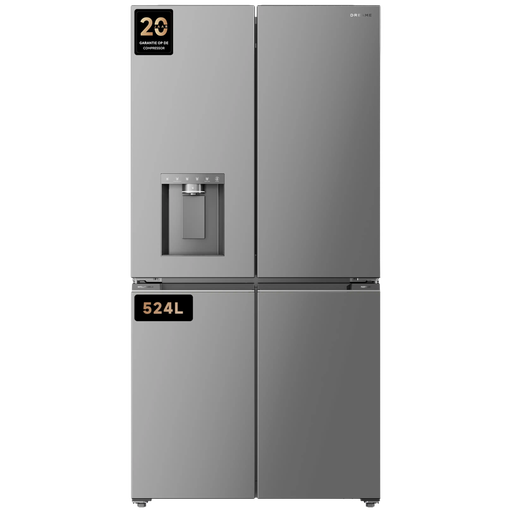
A freestanding model for anyone looking for a spacious, separate fridge compartment for the family shop.
Fridge capacity: 308 l. The product name states a total volume of 524 l and a four-door layout. The description mentions a FreshFlex zone and electronic temperature control; the entire zone capacity may not be suitable for storing dressing in the fridge.
External dimensions: 91,1 × 69,3 × 183 cm.
 No image available
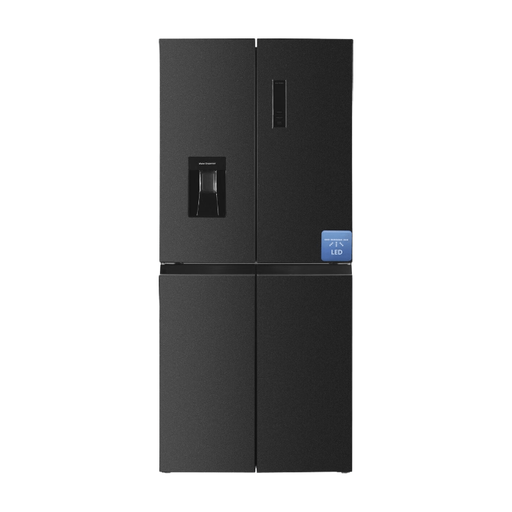
A freestanding fridge-freezer for anyone who wants to store groceries and meal ingredients separately from frozen food.
Fridge capacity: 269 l; freezer capacity: 150 l. The description mentions adjustable fridge shelves, digital temperature control and Total No-Frost.
External dimensions: 180 × 79 × 70 cm.
 No image available
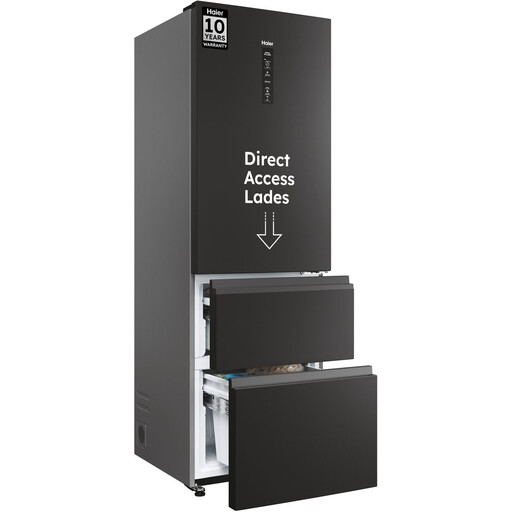
A freestanding model for anyone who wants to organise meal ingredients across different fridge shelves.
Fridge capacity: 235 l. The description mentions four glass shelves, three of which are adjustable, and Total No Frost.
External dimensions: 59,5 × 185 × 66,7 cm.
 No image available
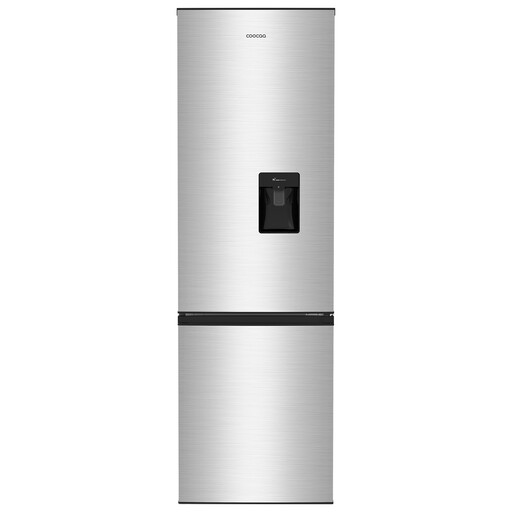
A freestanding fridge-freezer with a separate fridge compartment for chilled groceries and meal ingredients.
Fridge capacity: 197 l; freezer capacity: 71 l. The description mentions three fridge shelves and three door compartments, with adjustable shelves.
External dimensions: 550 × 586 × 1750 mm.
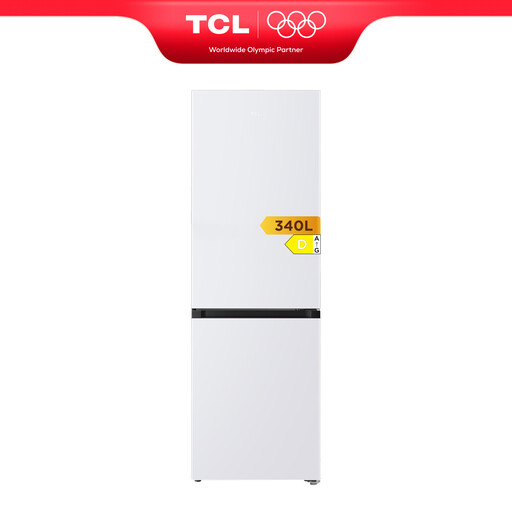 No image available
A freestanding model for anyone who wants to assess the fridge compartment for family groceries separately from the freezer space.
Fridge capacity: 223 l; freezer capacity: 117 l. The product name states a total volume of 340 l, Total No Frost and energy rating D. The description mentions electronic controls and a flexible door layout.
External dimensions: 59,5 × 185 × 66,7 cm.
The Netherlands Nutrition Centre recommends setting your fridge to 4 °C. Put food that spoils quickly back in the fridge promptly, and don’t leave it out for more than 2 hours. This is food safety advice, not a separate legal requirement for buyers.
For a dish containing raw egg, the Netherlands Nutrition Centre recommends a maximum of 24 hours, always in the fridge. It advises pregnant women, young children, older people and anyone with a weakened immune system to avoid dishes containing raw egg. Don’t automatically apply the storage times for packaged dressing or mayonnaise to homemade dressing.
Check the housing height, width and depth, the ventilation space and the cabinet door attachment. The ETNA KKS7102T has a sliding door system; the Siemens KI81RADD0 has a fixed hinge. Measure the housing space and compare it with the installation details for the exact model.
Compare the energy label and stated consumption in kWh per year for models that suit your space and needs. Actual consumption and your electricity tariff may vary, so these figures don’t represent a fixed cost.
According to the European Commission, energy labelling for the relevant household refrigeration appliances must be clearly displayed at points of sale, including online shops. This is information provided at the point of sale, not a requirement for consumers to choose a particular energy rating.