You don’t automatically need your own fridge. If your dressing fits in the shared fridge in a sealed container and you can keep the temperature at 4 °C, you can continue using that space. If there’s consistently too little room or it’s difficult to agree on how to share it, compare compact models by their external dimensions, layout, annual energy consumption and noise level. How long the dressing keeps also depends on its ingredients and how it’s made.
Who is this buying guide for?
Anyone making their own dressing and wanting to chill it safely
You make dressing with fresh ingredients and want to know whether the shared fridge is at the right temperature and has a suitable spot for sealed containers. The Netherlands Nutrition Centre advises setting your fridge to 4 °C.
Anyone short on fridge space
There may not be enough dedicated space for your bottles and jars in the shared fridge. So you’re comparing a more compact model with a larger under-counter fridge, taking the available space into account.
Anyone sharing a kitchen-living space
You’re considering an extra fridge in a space where housemates may hear it and could share the electricity costs. Milieu Centraal points out that two refrigeration appliances use more energy combined than one suitably sized appliance.
What should you look for when choosing?
Use the existing fridge
Choose this if: you can store sealed containers neatly, keep the fridge at 4 °C and agree with your housemates on how to share it.
Bear in mind: available space and shared use; you’ll need to work around the kitchen layout and any agreements you have in place.
A fridge of your own, without a freezer compartment
Choose this if: there’s consistently too little usable space in the shared fridge and you have a safe place to put your own appliance.
Bear in mind: the extra space the appliance will take up and the energy used by a second fridge.
An under-counter fridge with a freezer compartment
Choose this if: you genuinely need freezer space as well as somewhere to chill your dressing.
Bear in mind: a freezer compartment takes up space that could otherwise be used for chilled food.
| What to consider |
What to check before buying |
Who should pay particular attention? |
| Chilling temperature and storage |
Check the actual temperature once the appliance is in place; store dressing in a sealed container and take its ingredients into account. |
I want to store prepared dressing at a suitable temperature and avoid confusing guidance for homemade food with advice for a packaged product. For around 36% of consumers who prioritise safe storage, this is their main buying concern. |
| Dimensions and layout |
Measure the space and compare the external dimensions, shelves and door compartments with your bottles and jars. |
I want to be able to fit my own fridge in and store my containers conveniently. For around 29% of consumers who focus mainly on space, this is their top buying concern. |
| Energy consumption |
Compare the annual consumption in kWh of models that are the right size and capacity; agree how you’ll share the costs. |
I want to avoid adding unnecessary energy consumption to a shared household by having extra fridge space. For around 21% of consumers who prioritise energy use, this is their main buying concern. |
| Noise in your living space |
Compare the stated noise level for the exact model and think about where the fridge could go. |
I want to avoid a fridge being unnecessarily audible in the next room when it’s in a shared kitchen-living space. For around 14% of consumers who prioritise noise, this is their main buying concern. |
The Netherlands Nutrition Centre advises setting your fridge to 4 °C and putting leftovers in the fridge within 2 hours. It recommends keeping leftovers covered in the fridge for no more than 2 days; don’t automatically apply this timeframe to every homemade dressing.
How to avoid common buying mistakes
-
Applying the shelf life of packaged dressing to a homemade recipe
Storage advice depends on the ingredients and how the dressing is made. Refrigerating prepared dressing doesn’t make it last indefinitely.
Chill it promptly, keep it in a sealed container and follow appropriate storage advice for the ingredients you’ve used.
Incorrect storage can lead to food waste.
-
Buying a second fridge without checking the space you already have
An extra fridge uses electricity; Milieu Centraal notes that two refrigeration appliances use more energy combined than one suitably sized appliance.
First check whether sealed dressing fits neatly in the shared fridge and can be stored at the right temperature.
-
Looking only at the capacity in litres
The stated capacity alone won’t tell you whether you can store your bottles and jars conveniently or whether the appliance will fit in your chosen spot.
Measure the space and compare the external dimensions, door layout and adjustable shelves. If space is tight, confirm the exact dimensions of the model you’ve chosen.
Choosing the wrong size could mean extra work to fit or exchange the appliance.
-
Assuming a freezer compartment or stated noise level is automatically an advantage
A freezer compartment won’t help if your dressing only needs to be chilled. The stated noise level alone won’t tell you how disruptive the appliance will sound in your chosen spot.
Only choose these features if they suit the way you’ll use the fridge, and compare the specifications for the exact model.
Relevant brands to consider
Inventum
The 94 l KK471W and 131 l KK550 are models worth comparing if the available width and layout will determine your choice.
- Inventum lists adjustable shelves and a removable interior layout for the KK471W.
- Inventum lists the KK471W as both 47,2 and 47,5 cm wide. Confirm the exact dimensions before choosing this model for a tight space.
ETNA
The KKV956WIT is an under-counter fridge without a freezer compartment, with 133 l of fridge space. It’s designed for anyone wanting to store several jars and other food in their own appliance.
- ETNA lists two adjustable shelves, energy label C, annual consumption of 58 kWh and a noise level of 37 dB(A) for this model.
- It is 56 cm wide and has a mechanical thermostat. The stated figures don’t determine the temperature the appliance will reach in your kitchen once installed.
Liebherr
The Rd 1400 is an under-counter fridge without a freezer compartment, with a capacity of 125 l. Its door layout and stated noise level may be worth considering for a shared kitchen-living space.
- Liebherr lists a noise level of 34 dB, an adjustable temperature range of +2 to +8 °C and a door alarm for the Rd 1400.
- A door alarm is no substitute for checking the fridge temperature. These specifications apply to this model.
Bosch
The KTL15NWEB is an under-counter fridge with 106 l of fridge space and a 14 l freezer compartment, for anyone who needs freezer space as well as somewhere to chill food.
- Bosch lists a door alarm and a noise level of 39 dB(A) for this model.
- The freezer compartment takes up space that could otherwise be used for refrigeration; it isn’t an obvious benefit if you only need to chill dressing.
Fridges at Joybuy
These product picks focus on compact fridges of your own, giving you extra chilled storage in a shared kitchen.
 No image available
Bella BKK090.1BE compact fridge, 88 l
An option for your own chilled storage, with adjustable shelves and door compartments for jars and bottles of different sizes.
88 l capacity; three adjustable glass shelves; three door compartments; stated noise level 39 dB; energy label E.
View at Joybuy
 No image available
Wiggo WL-BTT88E(W) under-counter fridge, 129 l
The larger capacity could be a good fit if several housemates need extra chilled storage.
129 l capacity; 54 cm wide; two adjustable glass shelves; salad drawer and two door racks; stated consumption 92 kWh per year; energy label E.
View at Joybuy
 No image available
TCL RF120DWE0 compact fridge, 90 l
A compact option with adjustable shelves; check the actual temperature once installed before storing dressing in it.
90 l capacity; mechanical temperature control with a stated cooling range of 0 °C to 10 °C; three adjustable glass shelves and a bottle compartment in the door; energy label E.
View at Joybuy
 No image available
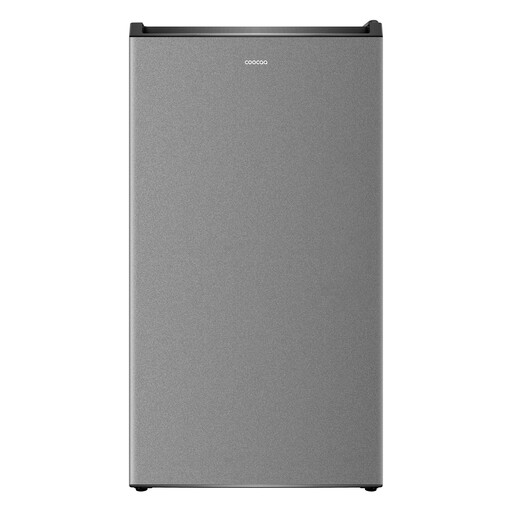
Coocaa single-door fridge, 83 l
An option for extra chilled storage in a small kitchen-living space, with temperature control and a salad drawer.
83 l usable fridge capacity; temperature control; three door compartments; salad drawer; adjustable feet; energy label E.
View at Joybuy
 No image available
CHiQ JR92DSE compact fridge, 92 l
An option for your own chilled storage, with adjustable shelves and a reversible door; check the available space and which way the door needs to open.
92 l fridge capacity; 474 mm wide; adjustable glass shelves and door compartments; seven temperature control settings; stated consumption 85 kWh per year; energy label E.
View at Joybuy
Frequently asked questions
Do I need to buy a separate fridge for homemade dressing?
No, not automatically. First check whether you can store the dressing in a sealed container in your existing fridge and keep it at 4 °C. A second fridge gives you your own space, but adds to your energy consumption.
How long does homemade dressing keep in the fridge?
It depends on the ingredients and how it’s made. The Netherlands Nutrition Centre recommends keeping leftovers covered in the fridge for no more than 2 days and not leaving them out of the fridge for longer than 2 hours. Don’t automatically apply this timeframe to a homemade recipe prepared differently.
How should I use and maintain a fridge in a shared kitchen?
Set the fridge to 4 °C and put prepared food back in a properly sealed container. Agree on who will check the temperature, shut the door and clean up any spilled dressing; follow the instructions for your chosen model when cleaning removable parts.
What should I compare when it comes to energy consumption?
Compare the annual consumption in kWh of models that are the right size and capacity. The European Commission says the EU energy label provides information about energy consumption; your own costs will also depend on how you use the appliance and your electricity tariff.
What scale does the energy label use for fridges in the Netherlands?
According to the European Commission, since 1 March 2021 the EU energy label for household fridges has used a scale from A to G. The label also includes information on factors such as capacity and noise.


