What should you look for when choosing?
FM radio
Choose this option: if your programme is available on an FM station and reception is good at your desk.
Bear in mind: an FM-only model won’t receive DAB+ or internet radio. For example, Lenco doesn’t list DAB+ for the SCD-24.
DAB+/FM radio
Choose this option: if your programme is available on DAB+ or you want to be able to switch between DAB+ and FM.
Bear in mind: a DAB+ tuner doesn’t guarantee reception everywhere indoors. Roberts recommends extending the aerial, adjusting its direction or moving the radio if the signal is weak.
Internet radio with FM/DAB+
Choose this option: if your programme is available online or you want to receive online stations as well as terrestrial ones.
Bear in mind: online reception requires a network connection. Check that your particular programme is available on the device.
First compare how your programme is broadcast. Then decide whether you’ll use the radio on mains power, take it with you or listen privately.
| What to consider |
What should you check? |
Who is this important for? |
| Receiving your programme |
Check whether the programme is broadcast via FM, DAB+ or the internet, and test reception at your desk. |
If I want to listen to a particular programme while I work, I need to know whether reception works where I’ll be listening. Around 33% of consumers make receiving their programme their top priority. |
| Power and portability |
Check whether an adapter is included, which type of battery is needed and whether the batteries are rechargeable. |
If I want to use the radio away from a socket too, I’ll consider the power supply and how easy it is to carry. Around 27% of consumers prioritise portable power. |
| Private listening |
Look for a headphone socket or an explicitly stated Bluetooth transmission function. |
In a shared workspace, I want to listen without switching on the speaker. Around 20% of consumers make private listening their top buying priority. |
| Other audio sources |
Check separately for internet radio, Wi-Fi and Bluetooth audio input; these are different features. |
If I want to listen to online radio or audio from my phone as well as terrestrial stations, I’ll check which sources the model actually supports. Around 20% of consumers prioritise these additional audio sources. |
Joybuy products for FM listening
These Joybuy product picks are for FM listening, from a fixed workstation to a portable speaker with a radio function.
 No image available
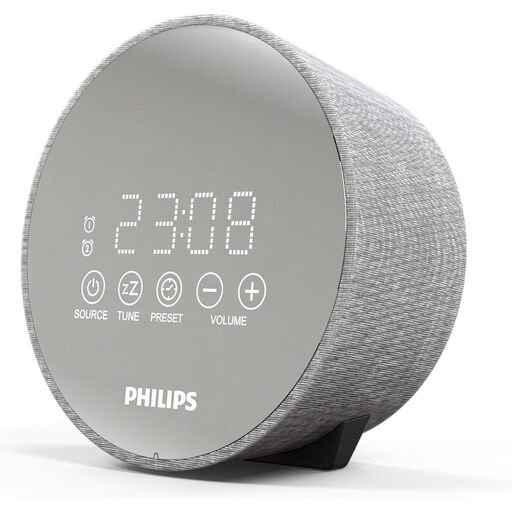
Philips TADR402/12 FM clock radio
The FM tuner suits a programme broadcast via FM; check reception where you plan to listen.
The product title lists dual alarms, a USB charging port, a night light and battery backup. Battery backup alone doesn’t confirm that the radio can run on batteries while you’re listening.
Joybuy
 No image available
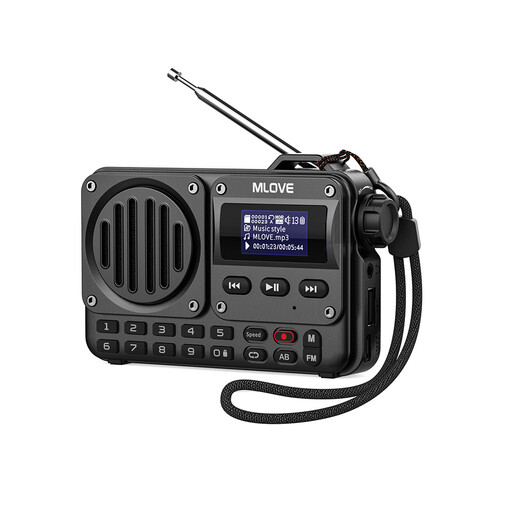
Mlove BV800 portable Bluetooth speaker with FM radio
The FM radio function makes this model worth considering if your programme is available via FM; check reception where you plan to listen.
The product information lists an aerial, an LCD screen and a built-in rechargeable battery. Bluetooth on the speaker doesn’t confirm that it can transmit radio audio to Bluetooth headphones.
Joybuy
Frequently asked questions
How can I tell whether DAB+ will work at my desk?
First check whether your programme is broadcast via DAB+, then test reception where you plan to use the radio. Roberts recommends fully extending the aerial, adjusting its direction or moving the radio if the signal is weak. This is the manufacturer’s advice, not a guarantee for a particular address.
Can I listen directly through wireless headphones with a Bluetooth radio?
Only if the specific model can transmit audio via Bluetooth. Sangean explicitly lists Bluetooth TX for the DPR-35BT; a model that only receives audio from a phone doesn’t therefore have wireless headphone output.
What should I check about the power supply?
Check the adapter, the battery type and whether batteries are included. According to the manufacturer, the Lenco SCD-24 needs six C/LR14 batteries, which are not supplied, for battery-powered use; the Sony XDR-S60DBP uses three C batteries. Any stated battery life applies under the conditions specified by the manufacturer.
What rights do I have if I buy a radio online from a business?
According to the Dutch government, when you buy online you generally have a 14-day cooling-off period in many cases. Check the information and terms for the specific purchase; the Dutch government also explains consumer rights and guarantees when buying in an EU country.
Do I need a broadcasting licence in the Netherlands to listen to FM or DAB+ at home?
The Dutch Authority for Digital Infrastructure explains the licensing requirements for broadcasters that use frequency spectrum to transmit programmes. This information doesn’t apply to someone listening to the radio at home; make sure you use equipment that meets the relevant requirements.


