
Vandaag of morgen in huis

Kwaliteit gegarandeerd

Welkomstaanbiedingen ontgrendelen: GRATIS bezorging | Tot 80% korting | Gratis 30 dagen JoyPlus-proefperiode
Download de app
A home office desk may seem simple to choose, but small differences can determine how comfortable and practical it is to work at. A desktop that’s too shallow leaves little room for a monitor and keyboard. A lightweight frame may wobble. And an electric desk with useful features won’t necessarily suit your room or working routine.
For home workers, students, gamers and anyone setting up a workspace, there are three common pitfalls to watch out for:
So a good choice starts not with the colour or marketing claims, but with the specifications and how you plan to use the desk.
The space available in a bedroom, study or home office will often determine the size you need. A 120 x 60 cm desk will usually fit more easily into a smaller workspace. It has room for a laptop, one monitor and basic accessories, but may feel cramped if you use several screens.
A 160 x 70 cm desk is a better option if you need a wider setup. There’s more space for a monitor, keyboard, documents and printer. Just check that there’s enough room in the space to move your chair and open drawers or doors.
Pay attention to the difference between width, depth and height. An 80 cm-deep desktop gives you more viewing and working space than one that’s 50 or 60 cm deep. A compact computer desk may be fine at 50 cm deep, while gamers and home workers with multiple screens often need more.
Stability depends on more than the stated maximum load capacity. The material, frame design, adjustable feet and distribution of weight all matter too.
Check the following details:
A manufacturer may describe a desk as “super stable”, but don’t treat this as independently verified. Instead, look for information you can check, such as frame details, dimensions and maximum static load.
A sit-stand desk or electric desk can be useful if you want to switch between sitting and standing throughout the day. Its practicality depends largely on its adjustment range and controls.
Check:
A desk with a memory function lets you save your preferred heights. This saves you having to adjust it manually if you switch positions regularly. A desk with USB-C can be useful for charging compatible devices, but always check which charging features and power output are actually specified.
With electric models, you’ll also need to leave enough clear space around the desk. According to the product information for the models below, electrical components must not come into contact with liquids. Follow the manufacturer’s assembly and safety instructions too.
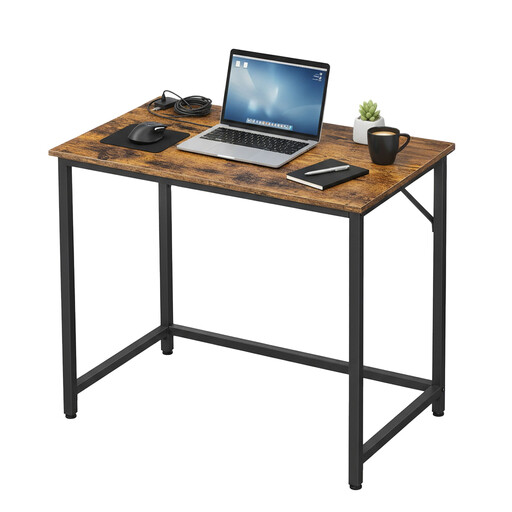
Why it suits this profile: Its compact size of 80 x 50 x 76 cm makes it a good fit for a bedroom, small study or first workspace. It’s suitable for work, study and everyday computer use.
The product description mentions adjustable feet, so you can level the desktop on an uneven floor. Its dimensions and 50 kg maximum static load are clearly stated.
Compact size, steel frame, adjustable feet and a stated maximum static load of 50 kg.
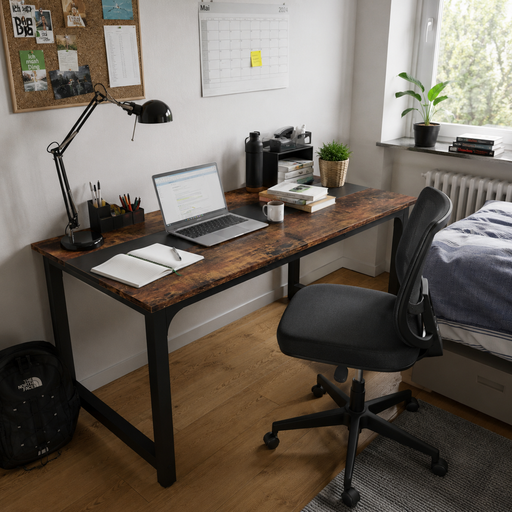
Why it suits this profile: This spacious desk is designed for anyone who wants to keep several devices, documents or a printer on one desktop. It’s a good fit for a large home office or a spacious study area.
The wide desk has a powder-coated steel frame, extra steel supports and adjustable feet. The product description states a maximum static load of 400 kg; distribute heavy equipment evenly.
160 x 80 cm desktop, product weight of 26 kg, adjustable feet and extra frame support.
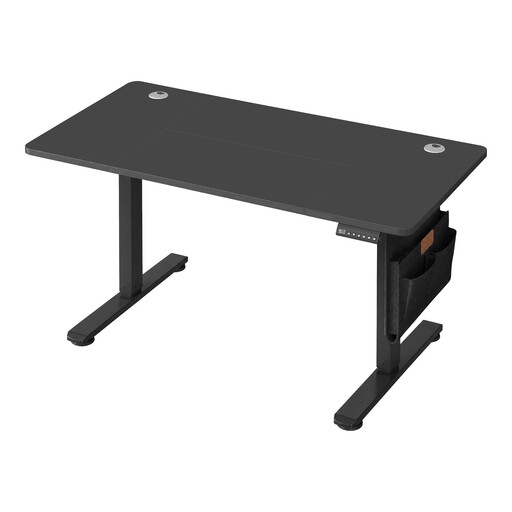
Why it suits this profile: Home workers with a large screen, laptop and accessories get 160 x 70 cm of workspace. The electric height adjustment is ideal if you regularly switch between sitting and standing.
The specifications list an adjustment range of 72 to 120 cm, a maximum static load of 70 kg, a memory function and a USB-C port. Cable holes, an organiser and a hook help keep loose cables and accessories under control.
Electric height adjustment, saved height settings, USB-C, cable management and a steel frame with adjustable feet.
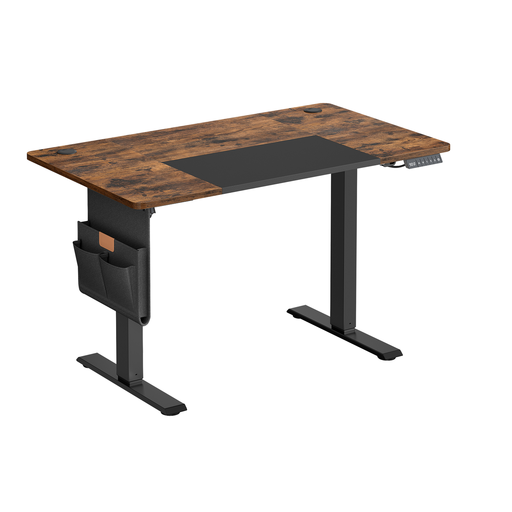
Why it suits this profile: This compact electric desk is designed for smaller rooms and workspaces. At 120 x 60 cm, it provides a practical base for a laptop or single monitor.
The product information lists an adjustment range of 72 to 120 cm, a load capacity of 70 kg, a memory function, USB-C and a built-in obstacle detection sensor.
Space-saving size, electric height adjustment, USB-C, memory settings and included storage options.
Before assembly, check that the package contains all the parts and fixings. A desk with labelled parts and clear instructions can be easier to assemble, but don’t fully tighten the screws until the frame is properly aligned.
Place the desk on a level surface and use the adjustable feet to compensate for small differences in floor level. Position heavy equipment over the load-bearing parts of the frame wherever possible. An electric desk needs room for the desktop to move freely, so don’t place it directly against a wall if that will obstruct its upward or downward movement.
Lifespan depends on load, assembly, cleaning and use. Keep liquids away from electrical components, don’t exceed the stated load capacity and check from time to time that the fixings are still secure. For intensive gaming, a gaming desk with enough depth and a sturdy frame may be more practical than a narrow writing desk.
We’ve put together a complete, up-to-date list of products that meet these strict selection criteria and current European safety regulations.
A 120 x 60 cm desk is often enough for a laptop or compact monitor. If you work with several screens, documents or a printer, consider a 140 x 60 cm, 160 x 70 cm or larger desktop. Remember to measure the space you’ll need for your chair and cables too.
Power consumption depends on the type of motor, how long you use it and how often you adjust the desk. According to the product description, a model with an energy-saving mode can reduce consumption when it’s not in use. Check the technical information for the specific model for a more accurate estimate.
Assemble the frame on a level surface, tighten all the fixings evenly and adjust the feet. Avoid placing heavy equipment on one side. On wider desks, extra crossbars or a heavier steel frame can help create a more stable setup.
