
Livraison le jour même et le lendemain

Qualité garantie

Débloquez vos offres de bienvenue: Livraison GRATUITE | Jusqu'à -80 % | 30 jours d'essai gratuits à JoyPlus
Téléchargez l'application
A home office desk needs to do more than look good in a product photo. It should fit your room, provide enough space for your monitor and accessories, and remain stable during everyday use. Yet many buyers focus mainly on colour and price. As a result, problems often only become apparent after assembly.
The most common pitfalls are:
Not enough depth for your monitor and keyboard
A compact computer desk measuring 80 × 50 cm may be suitable for a laptop or single monitor. For a monitor with stand, keyboard, documents and a lamp, the workspace can quickly feel cramped.
An adjustable desk without considering its operating limits
An electric sit-stand desk may seem flexible, but always check the height range, maximum static load and motor instructions. On some models, height adjustment is temporarily interrupted after prolonged continuous use.
Storage that does not suit your working style
A desk with drawers and shelves helps keep clutter at bay, but also takes up more floor space. A corner desk can make good use of the available room, while a straight office desk is easier to move.
First measure the available space, including skirting boards, radiators and walking space. With an electric desk, also allow for space behind and beside the desktop. The desktop must not hit a wall or cupboard while it is being adjusted.
Use these guidelines as a practical starting point:
A study desk for a bedroom will usually need a smaller footprint. For a home office with a printer, monitor arm and documents, a larger desktop is more practical.
Do not just look at the desktop material; check the frame and legs too. Many models combine chipboard with a steel frame. Also check whether the feet are adjustable. This is useful on uneven floors and can help prevent wobbling.
Pay attention to the difference between:
According to the product description, the 160 × 80 cm LANTINE desk has a metal frame, adjustable foot pads and a stated maximum static capacity of 400 kg. Always check the latest product information during assembly and do not exceed the specified load. Another desk may have a considerably lower limit: for example, the JOYFURNOS models with electric adjustment specify a maximum static load of 70 kg.
An adjustable-height desk is particularly useful if you want to alternate regularly between sitting and standing. When choosing one, check:
A desk with a USB-C connection can be useful for charging compatible devices, but check which charging function is specified and use suitable adapters. According to JOYFURNOS’s own product descriptions, several models feature a USB-C port in the control panel, cable grommets and a memory function. These are product specifications, not a guarantee that every device will charge at the same speed.
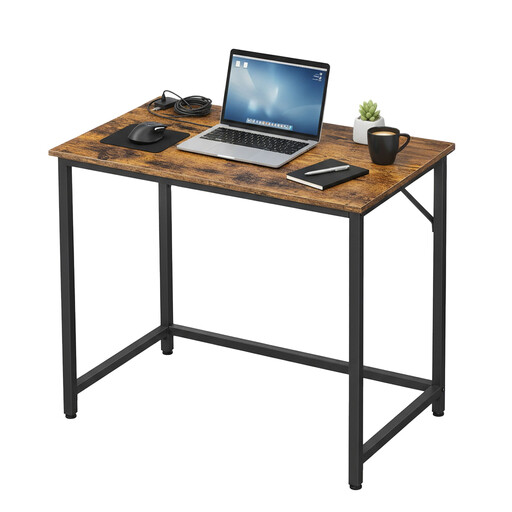
Why it suits this profile: Measuring 80 x 50 x 76 cm, this computer desk is suitable for a smaller workspace, student room or bedroom.
The fixed height avoids issues with motors and power connections. Its compact dimensions make measuring up beforehand easy, but leave less room for multiple screens.
Chipboard desktop, steel frame, adjustable feet and a stated maximum static load of 50 kg.
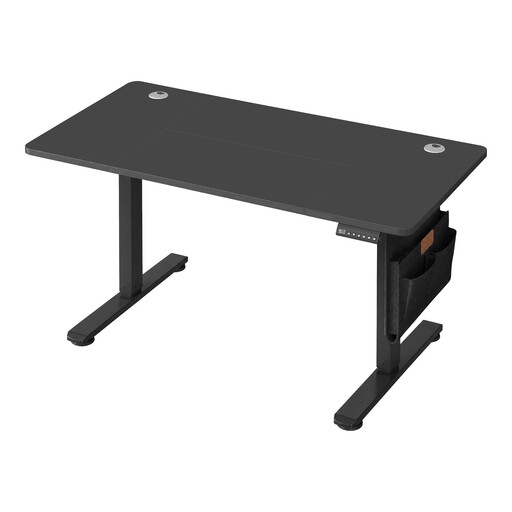
Why it suits this profile: This electric sit-stand desk offers a spacious 160 x 70 cm desktop and is designed for people who work from home every day.
The specified height range of 72–120 cm and the memory function make the adjustability clear. The load is limited to 70 kg, so remember to include the weight of your monitors and accessories.
Steel frame, USB-C connection, two cable openings, memory function, lockable controls and adjustable feet.
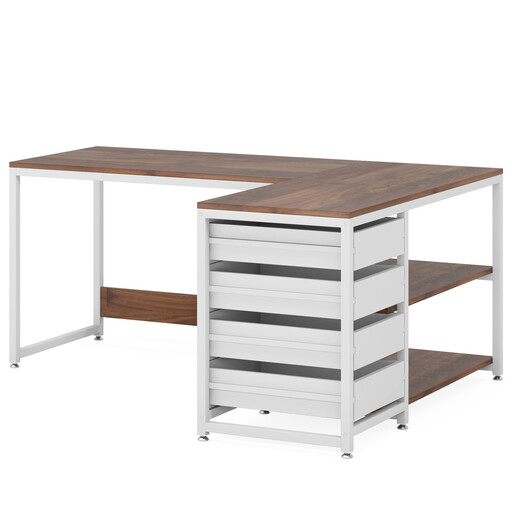
Why it suits this profile: This corner desk combines two work surfaces with four drawers and two open shelves. It is therefore well suited to users with multiple devices, paperwork or lots of accessories.
The reversible L-shape allows you to position it on the left or right. Measure the corner and check the orientation before ordering; the wide layout requires plenty of floor space.
Dimensions of 150 x 110 x 75 cm, four drawers, two shelves, adjustable feet and a metal frame according to the product description.
We have compiled a complete, up-to-date list of products that fully meet these strict selection criteria and the applicable European safety regulations.
Place the desk on a level surface and adjust the feet before positioning your monitors. Place one screen directly in front of you and leave enough room for your keyboard and mouse. With a deep desktop, you can position devices further back, giving you more room to move.
Keep the following points in mind with an electric desk:
A gaming desk does not automatically have a higher load capacity than a standard computer desk. Check the specifications rather than focusing only on a carbon-look finish, cup holder or headset hook. For a professional workspace, cable grommets and a large desktop are often more useful than decorative extras.
Power consumption depends on the type of motor and how often you adjust the height. The motor generally only runs while the desk is being adjusted; check the adapter details and product information for an accurate estimate. A USB-C port may also eliminate the need for a separate charger, but consumption varies depending on the connected device.
Its service life depends on the load, assembly, moisture, moving it and everyday use. A steel frame and correct positioning can contribute to stability, but do not guarantee a specific service life. Tighten the connections after assembly according to the instructions and do not exceed the specified load.
For working on a laptop, 80 × 50 cm may be sufficient. If you work with one or more monitors, 120 × 60 cm or 140 × 60 cm will usually be more suitable. A 160 × 70 cm desktop provides extra space for screens, documents and accessories. Always measure the room and allow for cables, chair space and cupboard doors.
