For a simple home inventory app, choose a laptop that suits your programming tools and local testing needs. Extra capacity for an Android emulator only matters if you actually plan to use one. The Consumers’ Association (Consumentenbond) recommends 16 GB of memory when running several programmes at once; it is not a universal minimum requirement for this project. Also check the processor and system requirements of your tools, and plan a separate backup for your local data.
Who is this buying guide for?
Building a simple local app
You want to keep your code, app and data on your own laptop, and mainly test locally. Check which programming tools you need: Visual Studio Code is an editor and does not include all the additional development components as standard.
Building an Android app
You want to test your home inventory app on Android too, possibly using an emulator. For the best emulator experience, Google recommends, among other things, 16 GB of RAM. Also check the current requirements for your operating system and processor architecture.
Protecting local inventory data
You do not want to rely on cloud storage, so you prioritise a separate backup that you can restore. SQLite documents a method for creating a consistent copy of a database.
What should you look for when buying?
| What to consider |
What should you check? |
Who is this important for? |
| Local programming and testing |
Compare the operating system, processor architecture, RAM and SSD of the exact configuration with the requirements of your chosen tools. The Consumers’ Association recommends 16 GB of memory if you use several programmes at once. |
If I mainly want to code and test locally, I need my editor, programming environment and tests to work on the same laptop. Around 36% of consumers make local development their top buying priority. |
| Storing and restoring local data |
Decide where the app stores its data, how you will make a separate copy, and which connection your backup drive needs. SQLite documents an Online Backup API for creating a consistent copy. |
If I do not want to store my inventory in the cloud, I need to be able to restore the data if my laptop is lost or stops working. Around 29% of consumers prioritise local data that can be restored. |
| Testing Android locally |
Check the current requirements for Android Studio and the emulator, including RAM, available storage and processor architecture. Google recommends 16 GB of RAM and 16 GB of storage for the best emulator experience; these are not general requirements for every laptop used for app development. |
If I want to use virtual Android devices, I need to know before buying whether my development environment will support them. Around 21% of consumers make Android emulation their top buying priority. |
| Working in different places |
Compare the screen size and connections of the exact configuration with your preferences, for example if you plan to use an external screen or a local backup drive. |
If I want to use my laptop in different places, I weigh up a comfortable working area against a size I can carry around. Around 14% of consumers prioritise portability above all else. |
Common buying mistakes
-
Mistaking the built-in SSD for a backup
A copy on the same laptop does not give you a separate place to restore from if the laptop or its storage fails.
Plan a separate copy and test that you can restore it. If you use SQLite while the database is active, choose a suitable method for making a consistent backup.
-
Assuming an editor has the same requirements as an Android emulator
Google publishes separate system requirements for Android Studio and the emulator. A simple local app does not have to use an emulator.
First decide whether you need virtual Android devices, then check the requirements for your operating system, processor, memory and storage.
-
Assuming the power adapter and development tools are included
According to the manufacturers, the Dutch configurations mentioned for the Apple MacBook Air 13-inch M5 and ASUS Zenbook 14 OLED UX3405 do not include a power adapter. Visual Studio Code also does not include all the additional programming tools.
Check what is included with the exact configuration and make a note in advance of which tools you will need locally.
Brands to compare
Apple
The MacBook Air 13-inch with M5 is a macOS option for anyone looking for a compact laptop for local development.
- For the configuration mentioned, Apple lists 16 GB of memory, a 512 GB SSD, a 13.6-inch screen and two Thunderbolt 4 ports.
- The Dutch order configuration mentioned does not include a power adapter. Apple’s battery life figures are manufacturer measurements for different usage scenarios and do not indicate how long you can programme on battery power.
ASUS
The Zenbook 14 OLED UX3405 is a Windows option to compare if you are looking for a 14-inch screen and local storage.
- The configuration 22516-NL-CNF described by ASUS has 32 GB of onboard memory, a 1 TB SSD and a 14-inch OLED screen.
- ASUS states that this configuration does not include a power adapter and requires a 65 W adapter. These specifications do not automatically apply to other UX3405 configurations.
Lenovo
The ThinkPad E14 Gen 7 is a product line worth comparing for its connections and expandability, which vary by configuration.
- For model 21T9006WIG, Lenovo lists 16 GB of memory in a SODIMM, a 512 GB SSD and a 14-inch screen.
- This specific configuration is listed without an operating system and with an English keyboard. Check the exact configuration you intend to buy separately.
Framework
The Framework Laptop 13 is worth considering if configuration options and repairability are important to you.
- Framework describes interchangeable expansion cards and customisation options for the Laptop 13, and lists the Netherlands as a shipping destination.
- Check the components and features of the configuration you choose; the product description alone does not demonstrate a performance advantage for this programming project.
Joybuy products for local programming
These product choices are aimed at straightforward local desktop or web development. Check that the processor and configuration of your chosen laptop are suitable for the tools you plan to use.
 No image available
ASUS ROG Zephyrus G16 GU605CM-QR026W
For local coding with several programmes, this configuration lists Windows 11 Home, an Intel Core Ultra 9 285H processor, 16 GB of RAM and a 1 TB SSD.
The power adapter must be purchased separately.
View at Joybuy
 No image available
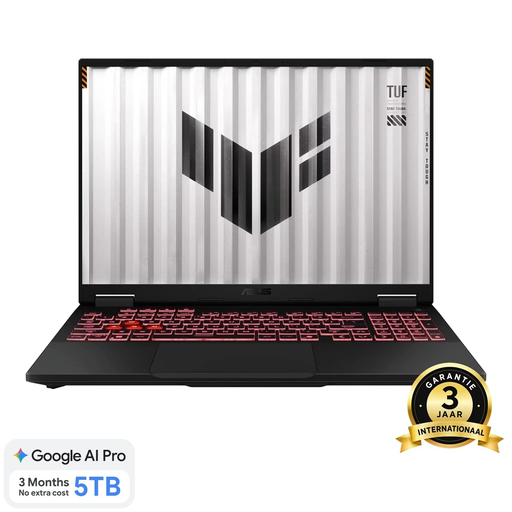
ASUS TUF Gaming A18 FA808UM-S8132W
For local programming with several programmes, this configuration lists an AMD Ryzen 7 260 processor, 16 GB of DDR5 memory and Windows 11 Home.
The SSD has a capacity of 512 GB and the screen measures 18 inches.
View at Joybuy
 No image available
ASUS Vivobook S16 S3607QA-SH109W
This configuration lists Windows 11 Home, a Snapdragon X processor and 16 GB of LPDDR5X memory.
The SSD has a capacity of 512 GB; the 16-inch screen is described as WUXGA OLED in the product name. Check that your programming tools are compatible with the configuration you choose.
View at Joybuy
 No image available
Auusda T161N
The product name lists an Intel Core i3 1000NG4 processor, 16 GB of DDR4 memory and a 1 TB SSD.
The description lists a 16-inch screen and a numeric keypad.
View at Joybuy
 No image available
MSI Modern 14 F1MG-867NL
This configuration lists Windows 11 Home, an Intel Core 7 150U processor and 16 GB of DDR4 memory.
The SSD has a capacity of 512 GB and the screen measures 14 inches. According to the description, no power adapter is included.
View at Joybuy
Frequently asked questions
Can you build a home inventory app without a cloud database?
Yes, a local database is an option. According to the SQLite documentation, SQLite is serverless and stores data in a file. However, check whether the other components of your chosen development environment can also work without cloud services, as this depends on the app framework.
Does Visual Studio Code work fully offline?
Not all features work without a network connection. Microsoft lists updates and searching for and installing extensions among the features that may require network communication. Install the components you need in advance if you plan to work offline later.
How do you back up a local inventory database?
Keep a separate copy and test that you can restore it. For an active SQLite database, SQLite documents an Online Backup API for creating a consistent copy.
Does the data in your home inventory app come under the GDPR?
According to the Dutch Data Protection Authority (Autoriteit Persoonsgegevens), processing personal data solely for personal or household use falls outside the GDPR. Do not assume this exemption applies to professional or more widely shared use; review the situation if the way you use the app changes.


