
Livraison le jour même et le lendemain

Qualité garantie

Débloquez vos offres de bienvenue: Livraison GRATUITE | Jusqu'à -80 % | 30 jours d'essai gratuits à JoyPlus
Téléchargez l'application
If you’re looking for home health monitors, you’ll probably want to measure things quickly and easily: blood pressure, blood sugar, oxygen levels, body temperature or weight. There’s a huge range on offer, but not every device is suited to daily use. A low price might seem appealing, yet replacement test strips, the wrong cuff size or complicated operation can push up costs and frustration later on.
This buying guide helps adults, seniors, carers and families compare medical measuring equipment and a health monitor objectively.
Terms like “clinical accuracy” or “professional result” sound convincing. Always check what the product specifications actually say. Some models list a stated measuring range or margin of error; that’s not the same as a guarantee that every reading will be correct in all conditions.
According to the manufacturer’s product information, the Treesmile FC-BP102, for example, has a blood pressure accuracy of ±3 mmHg and a pulse accuracy of ±5%. These are verifiable specifications, but the result still depends on your posture, cuff placement and sitting still.
A blood glucose monitor is often inexpensive to buy, but it uses test strips and lancets with every reading. So check:
The Yuwell 710 only works with test strips of the same model and brand. According to the product information, strips are not interchangeable with other meters. That prevents a wrong purchase, but it also means you need to look at the availability and price of refills in advance.
A blood pressure monitor with a cuff that’s too small can be unsuitable, even if the screen and features are fine. So measure your upper arm circumference first. For the Treesmile U83H and the FC-BP102, the stated cuff range is 22 to 42 cm. The Yuwell YE670A(S) lists a range of 22 to 45 cm.
With a pulse oximeter, other factors come into play. Cold fingers, movement, nail polish and false nails can all affect the reading. Always follow the instructions for use and don’t judge an unusual reading in isolation from your symptoms or medical condition.
An upper arm blood pressure monitor is practical for most households, especially when several people use the same device. Look out for:
A wrist blood pressure monitor is more compact for travel. The Medisana BW 345 has a cuff for wrist circumferences of 13.5 to 21.5 cm, memory for 120 readings for two users and automatic inflation. Your wrist must stay at heart level during the measurement. An incorrect position can affect the result.
A blood glucose monitor, also called a blood sugar meter, usually gives a reading within seconds. More important for daily use are the blood sample size, storage capacity and ease of operation.
The Sinocare Safe-Accu2 requires 0.6 μl of blood according to the product description and shows a result within 10 seconds. The meter stores up to 200 results with date and time. The included set contains 50 test strips and 50 lancets, among other items.
For more intensive use, a larger memory can be handy. The Sinocare Safe AQ Pro I offers 500 memory slots and a measuring time of 5 seconds. Only use the designated strips and follow the instructions for storage, shelf life and hygienic disposal of lancets. These devices are intended for personal self-testing; do not share the lancing device or lancets.
A pulse oximeter, also called an oxygen meter, typically displays oxygen saturation and heart rate. Check the following points:
The Medisana PM 100 has, according to the product specifications, an SpO₂ range of 70% to 100%, a pulse range of 30 to 235 beats per minute, a display with 10 brightness levels and a weight of 53 grams. Keep your hand still and warm up cold fingers first. The manufacturer states that the device is intended for wellness monitoring and is not a substitute for medical advice or diagnosis.
A digital thermometer should suit the situation. A pen-style model like the Treesmile T11 shows the temperature in increments of 0.1 °C, switches between Celsius and Fahrenheit and runs on an LR41 battery. An infrared model like the Treesmile FC-IR100 measures in ear, forehead and object modes according to the product information and stores 35 readings.
With digital scales, a flat, hard surface, maximum load and resolution are more important than extra body composition analysis. The Sparoma AD-26 has a capacity of 180 kg, a stated resolution of 0.05 kg and a platform made of 4 mm tempered glass. The two AAA batteries are not included. Do not place the scales on carpet and do not use them as a medical diagnostic instrument.
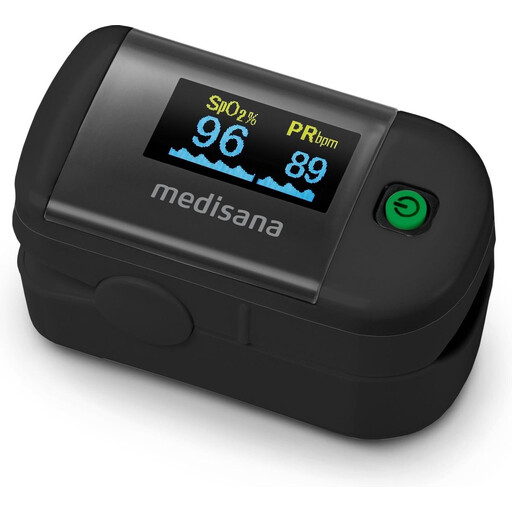
Why it fits this profile: The one-button operation, compact size and included AAA batteries make this an easy choice for occasional use at home or on the go.
The key usage information is concrete: SpO₂ and pulse measurement, automatic shut-off and adjustable screen brightness.
53 grams, 70–100% SpO₂ range and ten brightness levels.
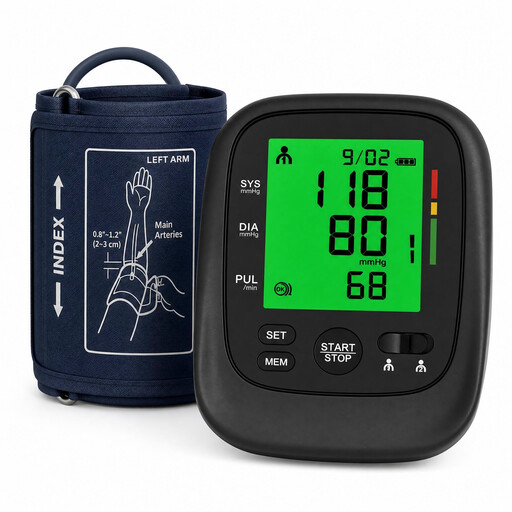
Why it fits this profile: If you measure regularly at home, you’ll appreciate the large screen, wide cuff and multiple memory functions for two users.
The 22–42 cm cuff and alerts for movement and placement help maintain a consistent measuring routine.
2 × 120 memory slots, average of three readings, USB and battery power.
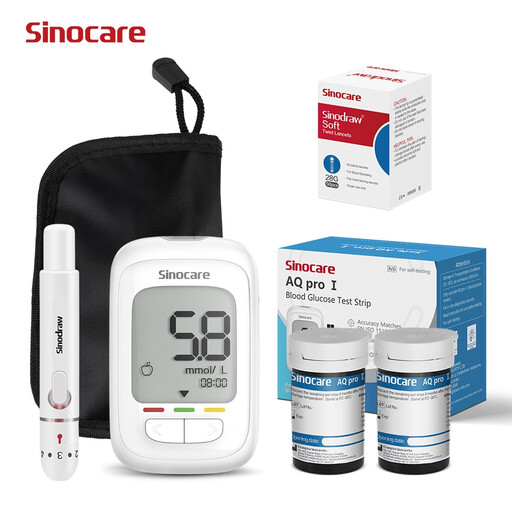
Why it fits this profile: This set is aimed at users who carry out blood glucose measurements frequently and want to store results over a longer period.
Compatibility with Safe AQ Pro I strips is clearly stated. This means you can see in advance which refills are needed.
Result according to the product information within 5 seconds, 500 memory slots and a set with 50 strips and lancets.
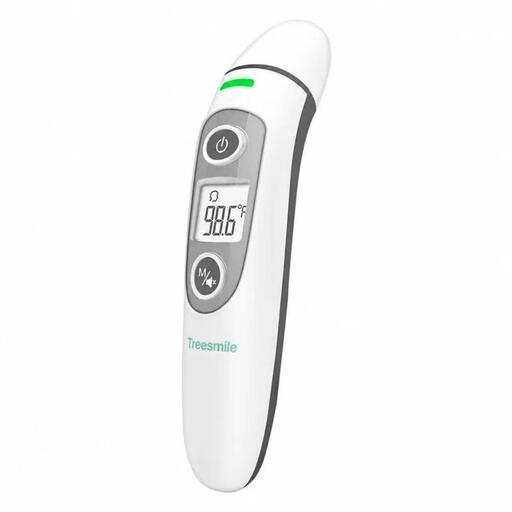
Why it fits this profile: The contactless measurement and choice of ear, forehead and object modes are practical when speed and versatility matter.
The usage modes and 35 memory slots are clearly described in advance; just check the instructions for the correct measuring distance and position.
Ear, forehead and object measurement, LCD screen with three-colour backlight and two AAA batteries included.
We’ve put together a full, up-to-date list of products that fully meet these strict selection criteria and comply with current European safety regulations.
Have the instructions for use ready, insert batteries according to the polarity and choose a fixed measuring spot. When taking blood pressure, use a suitable cuff, sit quietly for a few minutes and don’t talk. For repeated measurements, note the date, time and conditions. Only use a blood glucose monitor with compatible strips and new, clean lancets.
The lifespan varies depending on the device, battery use and maintenance. A thermometer or pulse oximeter has few consumables, whereas a blood glucose monitor needs strips and lancets on an ongoing basis. Store devices in a dry place, avoid dropping them and check the batteries. Look at the warranty, shelf life of test strips and any manufacturer information on the product page.
A health monitor is designed to track values and is not a substitute for diagnosis or treatment. Contact a healthcare professional if you have persistently abnormal readings, sudden changes or symptoms. Do not adjust medication on your own based on a single home reading.
