
Vandaag of morgen in huis

Kwaliteit gegarandeerd

Welkomstaanbiedingen ontgrendelen: GRATIS bezorging | Tot 80% korting | Gratis 30 dagen JoyPlus-proefperiode
Download de app
Working out at home sounds simple until a dumbbell set gets in the way, a pull-up station wobbles or an adjustable workout bench does not fit properly in the available space. When choosing home gym equipment, it is not just the number of exercises that matters. Stability, dimensions, adjustability and maintenance all determine whether a product will still be practical to use after a few months.
A high load capacity sounds appealing, but it does not tell you everything about the user experience. Also check:
For example, a power tower with a stated maximum capacity of 204 kg is not automatically suitable for every training space. Positioning, assembly and freedom of movement remain important.
A home gym with lots of functions can save space, but only if the exercises can be performed comfortably. When choosing a power tower or pull-up station, pay attention to the height adjustment, the width of the handles and the space around the frame. With a workout bench, the adjustment positions and locking mechanism are at least as important as its appearance.
Lifting straps can help when your grip tires before the target muscles during deadlifts or rows. However, they are no substitute for good lifting technique. Check the material, fastening and usage restrictions. According to the product information, the Thor Athletics straps are intended for strength training and not for Olympic weightlifting.
For a power tower, dip station or bench, a steel frame is a practical starting point. Also look at:
A powder coating can help protect the metal surface against normal wear and tear, but it will not prevent damage caused by incorrect assembly or overloading.
An adjustable workout bench with flat, incline and decline positions offers more variety for dumbbell presses, shoulder presses and other exercises. Check how many positions are available and whether the backrest can be locked securely before every set.
With a pull-up station, height adjustment is important for both the user's height and the available ceiling space. Allow extra room above the highest handle and take the range of motion during pull-ups into account.
Beginners often get more use out of several lighter weights than one heavy pair. A set with 1, 2 and 3 kg weights allows you to increase the load gradually. For larger muscle groups, a pair weighing 4 or 5 kg may be more suitable.
Hexagonal dumbbells are less likely to roll away. Neoprene can provide a comfortable-feeling grip, but place the weights down carefully after use. According to the product information, some models may have a weight variation of around 3%. If you want to progress precisely, it is worth bearing this in mind.

Why it suits this profile: The three pairs of weights are suitable for a first full-body workout, while the included stand keeps the dumbbells organised in a smaller home.
The weights are not limited to a single load, and the hexagonal heads are less likely to roll away according to the description.
Six dumbbells, three weights and a PP plastic stand; suitable for strength and conditioning exercises.
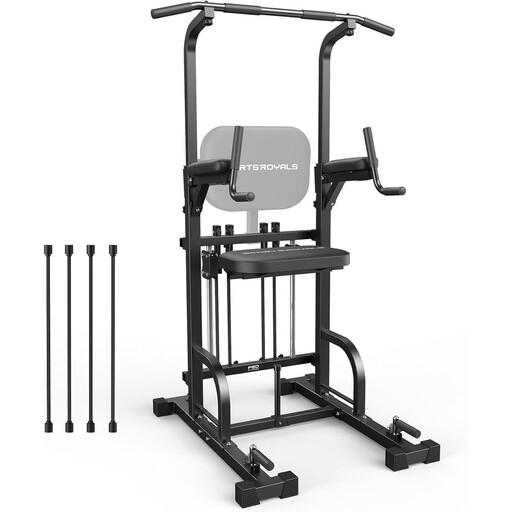
Why it suits this profile: This station combines pull-ups, dips, leg raises and core training in one freestanding frame for users who want to train with their body weight.
The product description states that it has an H-shaped base, eight non-slip feet and six height settings. Before buying, check that the dimensions suit your space.
Height range from 164,56 to 221,5 cm, adjustable armrests and included resistance bands from 10 to 40 kg.
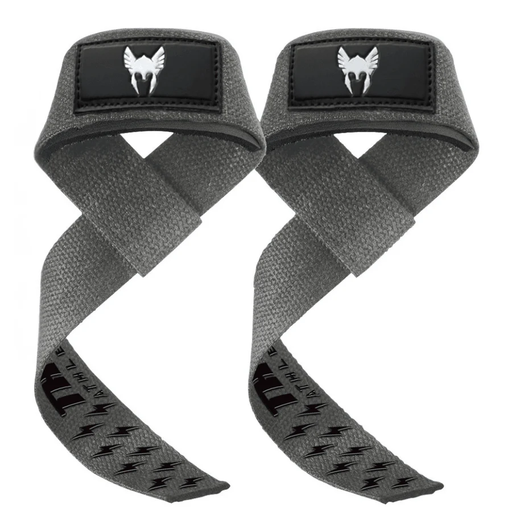
Why it suits this profile: This accessory is designed for strength trainers who want extra support around the wrist and bar during heavy deadlifts or rows.
The usage restriction is clear: do not use for snatches or clean and jerks. Check the stitching, fabric and rubber layer before every workout.
Supplied as a pair, with a cotton strap, neoprene wrist padding and a non-slip rubber layer on the bar-facing side.
Start with your training goal rather than the largest piece of equipment. For building muscle, a combination of dumbbells, an adjustable bench and enough floor space can already make a wide range of exercises possible. A power tower adds bodyweight exercises such as pull-ups, dips and leg raises.
Storage matters too. A dumbbell stand prevents weights from being left around the room. Store heavy dumbbells low down and do not place them on a high shelf. With larger equipment, assembly is part of the purchase: follow the instructions and check bolts, connections and locking mechanisms regularly.
If you have limited space, consider a folding bench. According to the product information, the FLYBIRD bench is delivered 80% pre-assembled and has several positions. Always check that the stated load capacity is suitable for your body weight, dumbbells and planned exercises.
We have put together a complete, up-to-date list of products that fully meet these strict selection criteria and the applicable European safety regulations.
For a simple start, a pair of dumbbells, an exercise mat and enough clear floor space are often all you need. If you also want to practise pull-ups and dips, a power tower or pull-up station can be a sensible addition. Choose weights that allow you to perform each exercise with controlled technique, and increase the load gradually.
Measure not only the equipment itself, but also the space needed to move around it. A power tower requires extra room above the pull-up bar. When training with dumbbells, you need to be able to move your arms freely and put the weights down safely. Keep doors, radiators and low ceilings outside the training area.
Wipe down metal frames and upholstery after use, following the product instructions. Regularly check the bolts, hinges and locking pins on benches and stations. Inspect lifting straps before every workout and stop using them if you notice fraying, loose stitching or peeling coating. Service life also depends on correct assembly, loading and storage.
