
Vandaag of morgen in huis

Kwaliteit gegarandeerd

Welkomstaanbiedingen ontgrendelen: GRATIS bezorging | Tot 80% korting | Gratis 30 dagen JoyPlus-proefperiode
Download de app
Working out at home sounds simple until a large piece of fitness equipment blocks the way, a treadmill makes too much noise or a workout bench no longer feels stable after a few weeks. Anyone searching for home fitness equipment is also likely to encounter plenty of marketing claims. A high motor power rating, a large maximum load capacity or “whisper-quiet” performance only means something when you understand the specifications behind it.
With this guide, you can compare home fitness equipment based on space, usage, adjustability, noise level, load capacity and maintenance. This helps you avoid buying equipment that mainly ends up collecting dust.
A load capacity does not guarantee that a piece of equipment will remain stable in every situation. Also check the frame dimensions, the base and the surface you will be training on. For a power tower, locking mechanisms, rubber feet and the positioning of your body weight all matter. With a workout bench, it is important that the backrest locks securely in every position.
“Quiet” can mean different things. An exercise bike with a belt drive generally makes a different sound from a treadmill with a motor and running belt. According to the product description, the Lugia exercise bike operates below 20 dB, while YOSUDA also lists a noise level below 20 decibels for its cross trainer. These figures come from the product information; the noise you actually hear also depends on the floor, walls and how the equipment is used.
For flats or a home office, a rubber mat, an even floor and regular maintenance are just as important. A walking pad may be compact, but footsteps and vibrations can still be heard by neighbours.
Measure not only the area where you will train, but also the route to the storage room or cupboard. Consider:
A foldable cross trainer or walking pad is not automatically suitable for every small room. Check whether you can move the equipment without lifting it and whether, when stored, it blocks an escape route or passageway.
For strength training at home, an adjustable workout bench offers more options than a flat model. According to the product description, the Pooboo Adjustable Workout Bench supports flat, incline and decline positions. This allows you to perform a range of exercises with dumbbells or a barbell set. The bench has a stated maximum load capacity of 1500 lb, equivalent to approximately 680 kg. Always check at the time of purchase whether this figure refers to the combined user and training weight.
For cardio equipment, look at the available resistance or speed range. The Lugia bike has continuously adjustable resistance and a saddle that can be adjusted for users up to approximately 190 cm tall, with a stated maximum user weight of 130 kg. According to the product specifications, the Kehot treadmill operates from 1 to 12 km/h and has a manually adjustable incline of 9%.
A treadmill with a 38 × 100 cm running surface is mainly intended for walking and gentle jogging. If you take long strides or want to run faster, a larger surface will be more comfortable. The HadMax walking pad has a running surface of approximately 35.4 × 15.7 inches and overall dimensions of 47.2 × 22.4 × 5.5 inches. The manufacturer also lists a foldable handrail and transport wheels.
Stride length is important when choosing a cross trainer. The YOSUDA has a 38 cm stride length and, according to the product description, is suitable for users up to approximately 175 cm tall. Measure yourself and allow for extra space at the sides and above the equipment.
A steel frame can provide a solid base, but the construction determines how stable the equipment is during use. Look for:
Clean fitness equipment with a soft, slightly damp cloth. With a treadmill or walking pad, you should also check the alignment, tension and lubrication of the running belt according to the instructions. Never use equipment above its stated load capacity and always place it on a flat, stable surface.
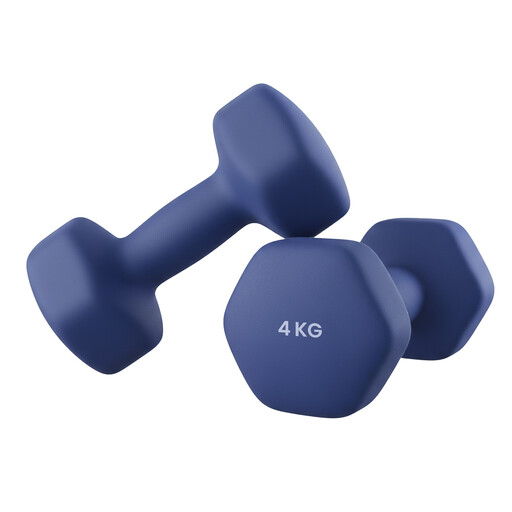
Why it suits this profile: A pair of 4 kg dumbbells takes up very little space and is suitable for simple strength and fitness exercises in a living room or home office.
The hexagonal ends stop the weights from rolling away. The fixed weights also avoid complicated adjustment systems.
2 × 4 kg, cast iron with a neoprene coating and a compact design. The product information states that the weight may vary by 3%.
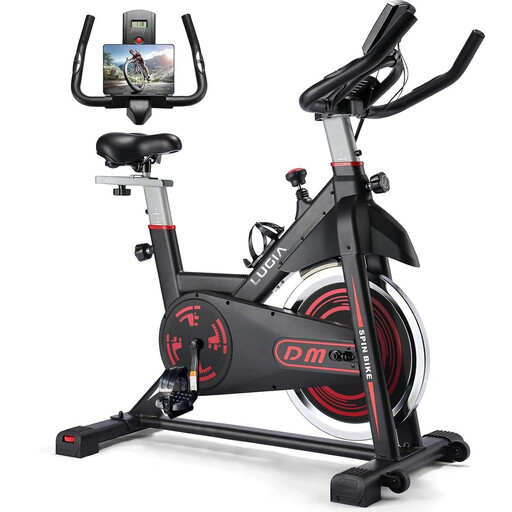
Why it suits this profile: The adjustable resistance and LED display are ideal for users who want to use their cardio equipment regularly and with a clear purpose.
The product specifications list a belt drive, continuously adjustable resistance and a maximum load of 130 kg. However, check the surface and fittings before every use.
6 kg flywheel, adjustable saddle, LED display showing time, speed and distance, among other details, and delivery that is 70% pre-assembled according to the description.
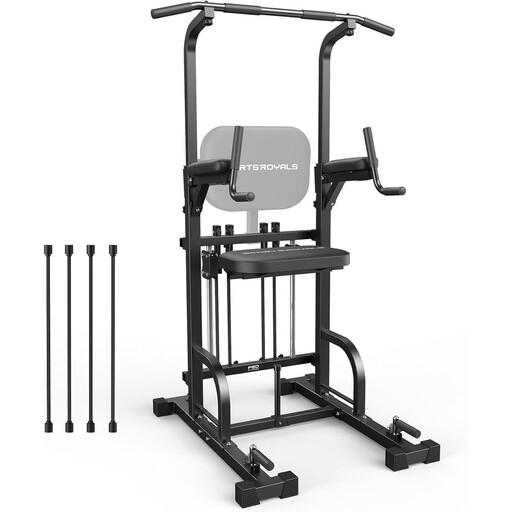
Why it suits this profile: This power tower is designed for users who want to combine pull-ups, dips, leg raises and core exercises in one home gym.
According to the product description, the base has eight non-slip feet, an H-shaped design and six height settings. Even so, place the station on a flat surface and check all bolts.
Stated maximum load of 204 kg, height range of 164.56 to 221.5 cm and resistance bands included, ranging from 10 to 40 kg.

Why it suits this profile: The low-profile design, foldable handrail and transport wheels are practical for a home office, flat or any space where you want to tidy the equipment away after use.
The compact dimensions and magnetic remote control make storage easier. The stated noise level of 45 dB comes from the brand’s product description.
Speed range of 0.6 to 3.8 mph, manual incline of 10%, 12 programmes and a stated maximum load of 300 lb.
We have put together a complete, up-to-date list of products that fully meet these strict selection criteria and the applicable European safety regulations.
Before your first workout, check that all parts are present and follow the assembly instructions. With a workout bench, power tower or cross trainer, all adjustable parts must be fully locked in place. Position cardio equipment on a flat floor and keep children and pets away while it is in use.
A non-slip mat can help limit movement and vibrations, but it is not a substitute for correct assembly. Wear suitable sports shoes and stop exercising if the equipment makes unusual noises. Always consult the manual and product page for information about maintenance, load capacity and warranty.
Dumbbells, a foldable workout bench, a walking pad or a foldable cross trainer take up relatively little permanent space. Measure the storage area and check the weight, transport wheels and folded dimensions before ordering.
Dumbbells, a workout bench and a power tower do not use electricity while you exercise. An exercise bike, treadmill or cross trainer does. Consumption depends on motor power, resistance, workout duration and your energy tariff. For an accurate estimate, multiply the stated wattage by the number of hours of use and your current price per kWh.
Its lifespan depends on the load, frequency of use, assembly and maintenance. Check the bolts regularly, keep belts and running surfaces clean, and do not exceed the maximum load capacity. Equipment that suits your training level and available space will generally remain more practical to use than a model with features you never use.
